
There used to be a time when spring would bring fire to the forests of the Bengali heartland. Greenery would be frequently interspersed with flaming orange and for many miles entire stretches would seem as if the trees are ablaze with these fiery flowers. “Fagun legechhe bon e bon e” (the season of Spring has set fire of colours to the woods) – was the poet’s response.

Palash, also known as ‘Flame of the Forest’, is a flower that blooms during spring in many parts of the globe, and is an integral part of Bengali culture. However, quite unfortunately, being an integral part of culture it has become quite a saleable commodity. Being a saleable commodity happily embraced by the culture of commerce, they have become so rare that one has to travel for miles to see the groves that still has flowers left on the trees. When Rabindranath Tagore imagined Basanta Utsav (the Festival of Spring), he never realized that the naturalness of celebrating with seasonal flowers would become a completely commercial concept. During the festival, Bolpur and Santiniketan treelines become free of the feted flower. And markets bloom with these orange blossoms. Even with regulations made for the protection of naturalness; poverty and greed win, as always. Greed is not only limited to the impoverished sellers, but to the buyers who flock to acquire these garlands that speak of bare ruined trees. The human need for ephemera is unending. And these flowers are discarded without ceremony after a few clicks and the photographs themselves are lost soon among many hundreds and thousands that bombard social media every single moment.
The last time I had attended Basanta Utsav was a quarter of a century back. Things were different, the chemistry between people seemed more organic (really organic, not the packaged kind).

But since then, as the festival’s fame intensified, crowds of intense people tense in their intent of not falling behind the trend started to make themselves present. People were no longer inebriated only with Spring. FOMO is quite real, trust me. And hotels, guest houses and other such places started to celebrate by recalibrating the tariff, sometimes tenfold. And Palash, the symbol of the festival, became the most coveted and the most marketed.
Therefore, in order to see the flower in its glory, one has to travel elsewhere these days. Many stretches of Purulia, hitherto unexplored by tourists and the related industry, came into the purview of persons who wanted peace and quiet and Palash. One such place was Baranti.
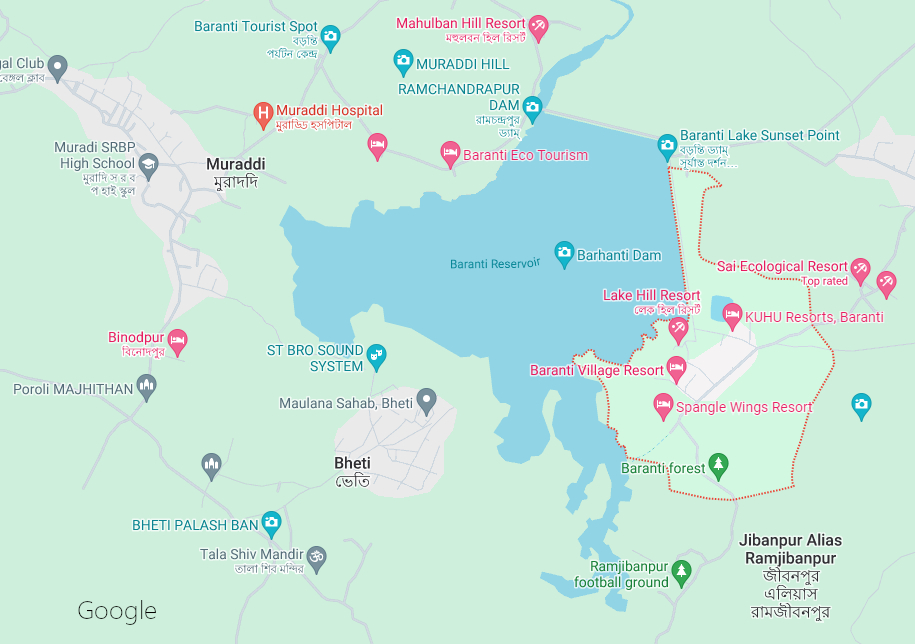

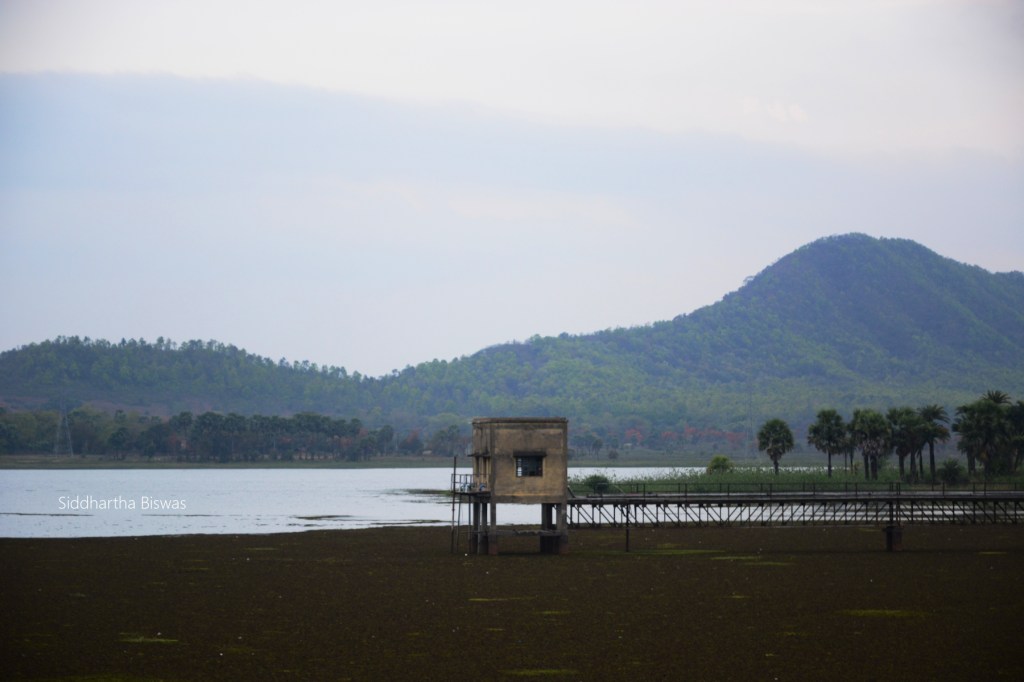
I use “was” because it is only partially “is” and soon will be mostly bereft of the brightness that Palash can bestow. Baranti is essentially a lake adjoining the Ramchandrapur Dam (a.k.a. Baranti Dam). It is not as extravagant as its neighbours such as Maithon or Panchet. But forests full of Palash was its claim to fame. The village with the name is still small, adjoining villages equally so.
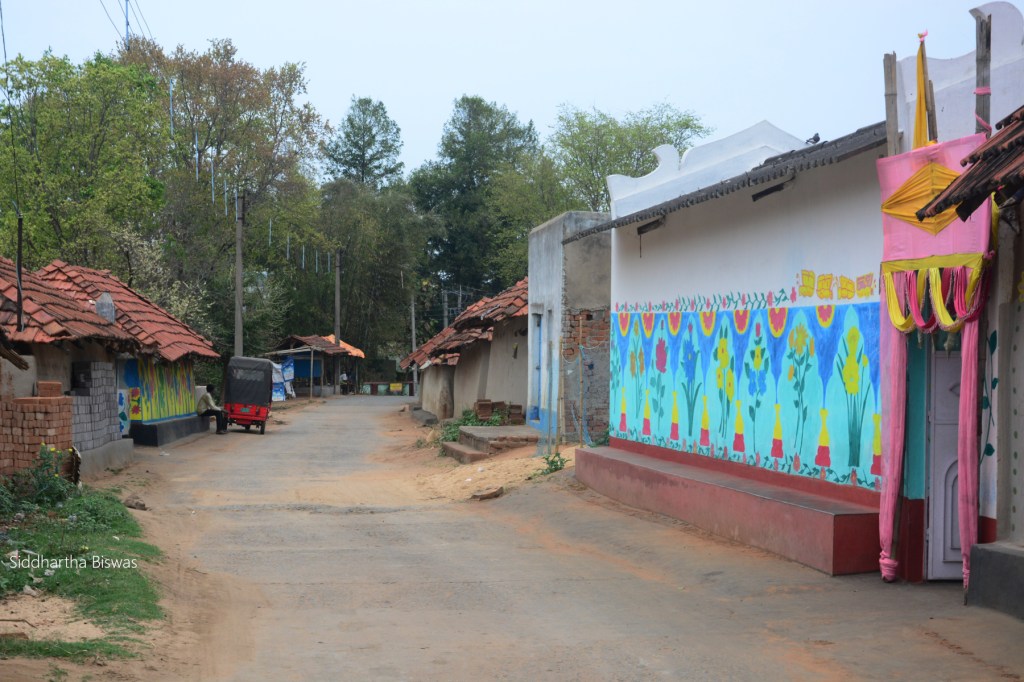
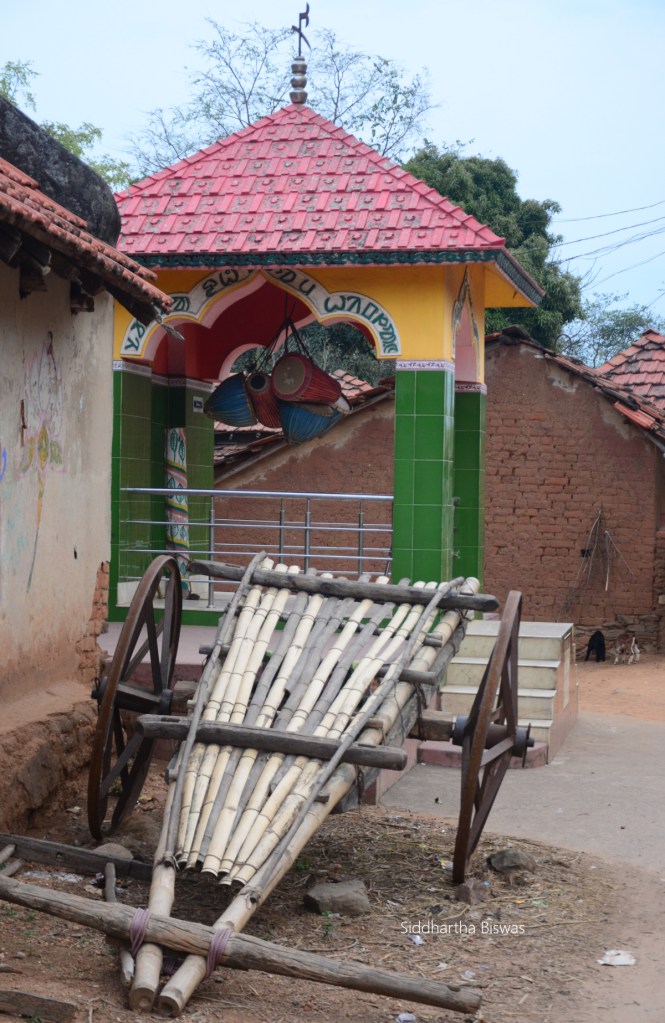
Talberiya was the nearest spot where you would find some traces of sarkari presence.
We had heard of Baranti a very long time back. There was only one decent place to stay then. Quite unfortunately, many others had heard of Baranti since then. Easy access by public and private transport turned the spot into a regular leisure – and to an extent luxury – destination for many from all around. The rustic staying places gave way to swanky affairs; and resorts now are almost as frequent as Palash trees. The small embankment next to the lake has a dedicated sunset point with temporary food shops and a considerable number of parked vehicles crowding the serenity with noise and indelicacy.

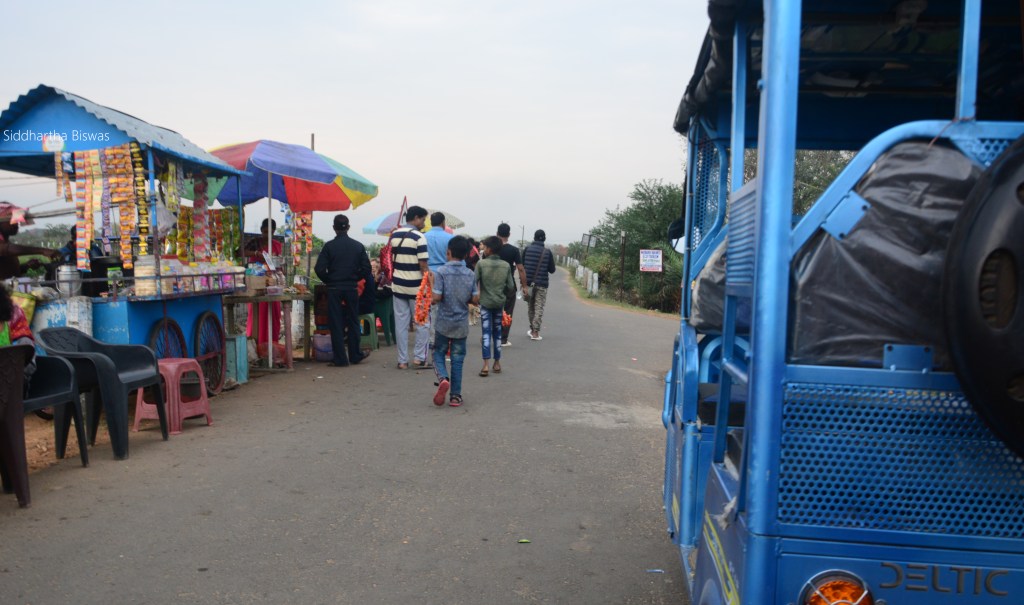
We were denied the sunset (the weather was cloudy with a chance of rain which decided not to fall).

The competition of many kinds of shooting devices trying to capture the perfect moment in a perfect frame created the most perfect nuisance imaginable. Photography is more about imperfection that tells a story, than about so-called ‘picture perfect’ shots. Then again, if you are obsessed with mere record shots (for various social needs) then I guess it is necessary to get the insta-perfect shot.
We dutifully went to the sunset point (the point from which you get the best view, obviously not the point where the sun sets, which would have been infinitely cooler), and saw sunset-hunters frolicking around food stalls and shops that sell knickknacks. The narrow strip of road on the embankment was full of selfie-seekers who fearlessly posed in front of moving vehicles.

We had tea and listened to the flawless cacophony of appreciation that nature draws from those who run away from the urban. As the poet whose words, as he himself thought most vehemently, were worth something, had written, nature to some is “a dizzy rapture” without the “need of a remoter charm”.
The only thing that made all this tolerable was the presence of a dear friend and his family.

With them we withdrew to our hotel terrace and had a very relaxing evening. The terrace is lovely, with loveliest views, and the hotel (video here) is one I would recommend with no uncertainty.
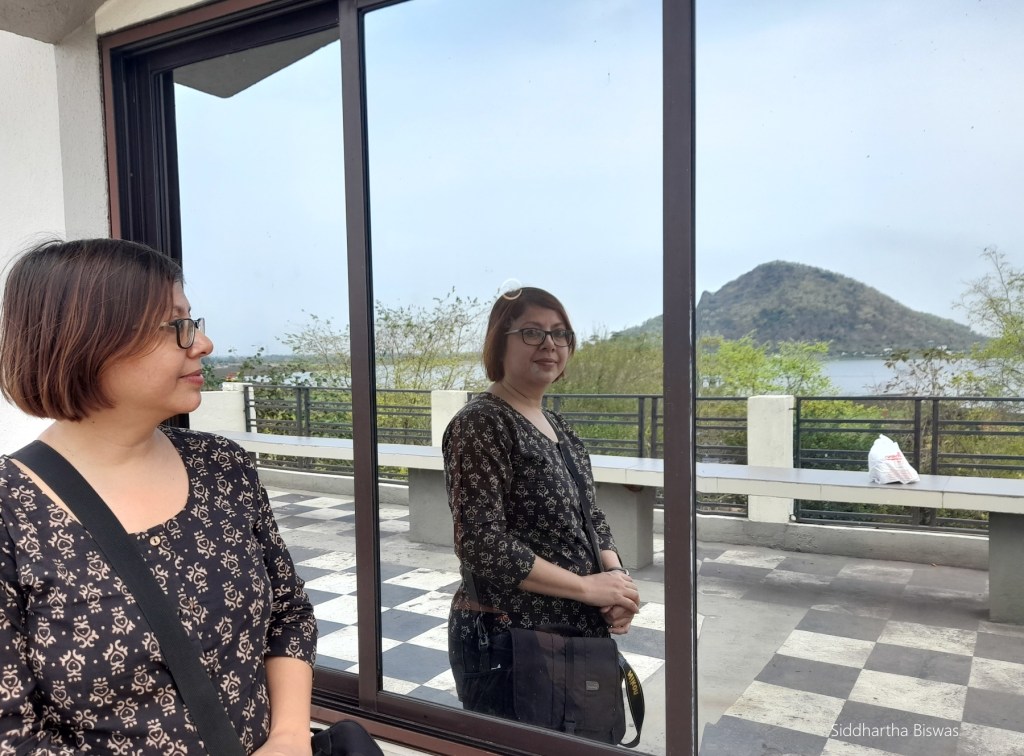
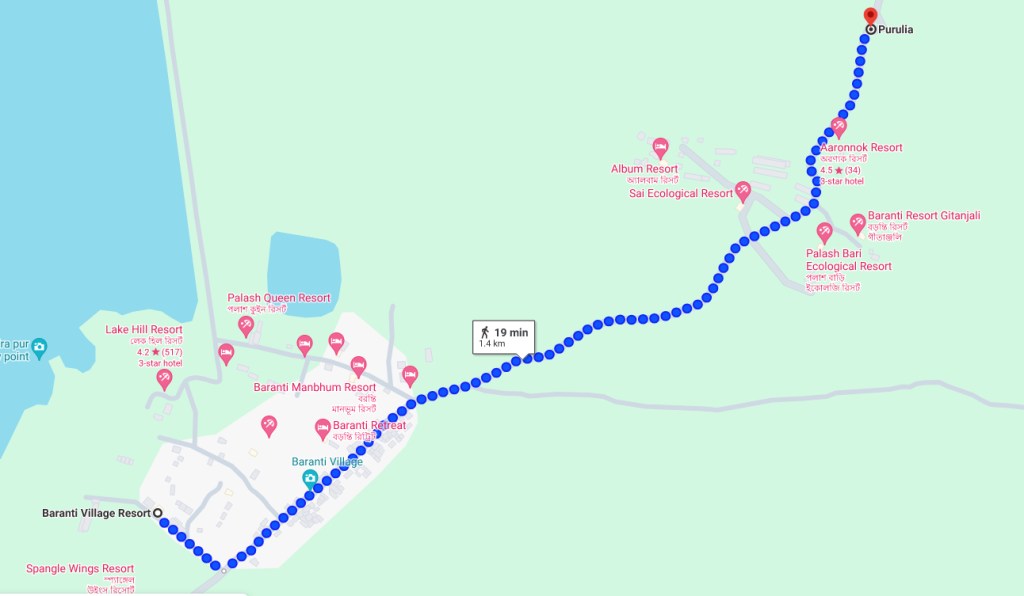
Among the stories we shared that evening, was the one about our very picturesque 6k (to and fro) walk through a road that is made gorgeous by its natural simplicity.


With small hills on one side and the lake visible slightly far away on the other – the road took our breath away. Roosters and hens cross the road frequently, though they still refuse to tell us why!
We meandered, exploring paths that disappeared in the woods; we stopped at villages, looking at village temples, and we simply strolled as we love to.


We came back only when our stomachs became impatient.
Since we had booked the room for three nights, we had three days to walk all around. We had gone through the village earlier in the opposite direction, and walked aimlessly through another lovely stretch. Reaching nowhere, we came back completely happy.
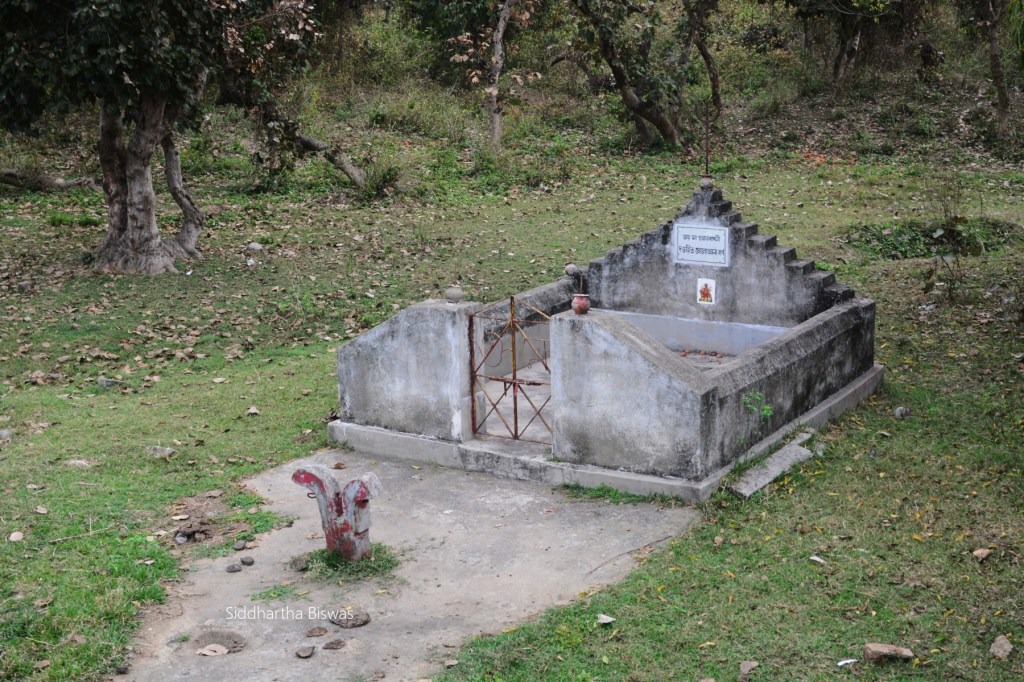
The road gave us shrines, flowers and a loneliness impossible to find elsewhere. The further you were from the tourist spot, the lovelier Baranti became.


In the afternoon, we took a Toto to Muradih station. It was the village market day and we usually love visiting such markets.
This one was disappointing. But the station was lovely, and we just sat unhurriedly and watched trains speed by. The man in the ticket counter was very surprised when we sought his permission to sit for a few minutes. He, in fact, very gladly asked us to spend as much time as we might want to spend on the charming platforms.


However, there is another tourist spot that you have to visit by Toto. It is called Bheti, and it is the last of the Palash forests persisting in the vicinity. It is still standing because tourists want to see for themselves that such a thing is not merely a myth. Although, it is not quite what you would imagine, it is still a memory of what once was everywhere.


On the way to Bheti we stopped at a beautiful Shiva temple. The shrine is very old, though the structure is new.


The village children flock everywhere with garlands and one slip of a girl asked Jaya if she would like to climb the hillock (called Ramchandrapur Boro Pahar – indicating it is a big hill) next to the road.
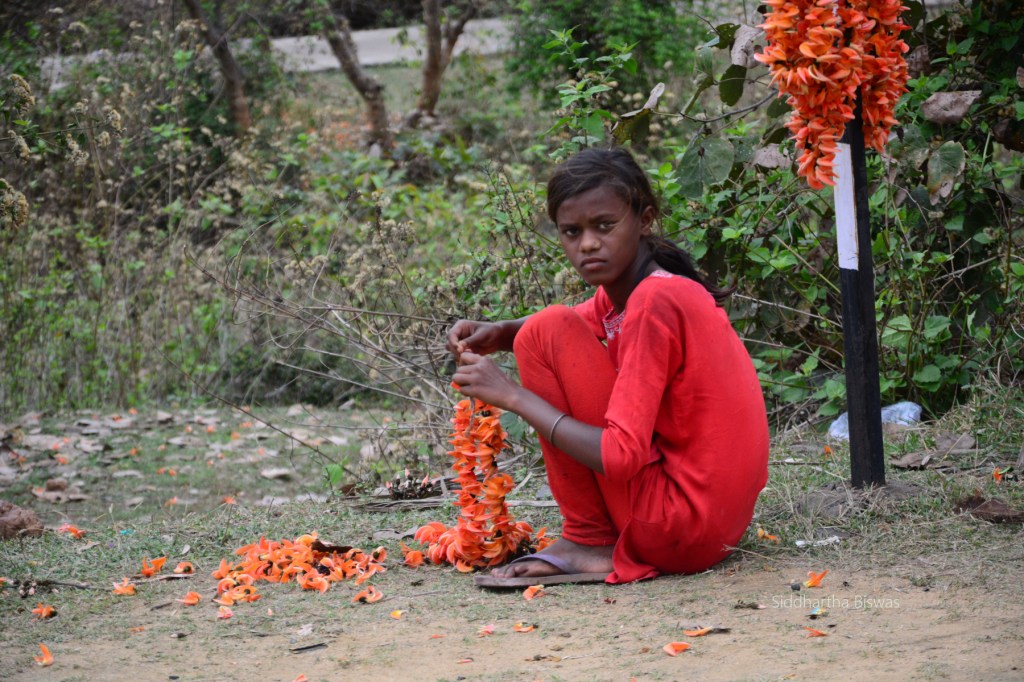
Children can surprise you sometimes with their insights. She didn’t even bother to ask me. My hill hiking days are quite over, but the hills themselves remain as dear as ever. Some say home is where the heart is, for us, both home and heart are where the hills are. It can be the mighty Himalayas or it can be a small hummock, they are always alive with the sound of serene silence. With all the little hillocks surrounding us, Baranti did become home for a brief period of our time on this planet.

Relevant information
Baranti is 230 km from Kolkata.
There are several places to stay in Baranti, but Baranti Village Resort is the best.
Located in Purulia, West Bengal.
If you want to stay at the Village Resort, it is best to book early.
March to April is the best time for Palash.
Famous for natural beauty.
Decent public transport. Resorts arrange for station drops.
Nearest station – Asansol / Adra / Purulia
Earlier Posts
1. Old Lucknow 2. Colonial Lucknow 3. Going Downhill – Versey to Dentam 4. Going to Garhwal 5. The Walkers 6. Palamau 7. Rishikesh 8. Kolkata Kolkata 9. The Roar of the Clouds – Santiniketan 10. Of Pests and Men – Uttarey 11. Where Hikers Fear to Tread – Rudranath 12. Old Times 13. History in Ruins – Pushpagiri 14. Once There was a Heaven 15. Serenity 16. Pilgrim’s Progress – Kedarnath 17. Unfinished – Gaumukh 18. Ghatshila 19. Nothing Important 20. Manu’s Alaya – Manali 21. Santiniketan 22. Little Lhasa – Dharamshala 23. From Varuna to Assi – Varanasi 24. Tunganath 25. Transitory Blues 26. Gurudongmar 27. The Beginning 28. Yumesamdong 29. Bangali in Bangkok 30. Mukutmanipur 31. Rasvanti 32. The Old Town and the Sea 33. Budapest 34. The Last Post of 2019 35. Travel Travails 36. Cluj-Napoça 37. Presenting the Past 38. Far From the Urban Crowd 39. Silent Night Sleepless Night 40. Norwich 41. Photo Essay – The Road 42. Photo Story – The Days of the Goddess 43. Badrinath 44. Monumental Mistakes 45. Odyssey Now 46. To the Mountains 47. Keylong 48. Where Moon River is Born 49. Kaza 50. Through the Valley of Spiti 51. Kalpa 52. Sarahan 53. Un-happy Journey (Meghalaya) 54. Shimla 55. Bhalukpong 56. Rissia Nature Camp – Kuldiha Forest 57. Arunachal Diaries – Dirang 58. Arunachal Diaries – Sela to Jong 59. Quest for Quietness – Barot 60. Chindi to Chail
 Peregrine's Progress
Looks like a lovely trip, except for the “picture-perfect “ hordes. But why do you say your hill hiking days are over?
LikeLiked by 1 person