
Ladakh is as much about the destination as it is about the journey. Here you experience a very different life than in the other parts of the country. The destinations are unique, but the roads present an almost surreal experience by themselves. It is the sheer and stark beauty of this region that is breathtaking to say the least. And amidst this fascinating map of roads, there are some sections which are truly out of this world. Anyone who loves to travel (not those who tick off places from a rather typical plastic bucket list) must at least once in their lifetime take the drive from Pangong Tso to Hanle. As a matter of fact, this was a journey so overwhelming that I had forgotten to take videos! But worry not, many photographs will follow soon.
We had no bookings in this trip. We had asked our dear friend Vishal to keep a room for us in Leh. In all other places we knocked on doors of hotels and guest houses, and secured good rooms and good fares. As we drove to Pangong from Nubra, we started to see variations in the landscape. We were gaining altitude, and vegetation was all but gone.
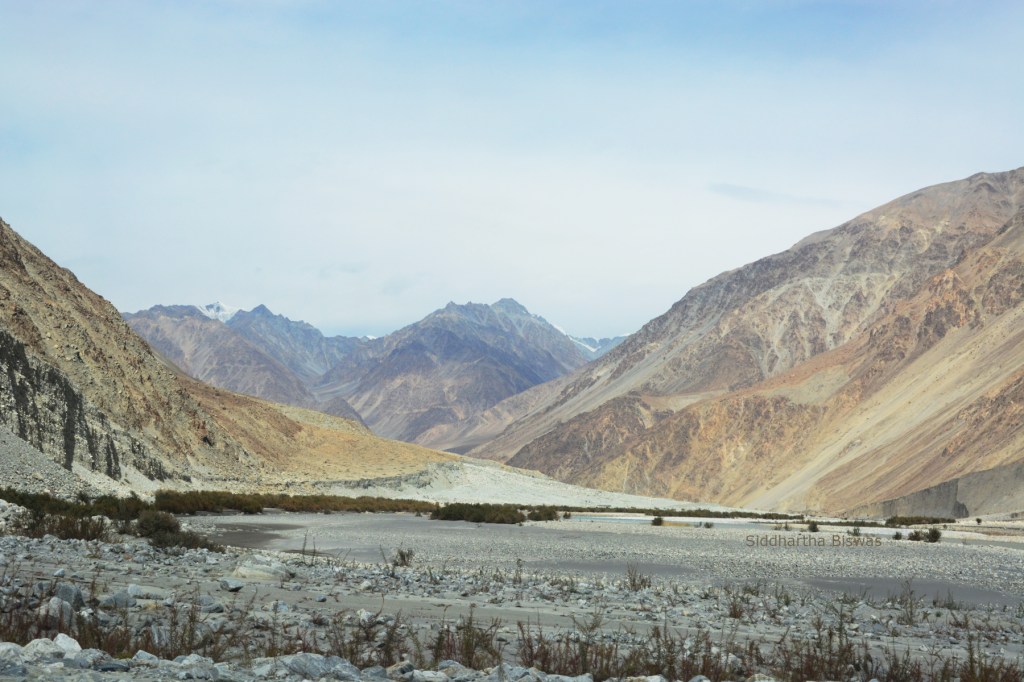
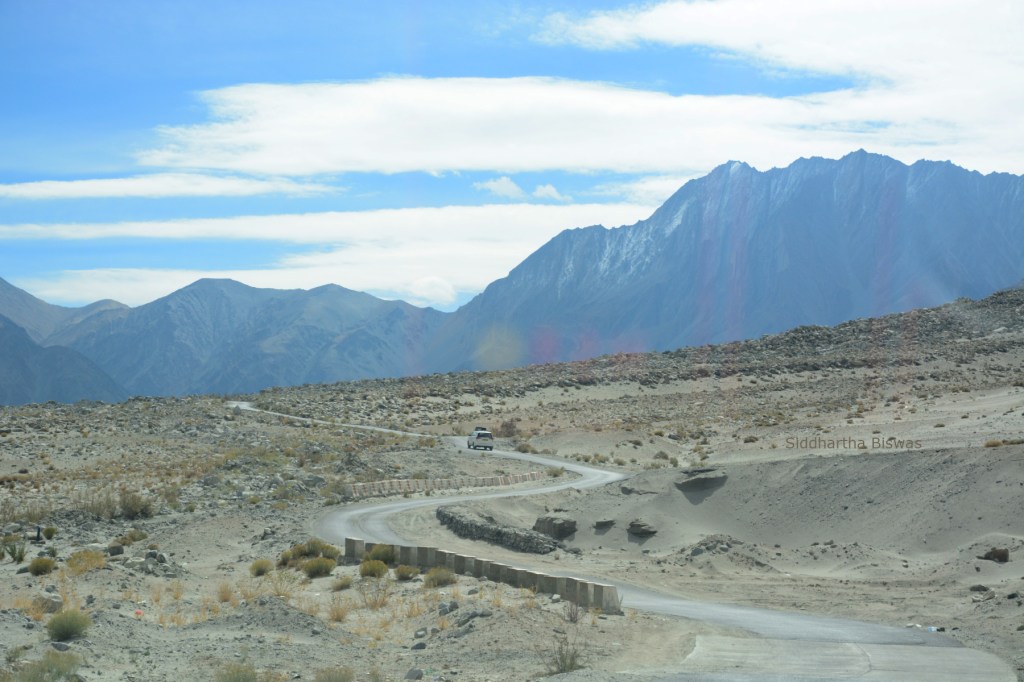
We left Shyok and then reached Tangtse via Durbik where we refuelled – both ourselves and the vehicle.

Then we reached the Pangong wetlands. Quite disappointingly, the wildlife this area usually boasts of was all but vanished.
But this disappointment disappeared at the first glimpse of the blue.

I know of many blues, but I guess there should be a separate Pangong Blue. As we came nearer, we were thankful for choosing this season. There were many settlements next to this awe-inspiring lake. Most of the tents and cottages were being dismantled as the season was ending. The number of these establishments betrayed the crowds that would pollute these pristine shores. The film about idiots quite naturally inspires hordes of them to come and indulge in callous cacophony all through summer. The autumn of the season sees far less tourists, and far greater tranquillity.

There are four villages next to Pangong – Spangmik, Man, Merak and Kakstet. One can stay in any of these places.

Even before Spangmik there is a settlement called Lukung and these days it is also offering accommodation.
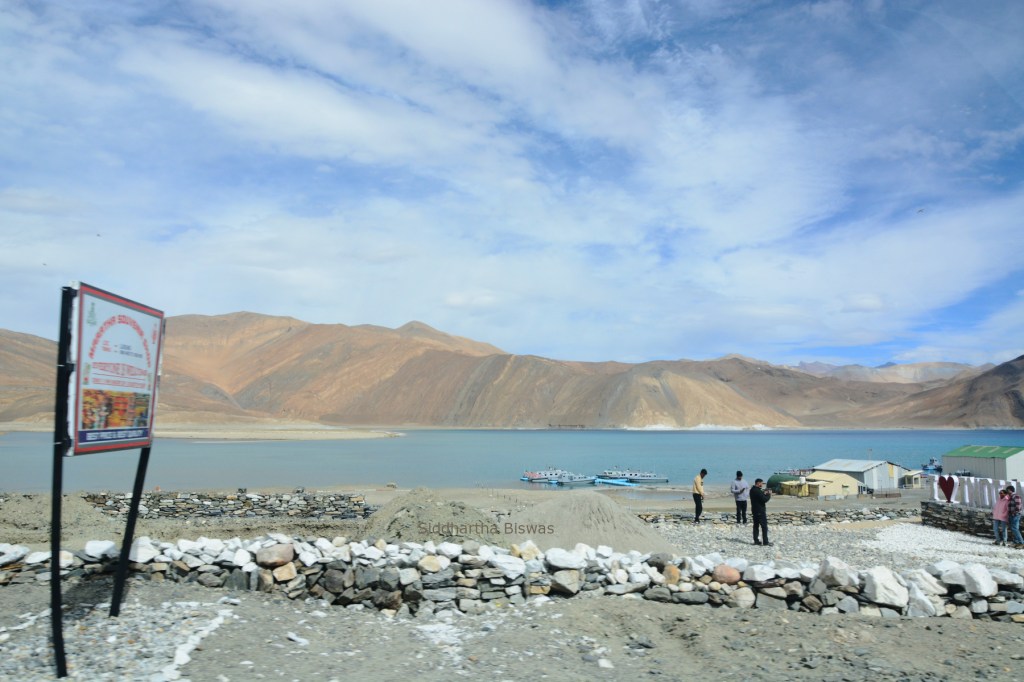
But the view is limited as it is one end of the lake. The drive by the lake is also something to write home about.


We decided to stay at the second village – Man. It was delightfully empty. And thanks to this emptiness, we had a strange experience. We zeroed in on a place that was located on an elevated nook. The view of the lake was brilliant.

The reception was open, but no one was there. We waited for half an hour and then went to a set of cottages right on the shore. They greeted us warmly with a promise of ultimate luxury and hefty discounts. The greeting was a tad too warm, which inspired me to enquire what the actual tariff was. It was about a third of our entire budget. Thus informed, we made a hasty retreat and immediately found accommodation in a set of cottages just at the back for a very reasonable price. [Here is the video.] A few very young men were running the place, and they took very good care of us. And sitting in front of the cottage (then behind the plexiglass window as the wind became more and more cruel) we enjoyed the passage of the day as reflected on the blueness of the lake, and in the shifting of shadows of a flotilla of clouds.

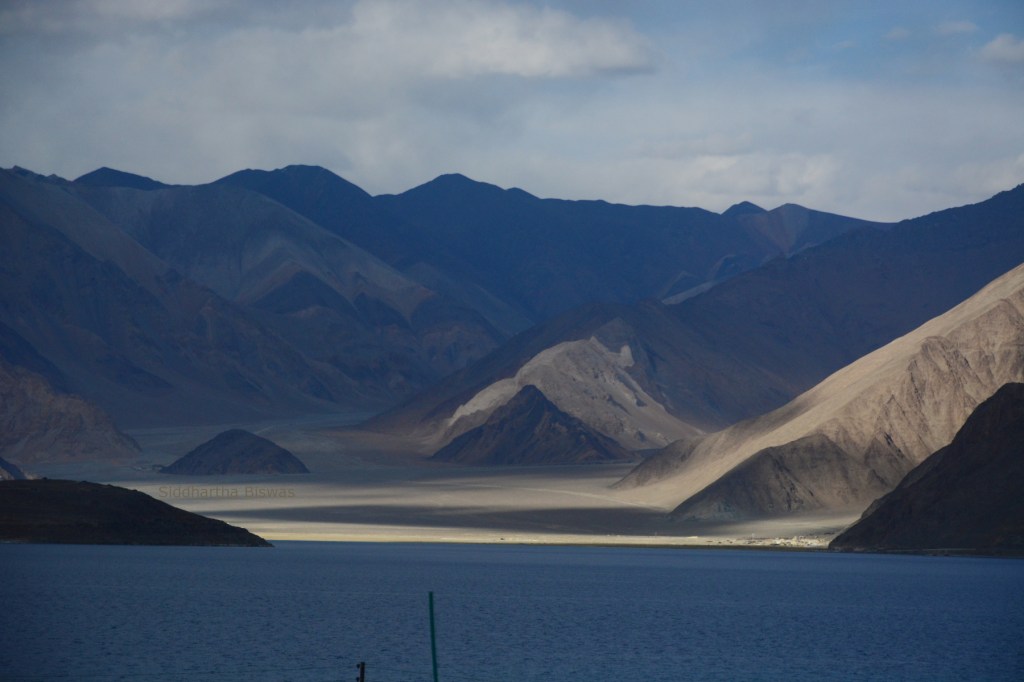
The night wasn’t nice. It was the two hot water bags that the kids provided (without us asking) that saved the night. In the brilliant morning that we woke up to, we saw the skylight was covered in light snow. After a hearty breakfast we started on the next bit of road that awaited us.
We have had many fantastic road journeys. I had always thought that the one from Keylong to Kaza via Chandra Taal and Kunzum La will always be on the top of the list. Of course, Baralacha La is another story. I never imagined that such a close challenge as provided by this journey was quite possible. And I am not talking about the brilliant ride next to the incredible Pangong Tso. Until it veers away into China, the little of the lake that India has will keep you mesmerized. We had a distant companion on the lake – an Indian Army boat travelled with us for a while (the white wake that can be seen in the next photograph).
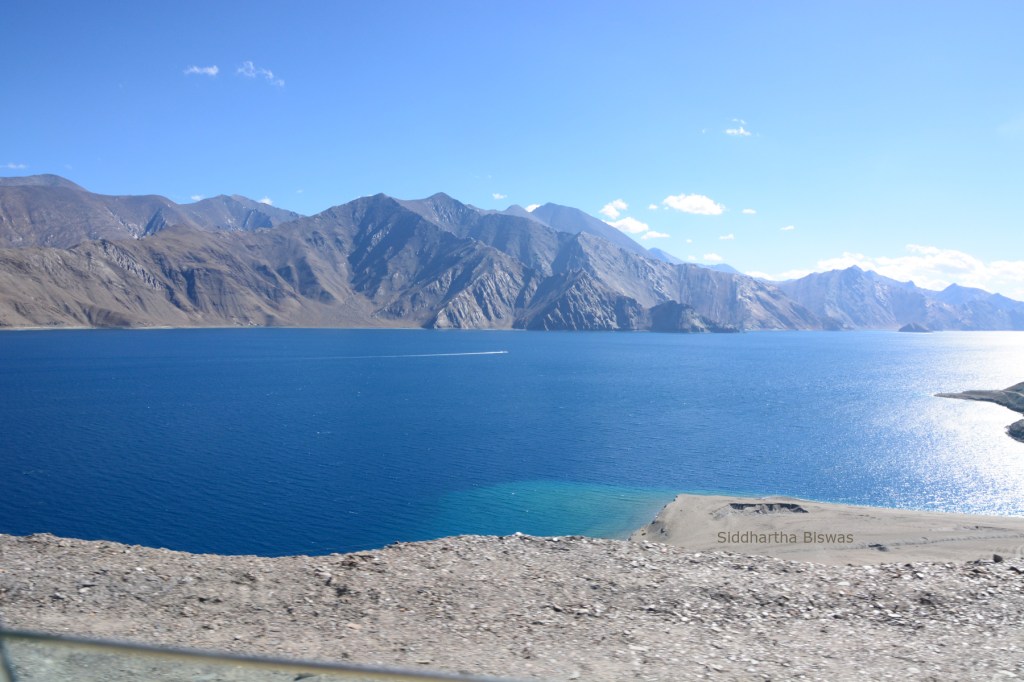


The variations in colour, the peaks that keep peeking (especially Kangju Kangri), and the crisp morning were truly beautiful. If you are interested, here is a 12 minute video of the journey next to the lake.
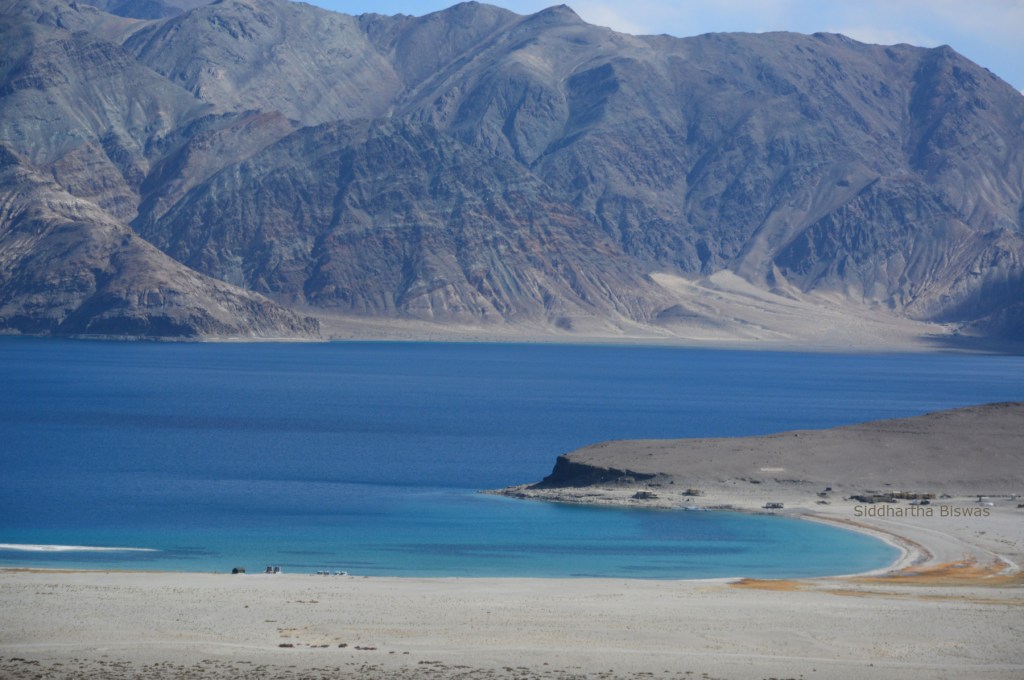

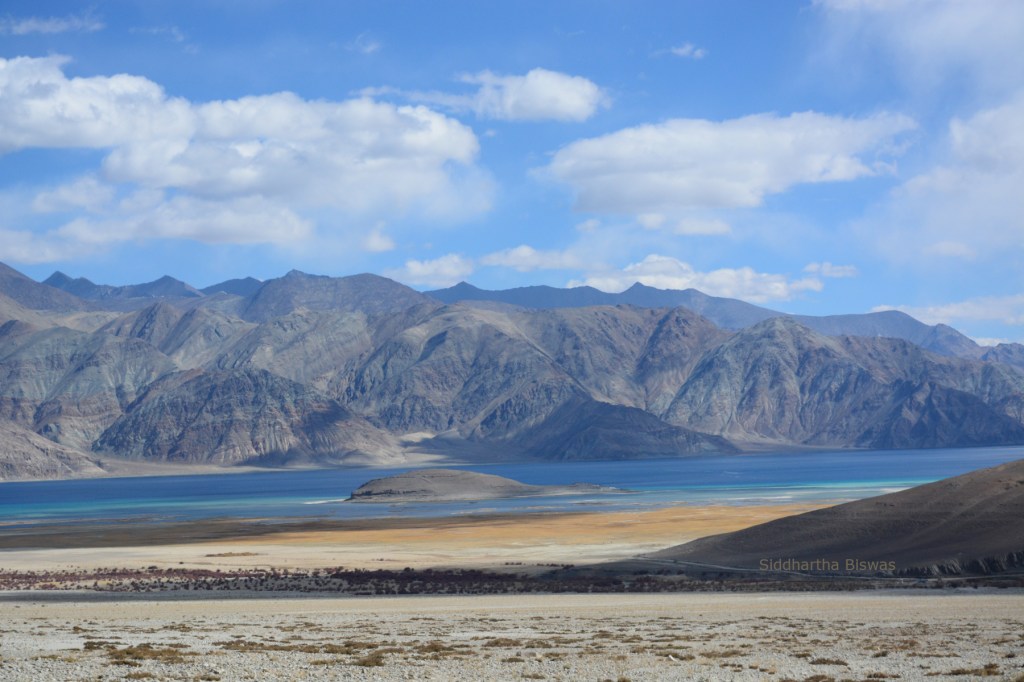
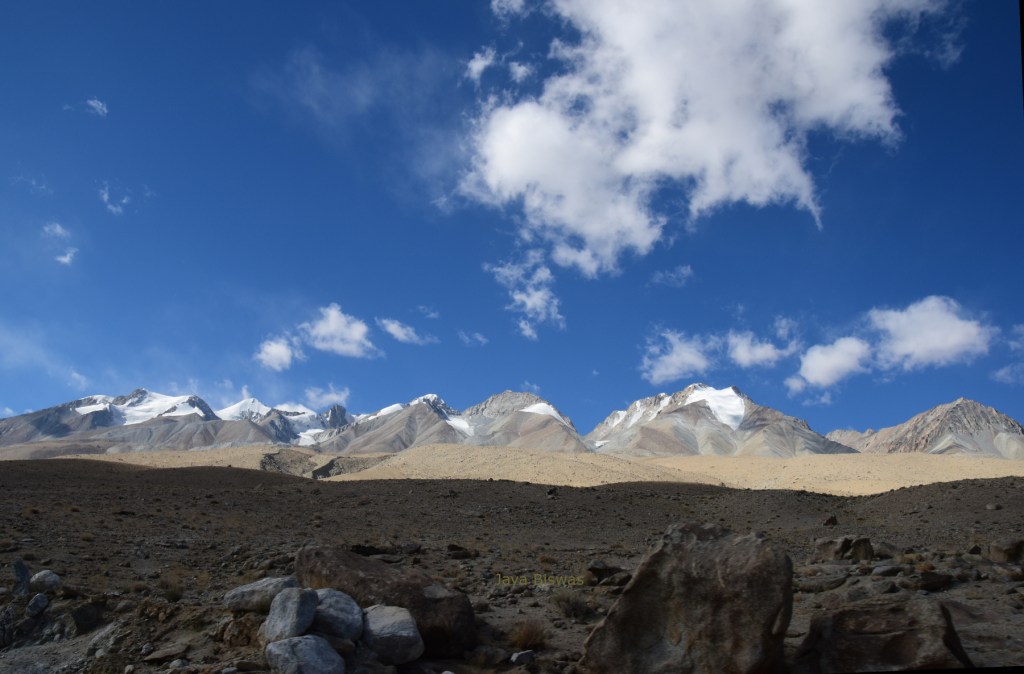
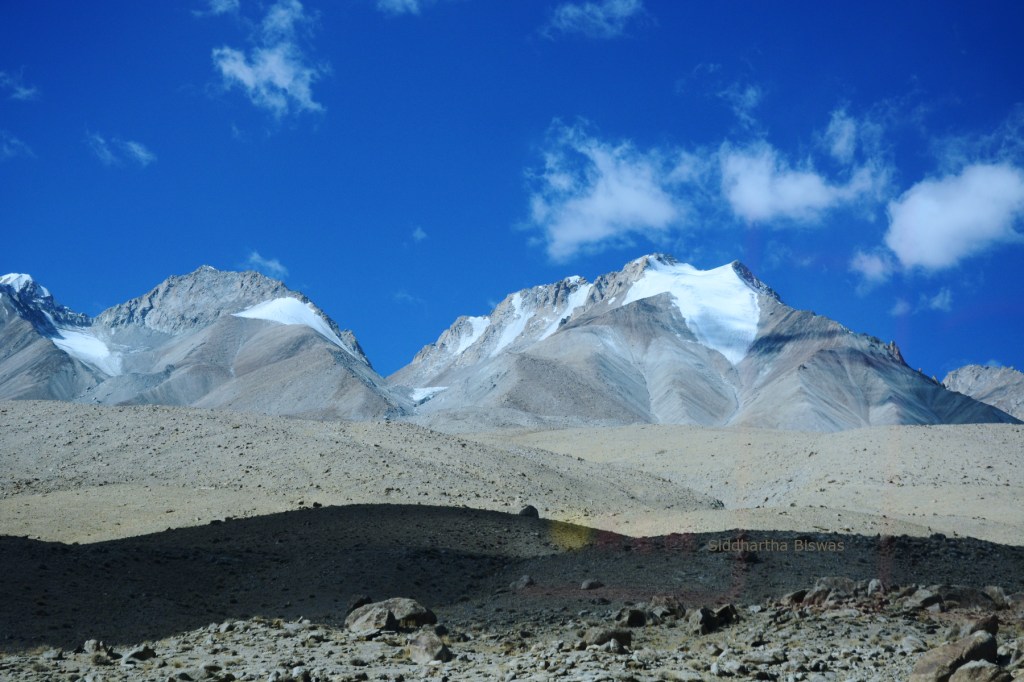
But after we left Pangong, we had to go through a few kilometres of rough riverbed.

In summer this bit is often underwater and it requires serious navigation skills until the driver reaches the metalled road. And when you reach Chushul for lunch in the one and only restaurant – at least at that very late moment of the season – you are happy to have left the off-roading bit. In Chushul you can decide whether to do towards Hanle or towards Himachal via Kaksang, Puga and Tso Kar. In this trip our plan was the first. For a long while we found a lot of fauna among the meagre flora.
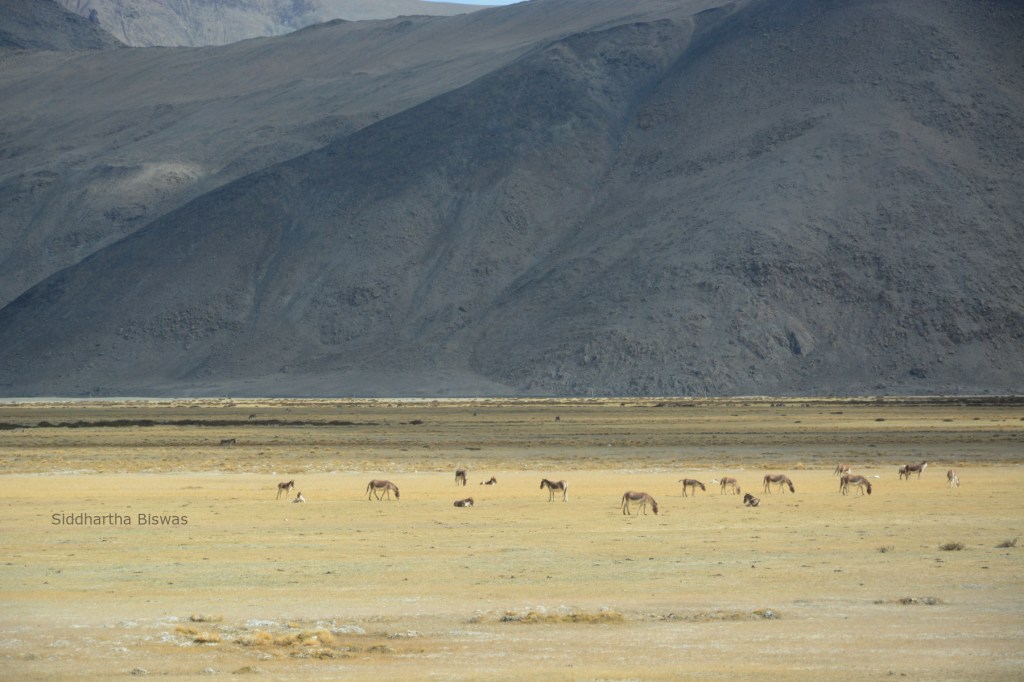

And the sky became clouded with drama.
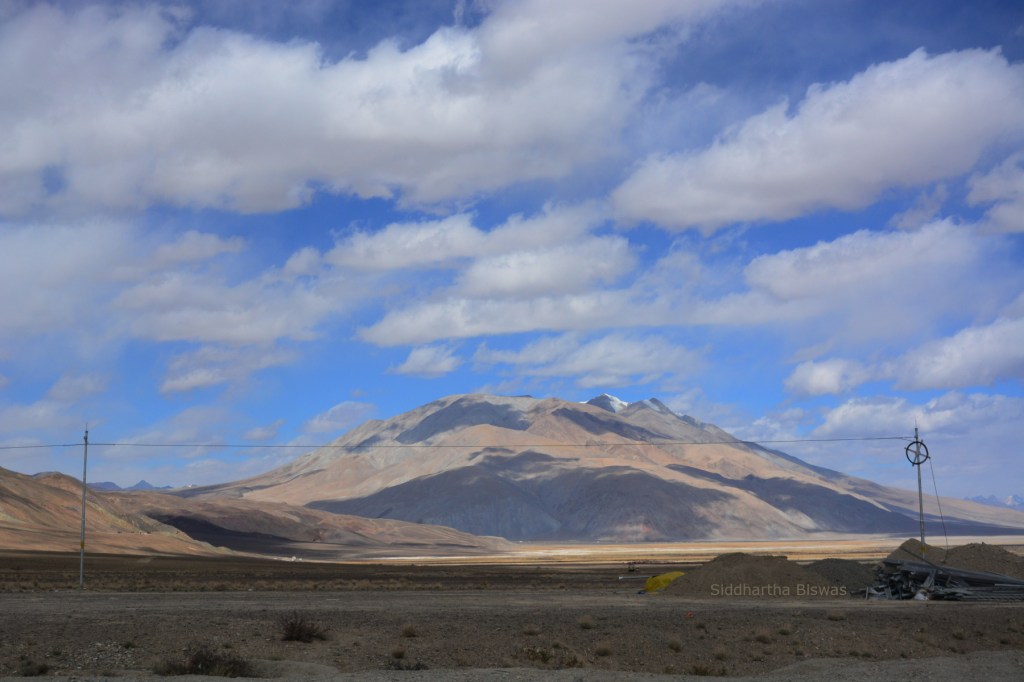
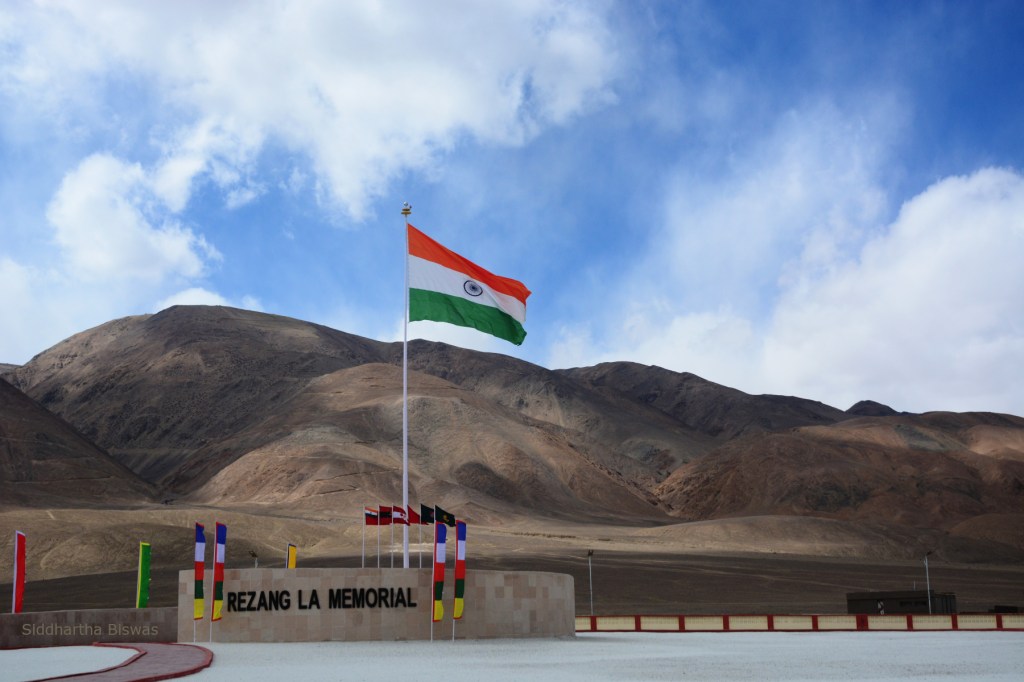
After Chushul comes Rezang La. This was the site of one of the fiercest battles fought during the Indo-China war. One hundred and twenty of our finest defended the area and inflicted heavy damage on the People’s Liberation Army. There is a film now celebrating that bit of history. Though the post was lost then, but it was a moral victory for India. Major Shaitan Singh was awarded the Param Vir Chakra posthumously. Details of this battle can be found here. The memorial is brilliant as it actually looks directly into unfriendly territory. We could see Chinese cars moving on a Chinese hill.

The next hill was ours, and to our great disappointment, we were told that there is a beautiful lake on top of that hill. But for strategic reasons civilians weren’t allowed to go there. This meant that the lake would be unsullied in the truest sense of the word. The quiet dignity of the memorial, the harsh landscape, and the fortitude of our boys – will make you ruminate on how the forces stand as the wall that protects the nation.

We carried this feeling as we left the memorial. After a while we met a lone sentry in the middle of a vast uninhabited stretch. He checked our identification documents and then came to us. He was a Bengali. We generally avoid the typical Bengali crowd. But this was a moment of pride. The boy, in his country’s service, will stay all alone here for six months. There may or may not be antagonistic movement, but the temperature and the wind in this wide-open region are enough to kill. I did not take a photo with him. But for whatever it’s worth, my good wishes will always be with him.
A few minutes from him we came across a landscape that is beyond belief. Around Thangra we reunited with the Indus.

It seemed all the hills around us were made of sand! There were sandstorms, sand-devils and miles of sand valley that went from one mountain to the other.


Quiet flows the Indus through it all. There were army camps here there and far. Their presence meant we were in strategically significant territory. But the sand got into everything – especially when I got too excited and rolled down the car window and then we both got out!

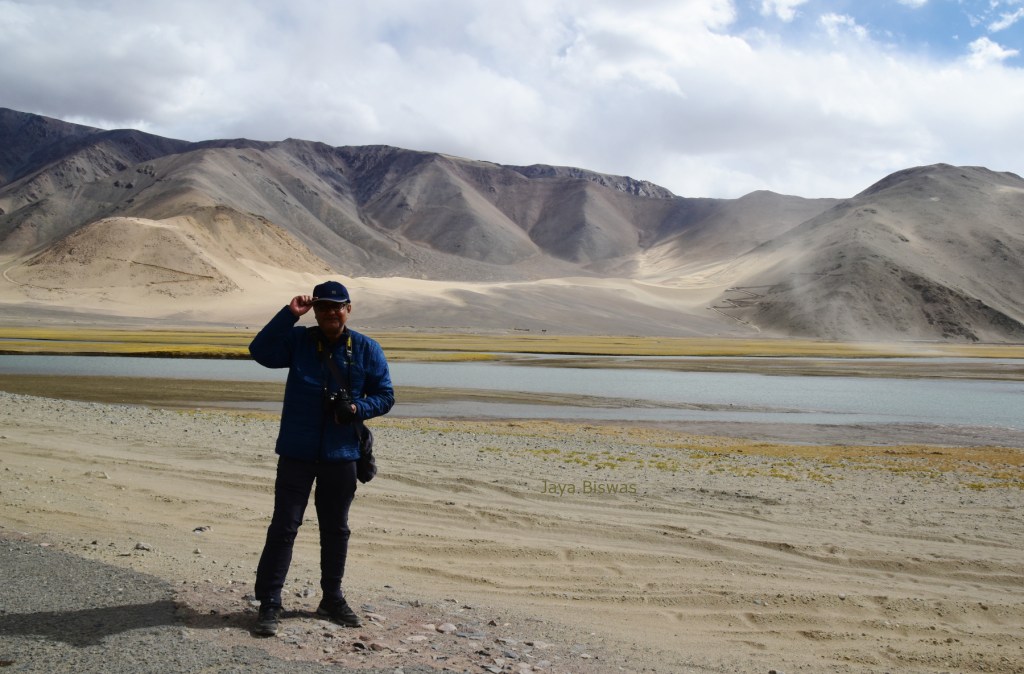
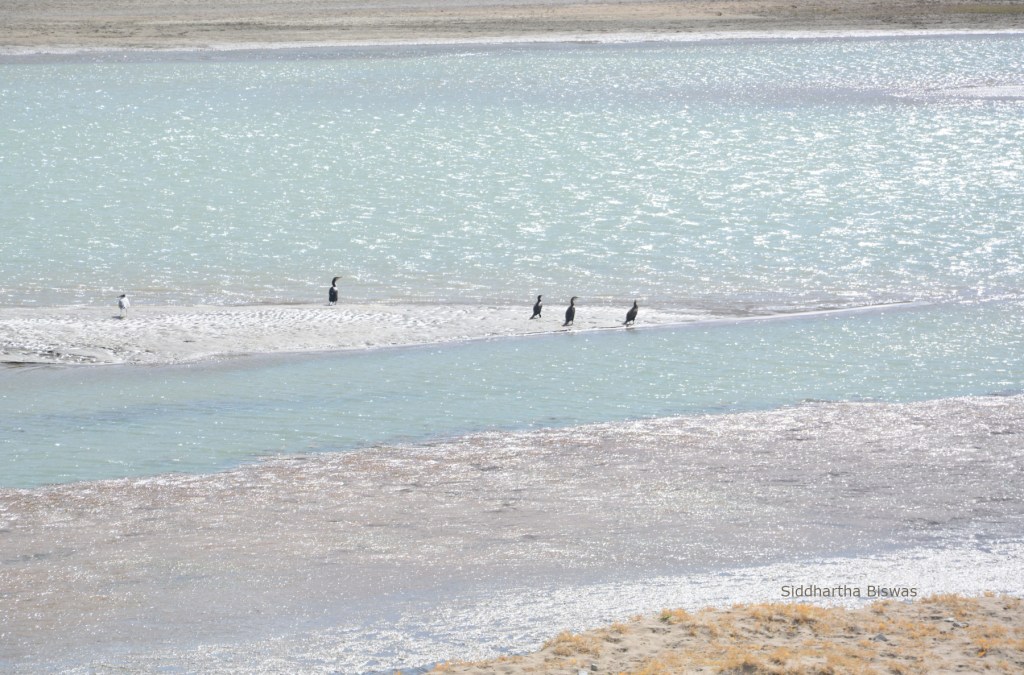
I was so awestruck, all I wanted was to soak it in. This terrain lasted till a few miles after Loma, a point from which the road bifurcates. One of the roads takes you to Hanle, the other to Nyoma and Tso Moriri and Puga Valley. This is a place where there is once again a small checkpost. Around Loma, we were welcomed by a host of birds and grazing animals. And from Loma we left the Indus and went towards Hanle.


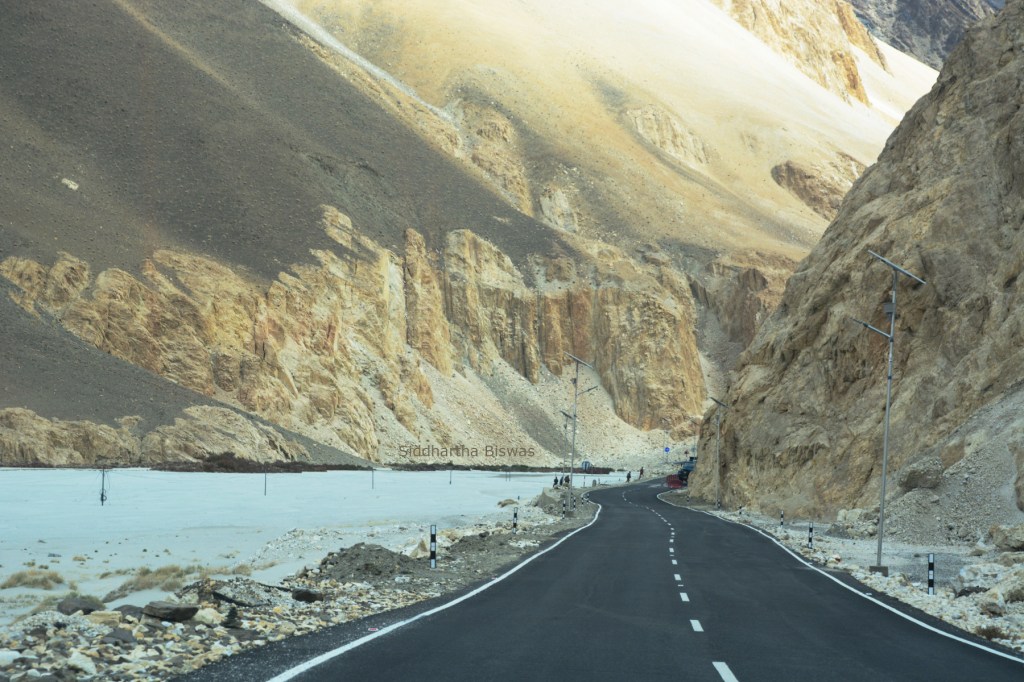
The road to Hanle once again took our breath away. The not-oft travelled road was simply magnificent. Thankfully the sky wasn’t clear. Small clouds, not far above our heads, provided a play of light and shadow that was brilliantly dramatic.
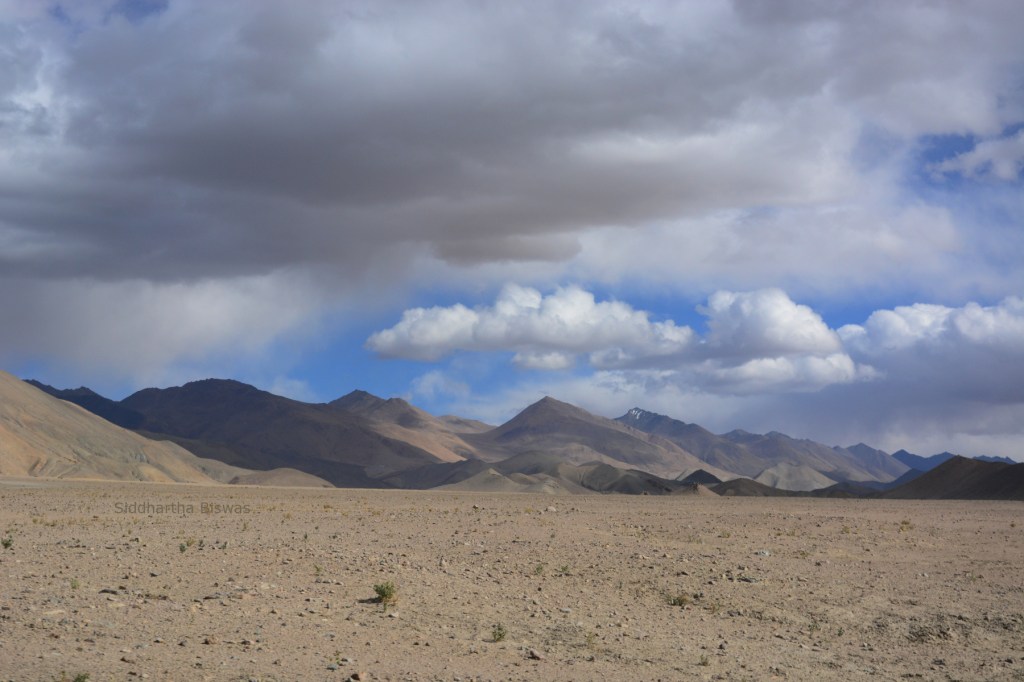

Adding to that was the roller-coaster nature of the road. It dipped and upped at whim.

Our witty driver Dorje had promised a fantastic ride and he was delighted seeing how delightfully we enjoyed every moment. There were hundreds of curiously identical wild donkeys (Kiangs, which the locals call wild horses) around us. And occasional Yaks and larger birds proved how unspoiled this place is. Soon we saw the Hanle Monastery appear against the sky and we realized we had reached the Hanle wetlands.
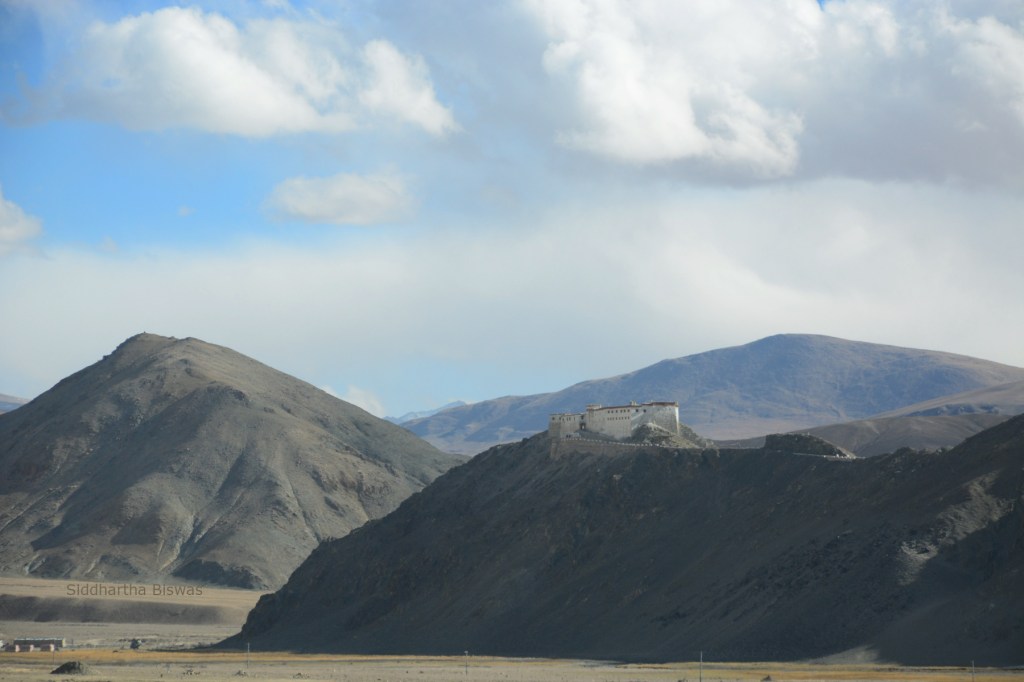
The Hanle story will soon follow.
RELEVANT INFORMATION
Hanle, via Pangong, is 360 kilometers from Nubra. It is 310 kilometers from Leh.
There is hardly any regular public transport.
There are good places to stay next to Pangong (high luxury is rare).
In season Pangong is extremely crowded.
The weather is unpredictable these days, but May to August is usually good.
One can stay at Leh and visit Pangong if one so wishes. But one needs to stay at Hanle as it cannot be visited as a day trip from Leh.
There are many checkposts on the way. Make sure you have the necessary permits.
Nearest town and airport is Leh.
The roads are generally great, but there are a few patches of natural damage.
Earlier Posts
1. Old Lucknow 2. Colonial Lucknow 3. Going Downhill – Versey to Dentam 4. Going to Garhwal 5. The Walkers 6. Palamau 7. Rishikesh 8. Kolkata Kolkata 9. The Roar of the Clouds – Santiniketan 10. Of Pests and Men – Uttarey 11. Where Hikers Fear to Tread – Rudranath 12. Old Times 13. History in Ruins – Pushpagiri 14. Once There was a Heaven 15. Serenity 16. Pilgrim’s Progress – Kedarnath 17. Unfinished – Gaumukh 18. Ghatshila 19. Nothing Important 20. Manu’s Alaya – Manali 21. Santiniketan 22. Little Lhasa – Dharamshala 23. From Varuna to Assi – Varanasi 24. Tunganath 25. Transitory Blues 26. Gurudongmar 27. The Beginning 28. Yumesamdong 29. Bangali in Bangkok 30. Mukutmanipur 31. Rasvanti 32. The Old Town and the Sea 33. Budapest 34. The Last Post of 2019 35. Travel Travails 36. Cluj-Napoça 37. Presenting the Past 38. Far From the Urban Crowd 39. Silent Night Sleepless Night 40. Norwich 41. Photo Essay – The Road 42. Photo Story – The Days of the Goddess 43. Badrinath 44. Monumental Mistakes 45. Odyssey Now 46. To the Mountains 47. Keylong 48. Where Moon River is Born 49. Kaza 50. Through the Valley of Spiti 51. Kalpa 52. Sarahan 53. Un-happy Journey (Meghalaya) 54. Shimla 55. Bhalukpong 56. Rissia Nature Camp – Kuldiha Forest 57. Arunachal Diaries – Dirang 58. Arunachal Diaries – Sela to Jong 59. Quest for Quietness – Barot 60. Chindi to Chail 61. Baranti 62. Clouds of Tawang 63. Kumaon Diaries – Binsar 64. Ladakh Diaries – Siachen 65. The Aran Islands – Inishmaan 66. Ladakh Diaries – Hunder and Turtuk
 Peregrine's Progress