
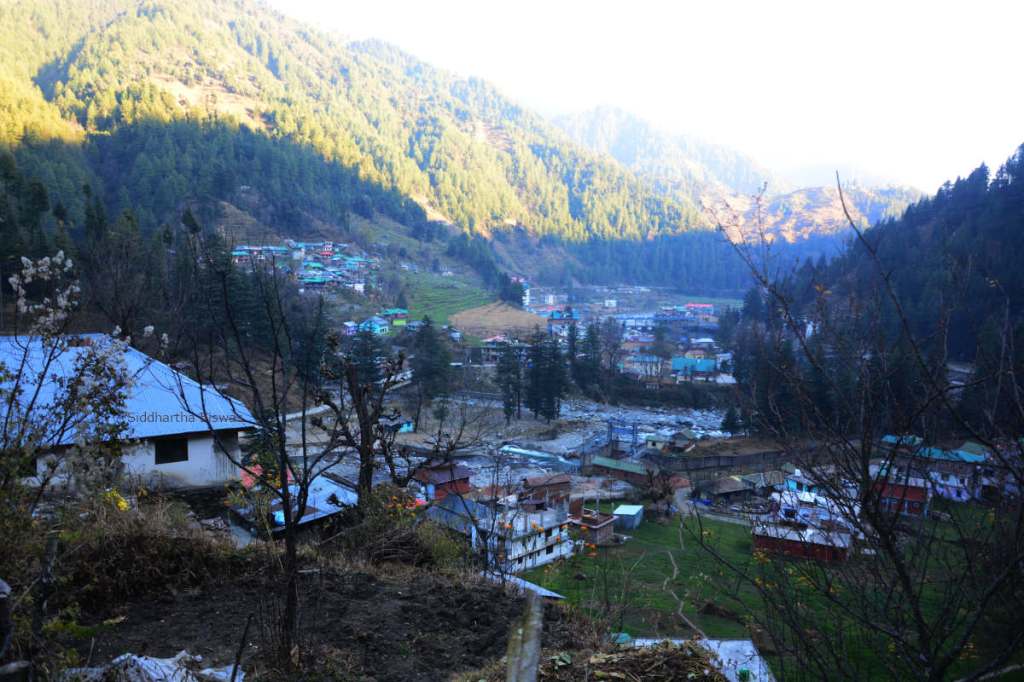
The soft murmur of a sleepy mountain river is one of the most soothing sounds in the world. Combine that with the mellow autumn morning light, and you have a feeling that all may, after all, be alright. It may not always be alright, but at least there is a possibility of alrightness in moments. This particular morning had that brilliant soft light of rightness enveloping all the green mountains that enclose the valley.
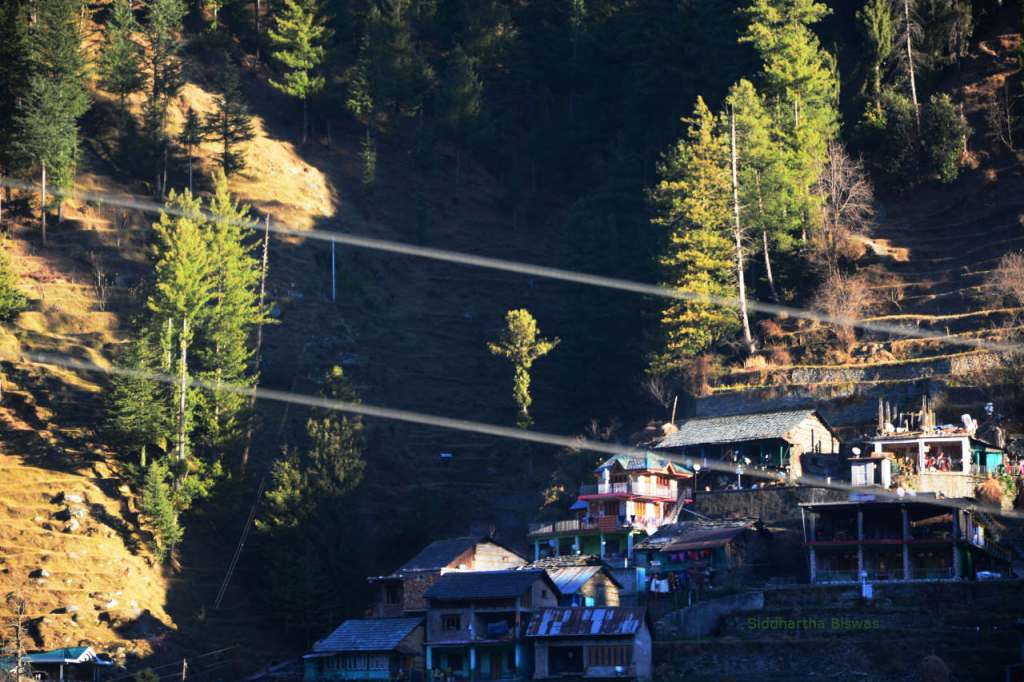
After a hectic day’s travel preceding us, through hectic highways that harm the hills to no end, this was the perfect awakening. Local life slowly getting into the daily with the market and the bus stand on the other side of the river waking up, gave us that old cozy feeling of home. Home is not always at home. Home is being at home in places that allow you to be so. The homely is still there, in nooks and corners of the world, and in nooks and corners of the self. One can find the much coveted ‘idyll’ anywhere, not only in storybook picturesque places, but places that offer peace. It is true that there is no longer the old ideally idyllic village life, but progress is required for all, and one person’s idyll should not become impediment for the quality of life of the villages.
The metal bridge in front of us was definitely less photogenic than the wooden ones of yore, but it is now a part of rural life. And it did give us ample opportunity to stand in the middle and soak it all in.

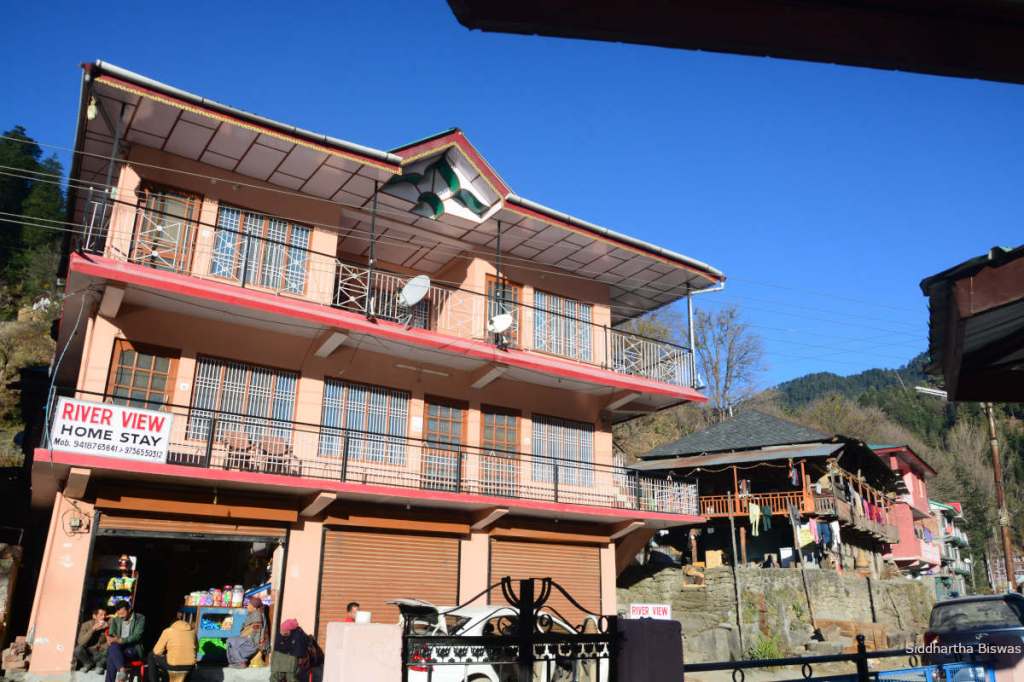
The Guest House / Homestay we were staying in was a true homestay. We had reached the small settlement in late afternoon. After reaching the place, thankfully located quite far from the rather clumsy barrage, we had had a bit of difficulty locating the owners.

There was a shop with no one guarding it. I called the contact person and he told us to go upstairs, to the second floor, and take whichever room we liked. All the rooms were open. Our typical urban sense of propriety (and property I guess) did not allow us to do so. Therefore we waited. In about ten minutes a man came running (literally) and asked why we are still outside. He was upset that we were waiting outside in the cold; and cold it was. He took our luggage upstairs, we chose the room in the middle to get away from the wind, and he gave us lovely smoking hot tea. Then the lady of the house came. She was busy in the fields. She was in charge as her husband (whom we had called) was in the city undergoing medical treatment. Her son was looking after his father; therefore, the fields and the homestay was hers to manage. We were supposed to call her Bhabiji, and she told us that we should feel at home. We did. She told us that she will feed us all the breakfasts and dinners we could wish to eat, but no lunch, as that was time for the fields.
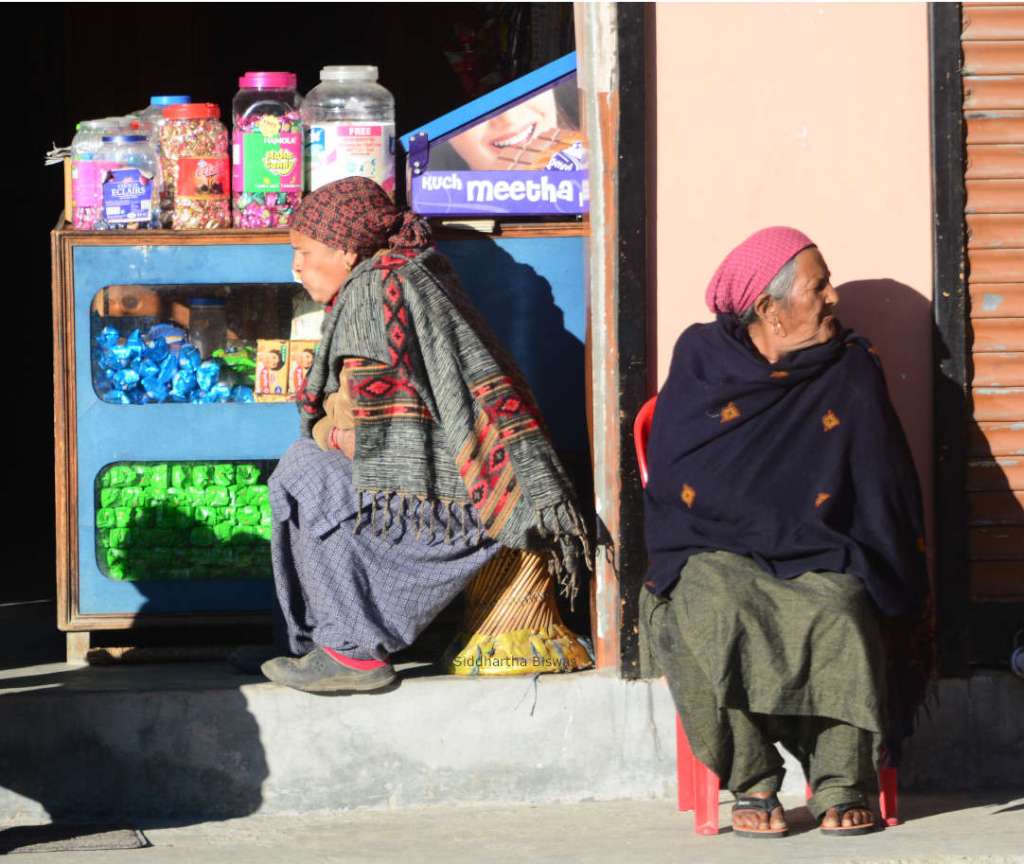
This suited us fine. We were to spend that and the following night, after which we would continue in our northward journey. So the question was of one lunch and we always prefer lunch on the road. The first night was exquisitely cold. The second one gave stiff competition. The room was cozy, but as this wasn’t a proper hotel, the cold seeped in at its will. However, warm running water and plenty of blankets helped a lot. The morning that I began with began with piping hot alu ke paranthe and toast (we are bread people, bread is winner in our home) sitting next to the river. A cup of welcome coffee came soon afterwards.

Then we went towards what Google Map called Bara Garan, which locals called Bare Gaon, a village that can be reached via a beautiful picturesque road.
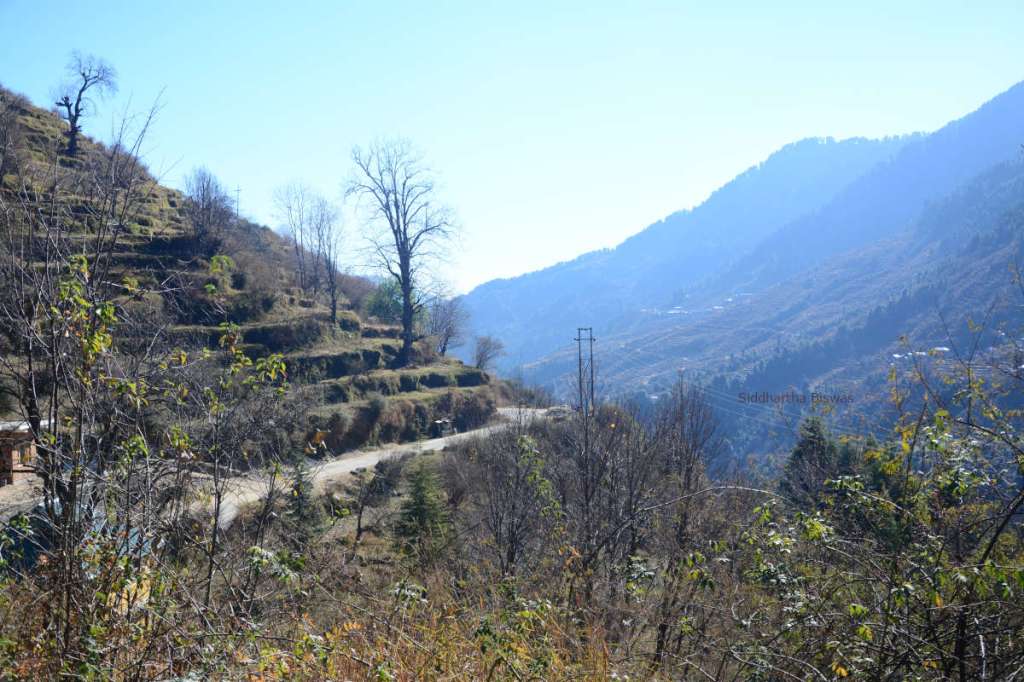
We stopped on the way to visit a village temple which looked just divine. The village high up from the road was called Sarla.

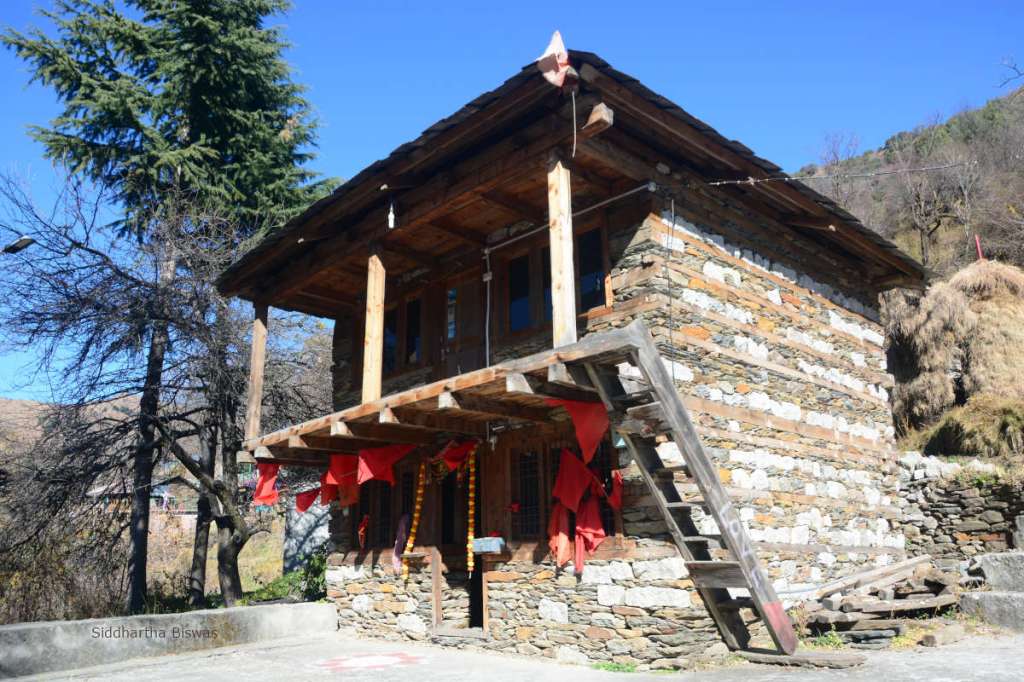
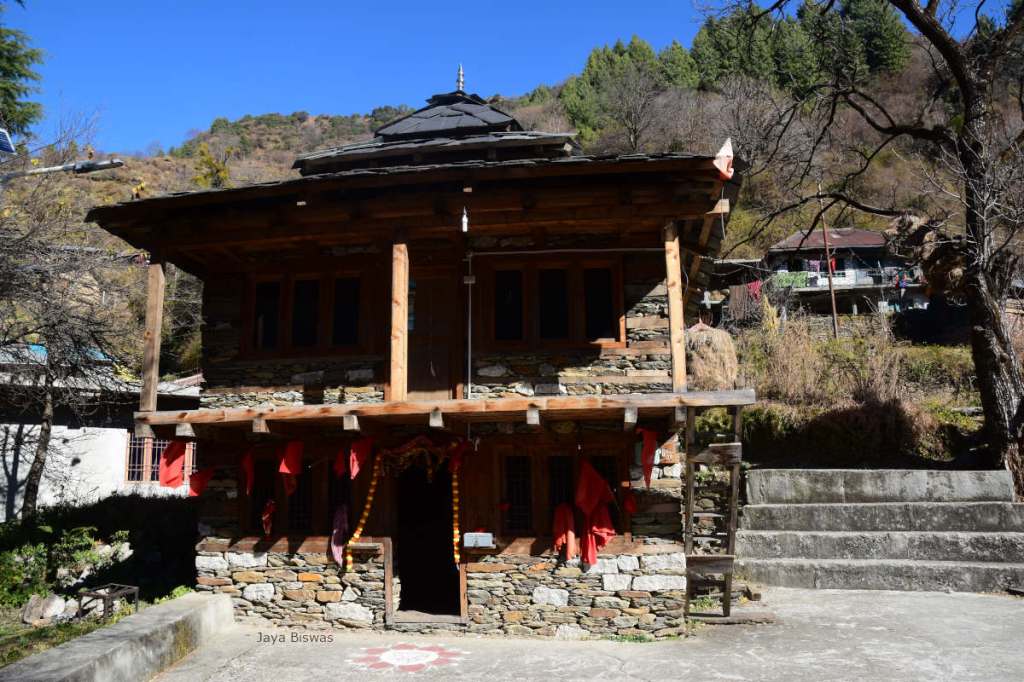
Bara Garan proved to be one of those destinations in which the journey is truly rewarding and one that ends at a lovely colourful village.


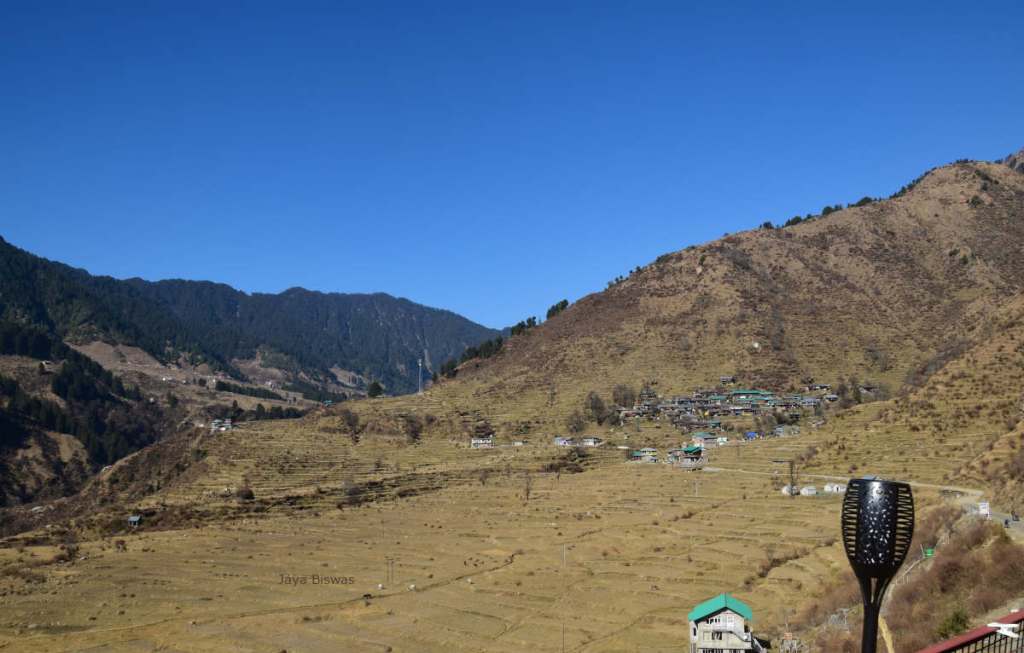


But on our way back we discovered an eatery accompanying a homestay. I would suggest this place to anyone who loves lonely places without the noise that always accompanies people. Quietness can never be overrated. And Dhauladhar Woodhouse has understood it quite well.

The owners fed us a great lunch, with parathas and vegetables. They showed us around their small property. I don’t know whether we’ll go back that way again or not, but I really would love to stay at that pleasant and welcoming place.


Our drive back to the homestay was peacefully uneventful. We got off on the other side, crossed the bridge and walked around. We walked around lazily.

We visited the temples we could see. The first one had tidy climb, and we found it closed.

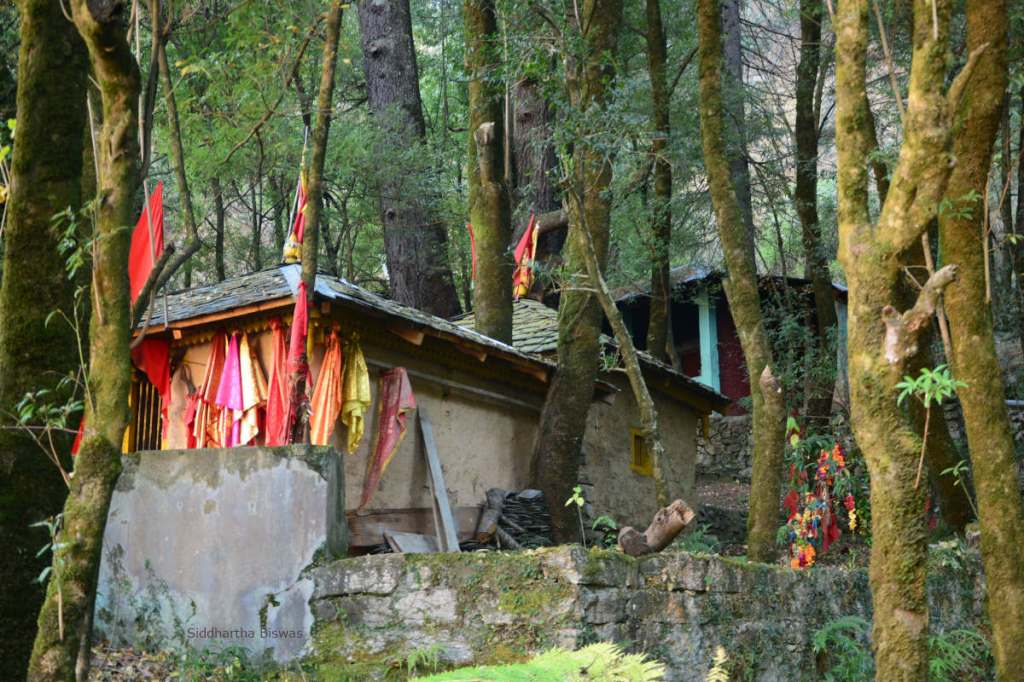
It didn’t really matter since this was a temple in which women could not enter. Such a rule, quite rare in the country, would have made me stay outside as well.

The other one was being constructed, and the presence of a rather unfriendly, though chained, dog made the visit hurried. We did not even try to photograph that dog.
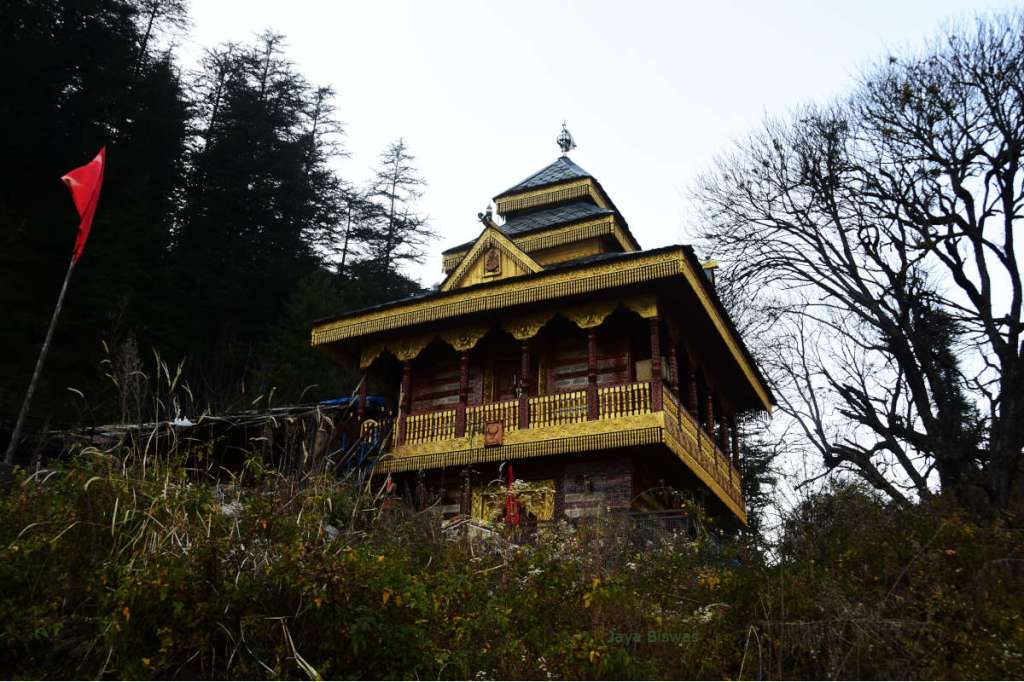
This temple was situated next to the upper portion of the settlement.

We climbed down, spent some time next to the river and then went back for that brilliant tea. The following night was calm. And when our hostess told us to come during summer, when lots of people converge here for a host of activities, we knew we had come at the right time. Dashera is not season in these parts. But for the likes of us, Barot is best enjoyed during the season of autumn when things are lonely and lovely.
The lighted balcony at night gave us the moment of memory that we often cherish. We stood for a longish while in that cold, keeping the river Uhl company. One of the dogs that had taken a fancy to us, had deposited itself on the couch there and was faintly snoring. The slice of sky in the valley was as quiet as we were. The stars were out, but seemed shy. Next morning would be all hustle bustle, we would leave for the next destination (not before another relaxed breakfast though), but this night gave us the opportunity to soak in the quietness of this quiet little valley. Barot may be full of activity in another season, but we were treated to that which we seek – the calm that is so elusive elsewhere.
Let me end with a quick and shaky video:
Relevant information
Barot is 65.2 km from Mandi, 191 km from Shimla, 229 km from Chandigarh
Barot is a valley, but can be quite cold as it is situated on the banks of Uhl River
Located in Himachal Pradesh
Limited accommodation, best to book earlier during peak season
Summer is the peak season
Altitude 6,001 ft
Famous for natural beauty and summer activities
Irregular public transport – best to have own / shared vehicle pre-arranged
Nearest airport – Bhuntar
Nearest railhead – Shimla / Chandigarh
Earlier Posts:
1. Old Lucknow 2. Colonial Lucknow 3. Going Downhill – Versey to Dentam 4. Going to Garhwal 5. The Walkers 6. Palamau 7. Rishikesh 8. Kolkata Kolkata 9. The Roar of the Clouds – Santiniketan 10. Of Pests and Men – Uttarey 11. Where Hikers Fear to Tread – Rudranath 12. Old Times 13. History in Ruins – Pushpagiri 14. Once There was a Heaven 15. Serenity 16. Pilgrim’s Progress – Kedarnath 17. Unfinished – Gaumukh 18. Ghatshila 19. Nothing Important 20. Manu’s Alaya – Manali 21. Santiniketan 22. Little Lhasa – Dharamshala 23. From Varuna to Assi – Varanasi 24. Tunganath 25. Transitory Blues 26. Gurudongmar 27. The Beginning 28. Yumesamdong 29. Bangali in Bangkok 30. Mukutmanipur 31. Rasvanti 32. The Old Town and the Sea 33. Budapest 34. The Last Post of 2019 35. Travel Travails 36. Cluj-Napoça 37. Presenting the Past 38. Far From the Urban Crowd 39. Silent Night Sleepless Night 40. Norwich 41. Photo Essay – The Road 42. Photo Story – The Days of the Goddess 43. Badrinath 44. Monumental Mistakes 45. Odyssey Now 46. To the Mountains 47. Keylong 48. Where Moon River is Born 49. Kaza 50. Through the Valley of Spiti 51. Kalpa 52. Sarahan 53. Un-happy Journey (Meghalaya) 54. Shimla 55. Bhalukpong 56. Rissia Nature Camp – Kuldiha Forest 57. Arunachal Diaries – Dirang 58. Arunachal Diaries – Sela to Jong
 Peregrine's Progress