
Wonder is an integral part of the Ladakh experience. Crossing the Zoji La, it starts. And it intensifies as you reach Khardung La. Khardung La may not be the highest altitude motorable road anymore (Umling La had taken that place, and now Mig La has turned Umling La a close second) but it is still a marvel.
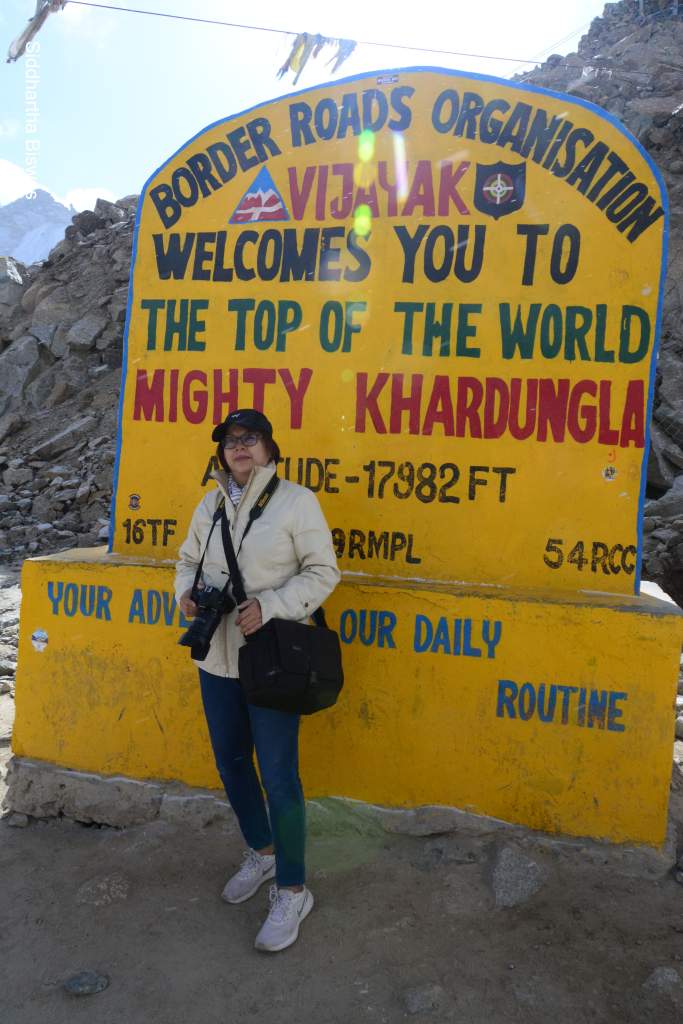
And right afterwards the mesmerizing mountains emerge. And just as you enter Nubra Valley, the inexplicable white sands and the famed dunes remained with us for a while.

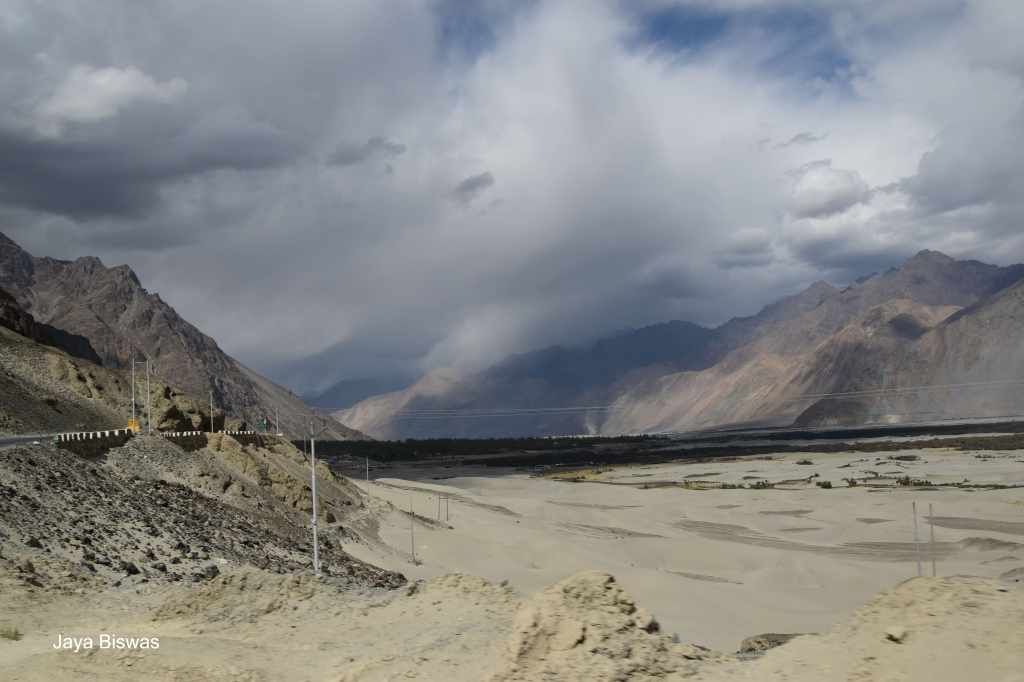
Then the terrain started to change. Till the small little village right after Balti Café, we found an amazing variety in the geo-physical appearance of this remote corner of our country. The military base, the non-civilian airstrip at Thoise, and the occasionally visible bunkers (along with far greater number of invisible ones) asserted how special this part of our world is.

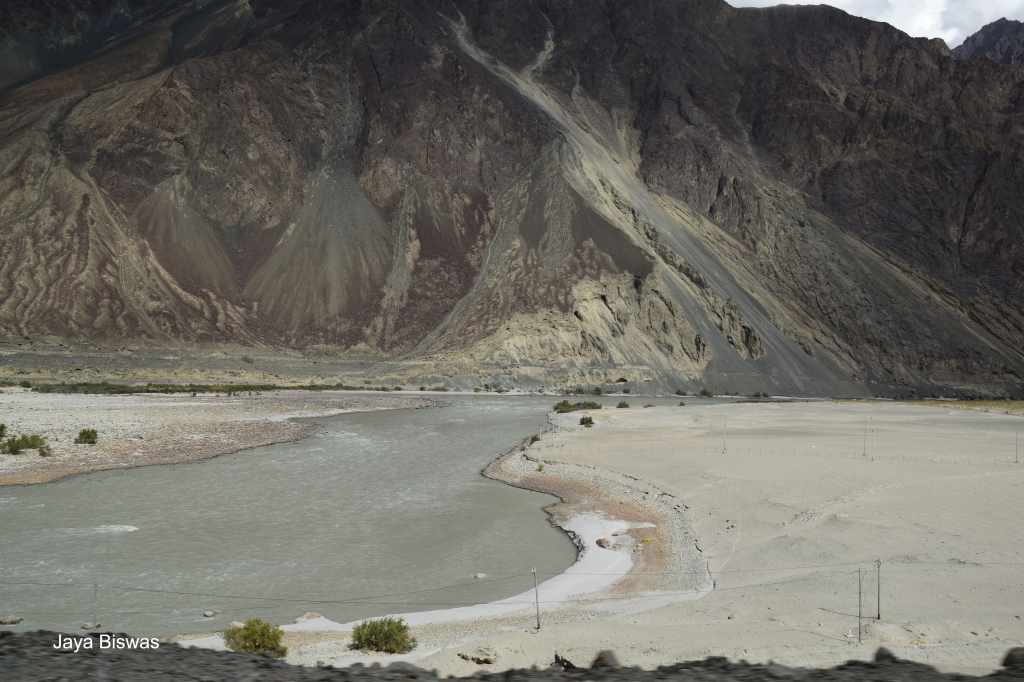
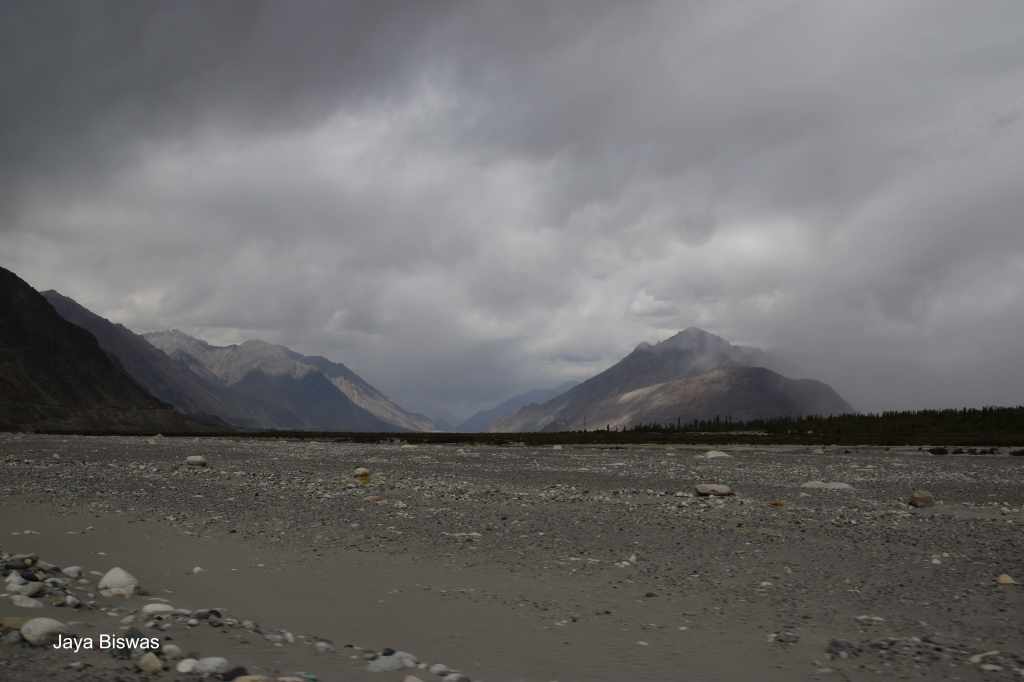
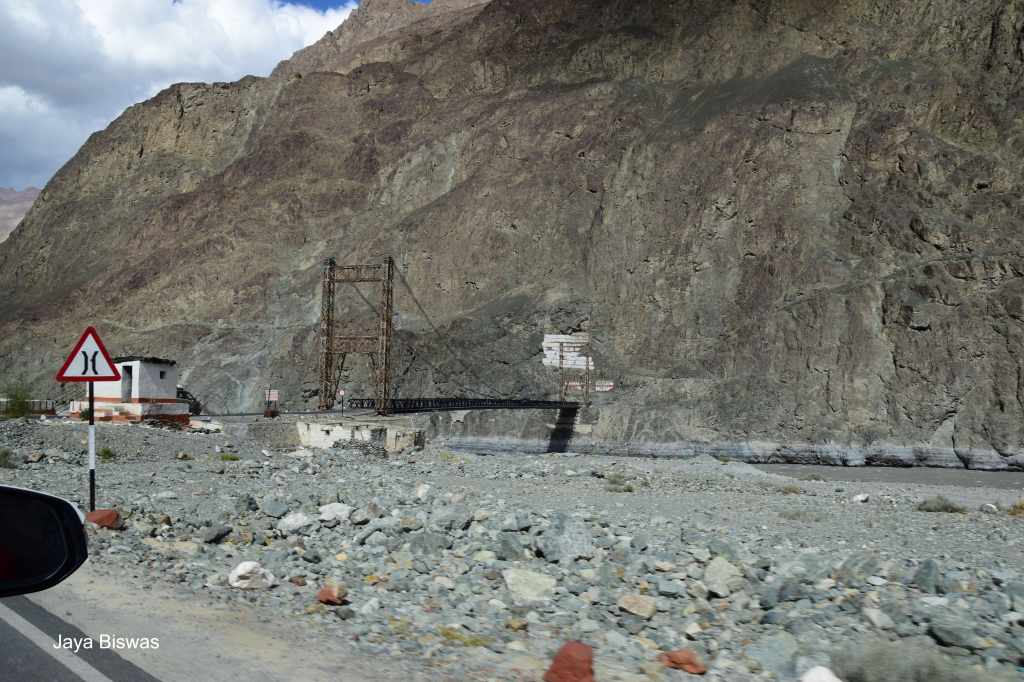

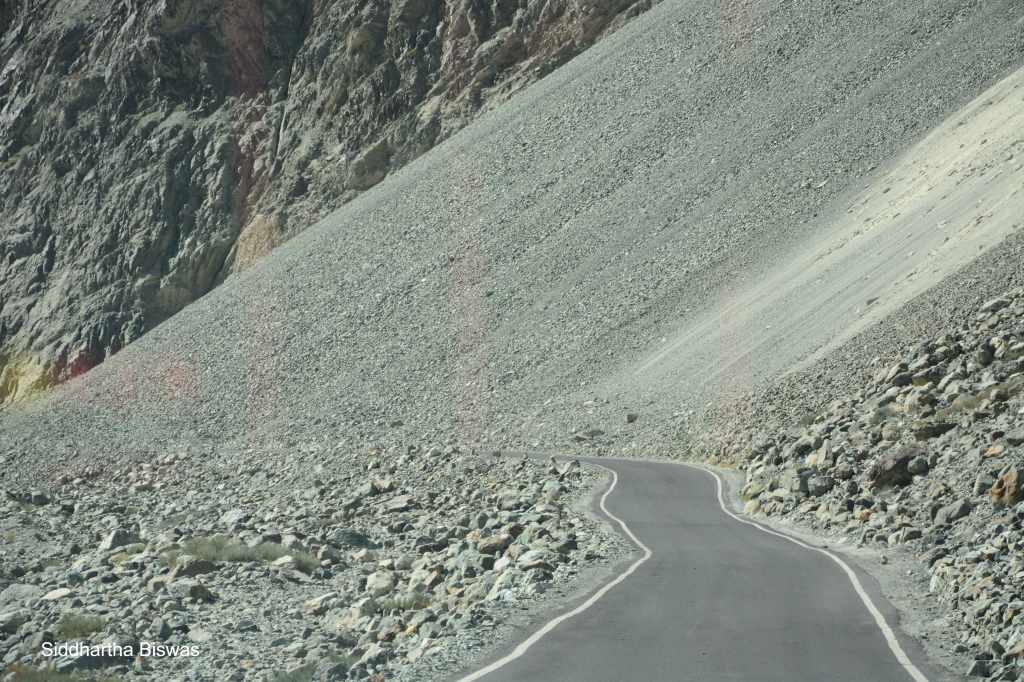

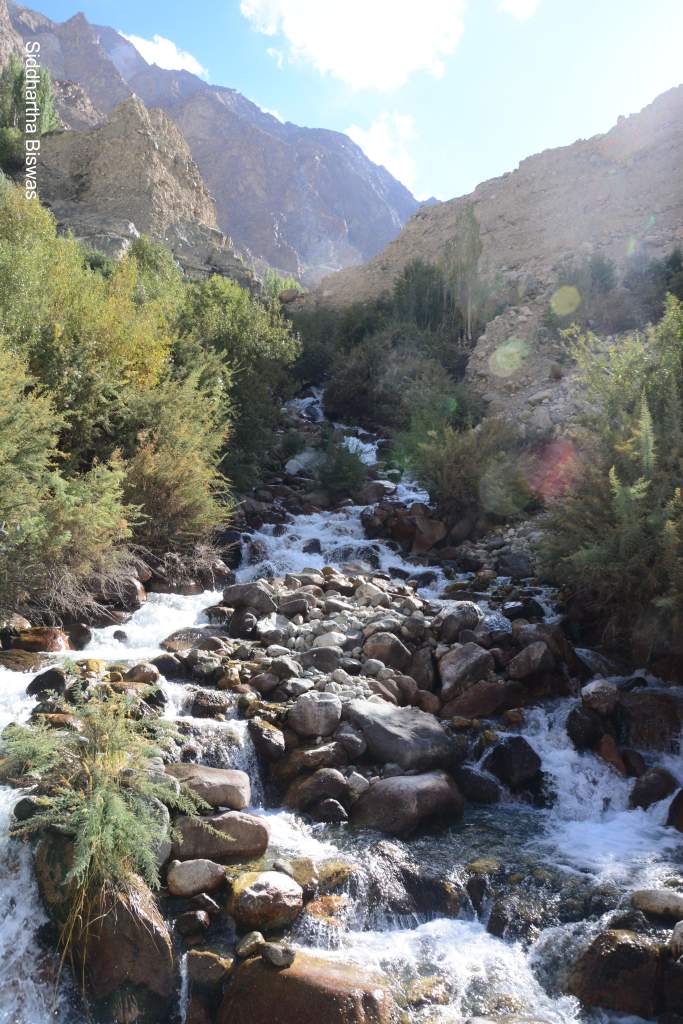

We had spent a few nights at Leh, but the Ladakh adventure started here. Quite surprisingly, the usual touristy route reaches Nubra Valley and then turns back. Very few come this way, even though it is only a few hours. As a matter of fact, very few cross the river and go towards Siachen base camp, a journey that gives you wonderful vistas and vibes (my post can be seen here).
People throng the Sand Dunes of Nubra which are located near the confluence of Shyok and Nubra rivers. Shyok originates in China, from a glacier called Rimo Kangri in the Karakoram range and Nubra comes from the Siachen Glacier (locals occasionally call it Siachen river) and they merge to become Shyok and flow to westward via Turtuk and Thang villages. It finally meets the Indus in Pakistan. This river has a very curious path.
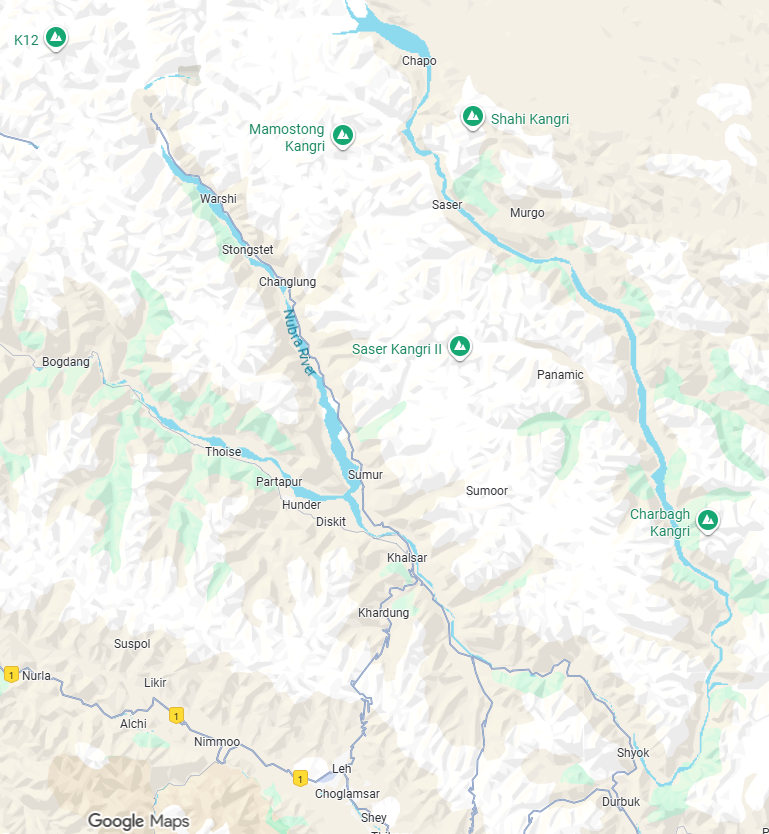
Thang is the final village at that location and you can see the wire fencing separating the two neighbours. Signposts are there to tell you that you are now under “enemy” surveillance.

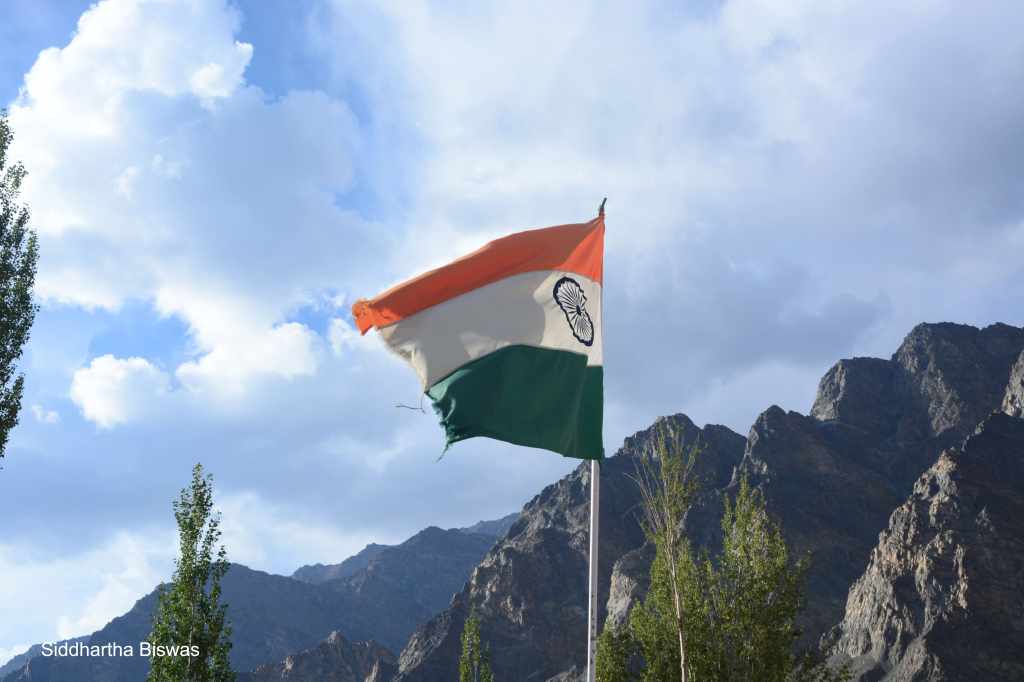
There are Pakistani bunkers, complementing our bunkers, interspersed in the hills towering above. It is difficult to understand which hills are ours and which are theirs.

As it is, Turtuk, after independence, was in Pakistan for a while. However, after the war in the early 1970s, this part of Baltistan was included within India. In Turtuk you must also visit Yabgo Palace.

The size will disappoint you after you negotiate through a maze of narrowest village alleyways to finally find the door.
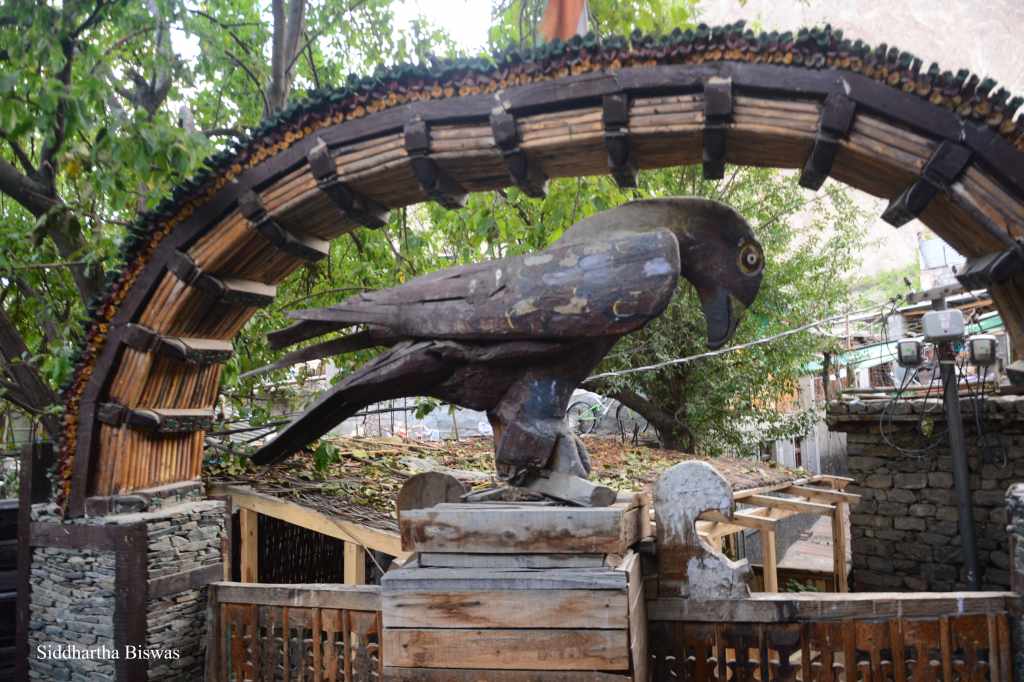
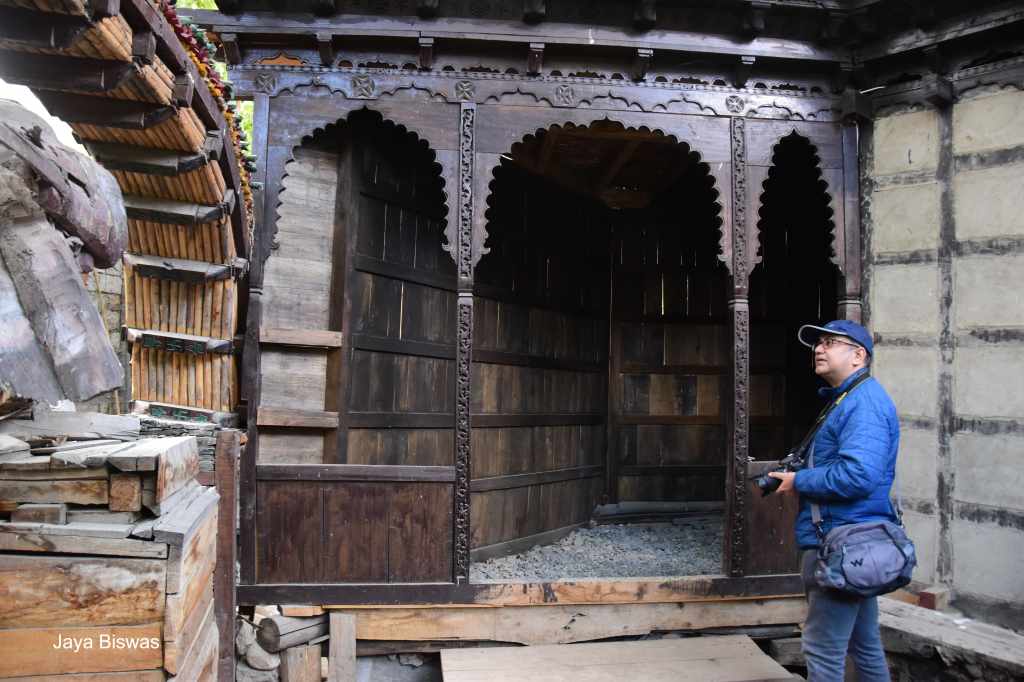
The palace offers you various mementos from a glorious past.
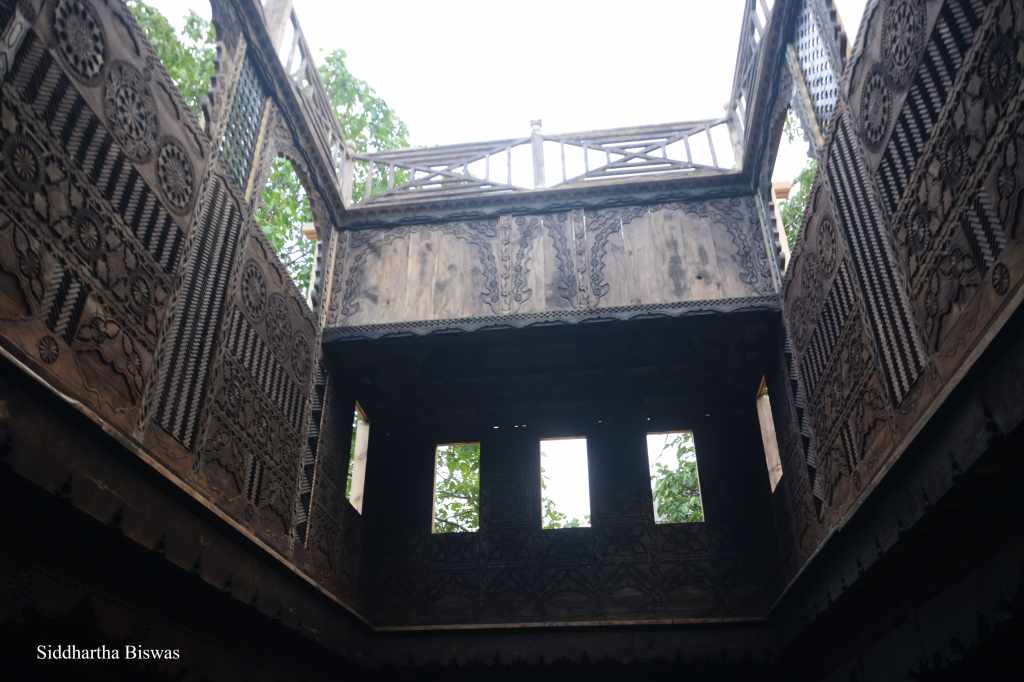
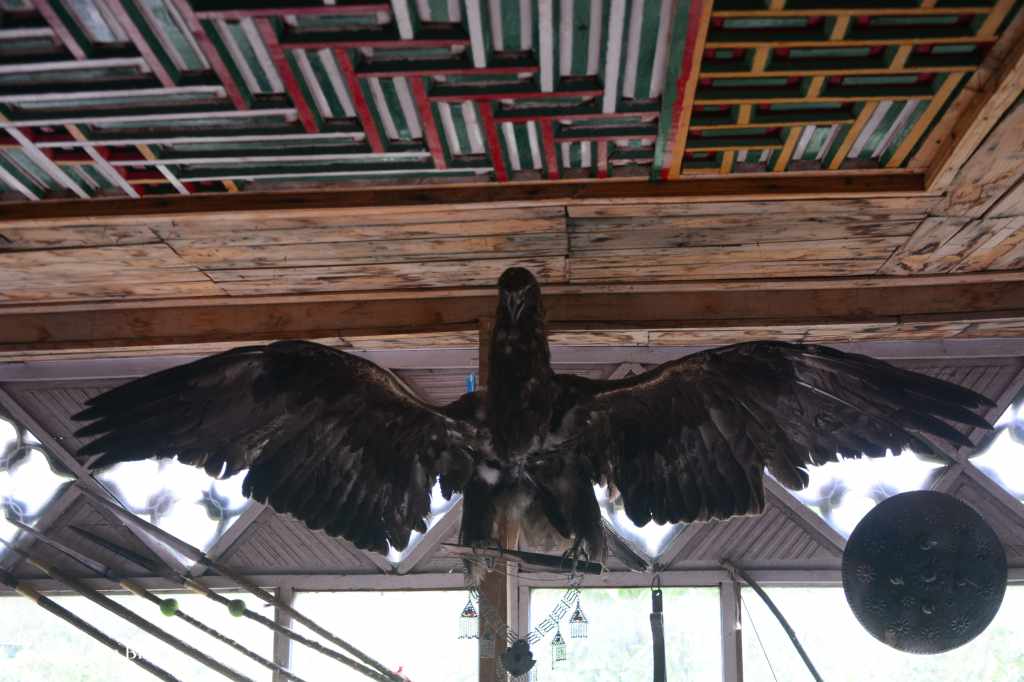
But if you are truly lucky, the somewhat expensive tickets will lead you to an old man with an imposing demeanour, who will tell you all about his ancestors who were rulers of Baltistan. This man, whom we had the good fortune to meet, is Raja Mohammad Khan Kacho, the current head of the royal family.
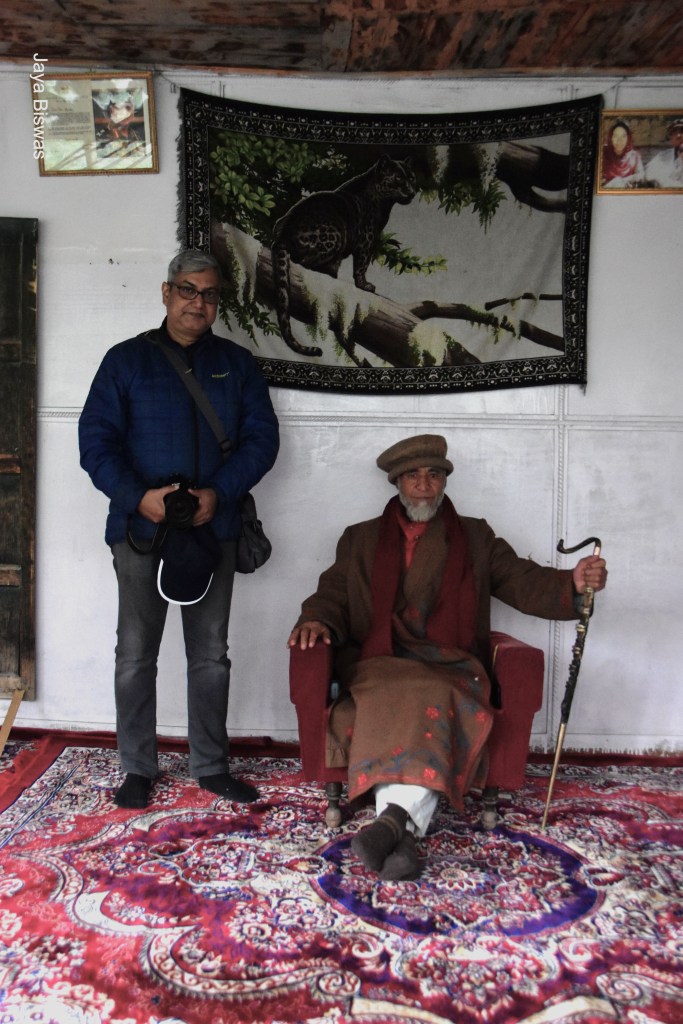
The region is still the abode of the Balti people. He will tell you how after 1947, the region went to Pakistan and the royal family had to move court to repossess this summer palace. He will tell you how they destroyed much of the relics in anger. After the 1971 war, Turtuk came to India, and the Indian Army did not bother the last royals. Little remains of the place but its history. Go there in daytime, there is hardly any light left there.

The journey to Turtuk and back is magnificent. Nature is at its splendid best here. Thanks to the Indian Armed Forces, which must keep a constant vigil, the roads are mostly brilliant. I made a short video of that journey. You can watch it here.
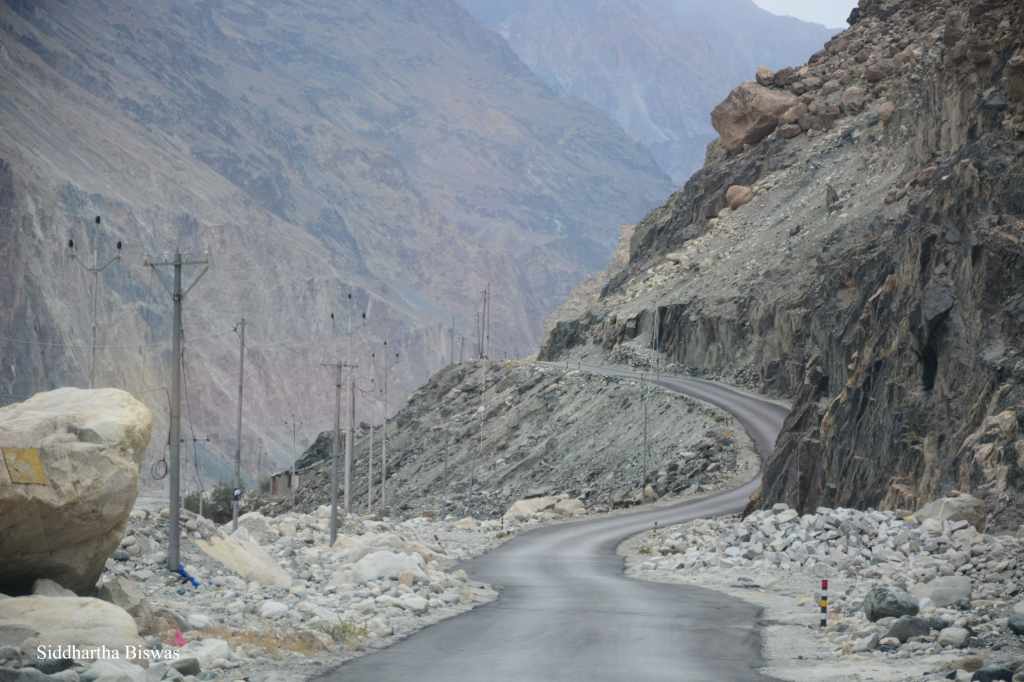
Shyok will not disappoint you as far as impressing those who love nature is concerned. While going to or returning from Turtuk, stopping at the Shyok Memorial is a must.
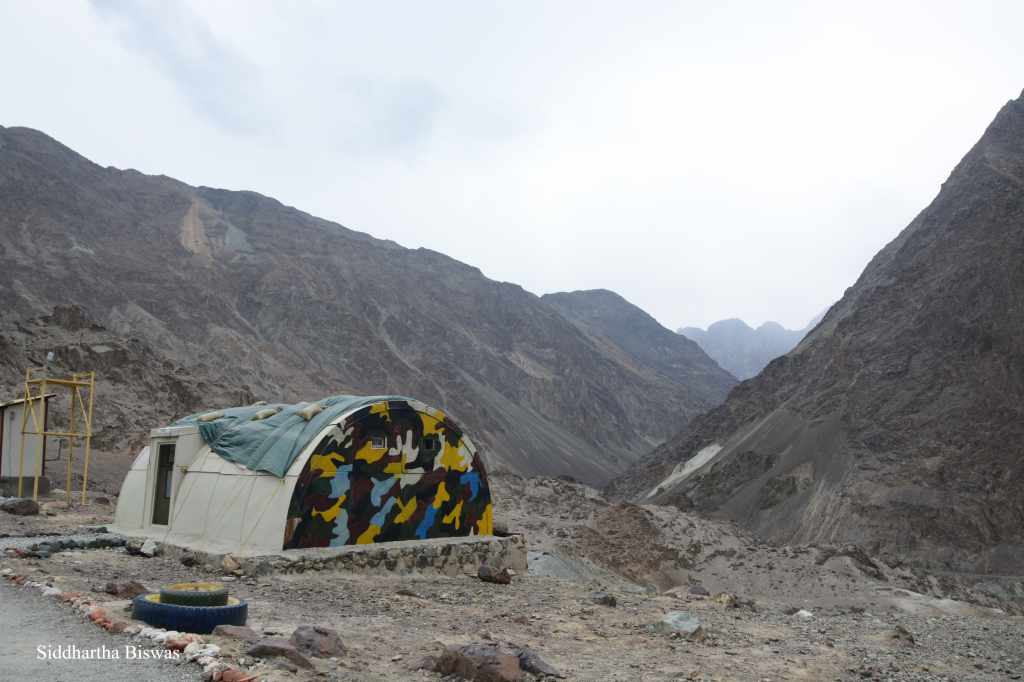
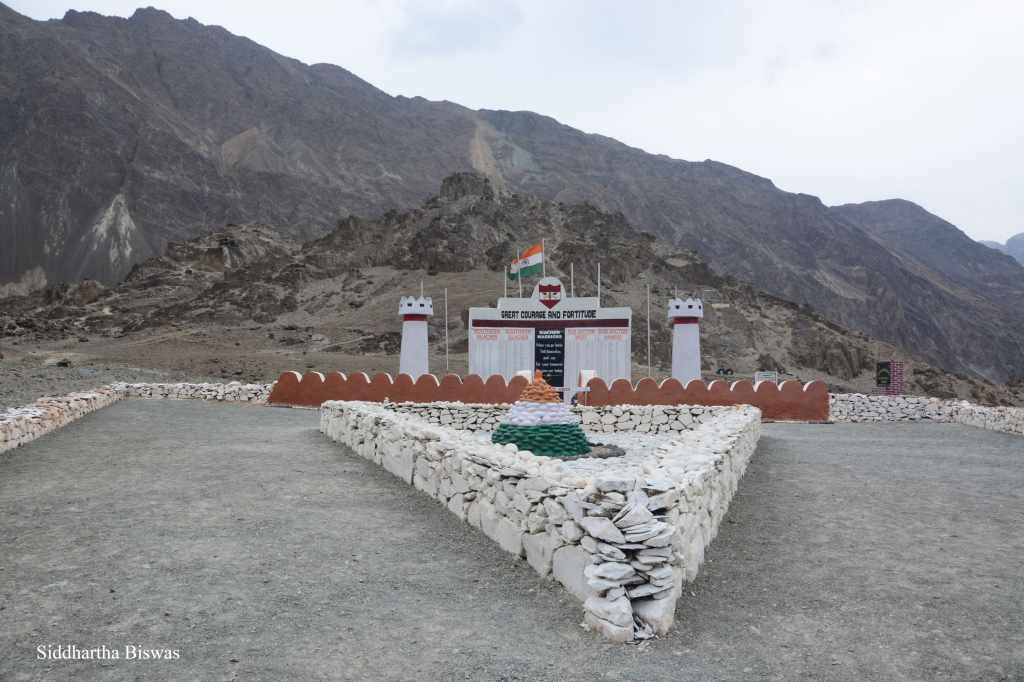

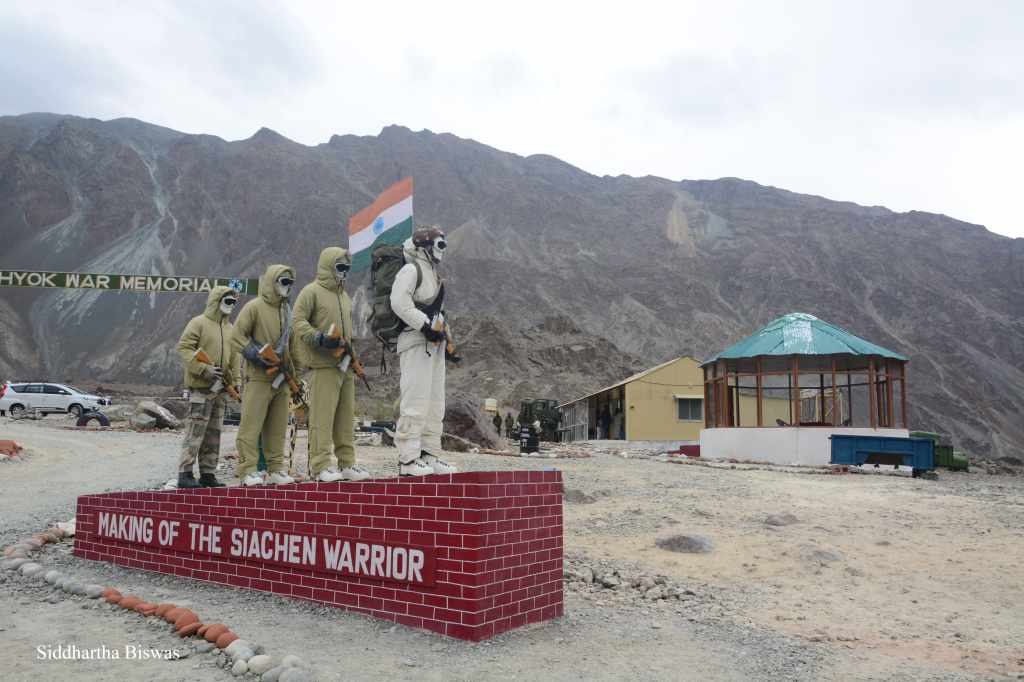
Apart from a scenery that seems out of this world, the Memorial serves as a reminder of all those fallen in the 1971 war, and since then has sacrificed their lives protecting these borders. The weather was unfriendly to say the least and we stayed for as many minutes as we could, but we did not forget to speak to the soldiers present and buy some trinkets from the small shop. Supporting the boys in these regimental uniforms is a duty.
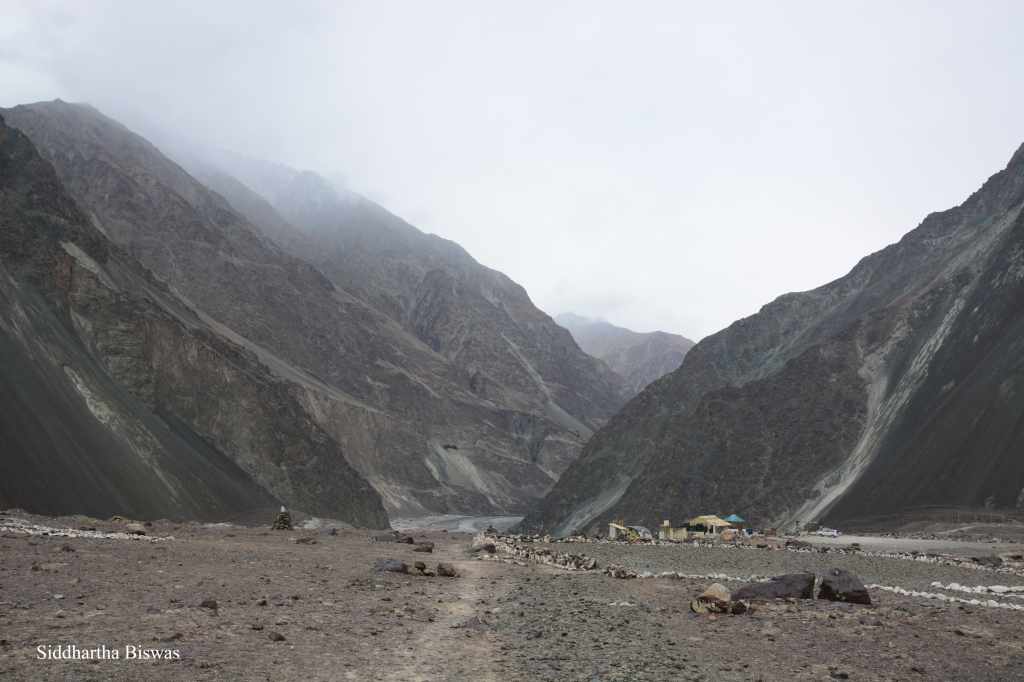

Nubra Valley, particularly the village called Hunder, is the favoured spot for all travellers. The twin humped Bactrian camels are natives of this place. You can ride them for a hefty fee.
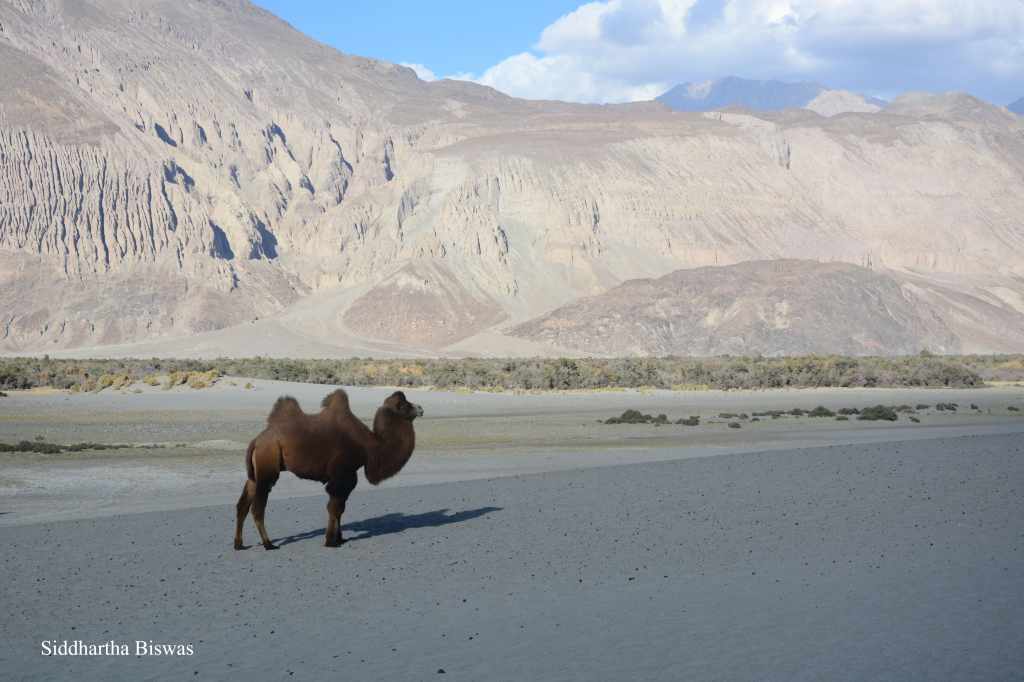
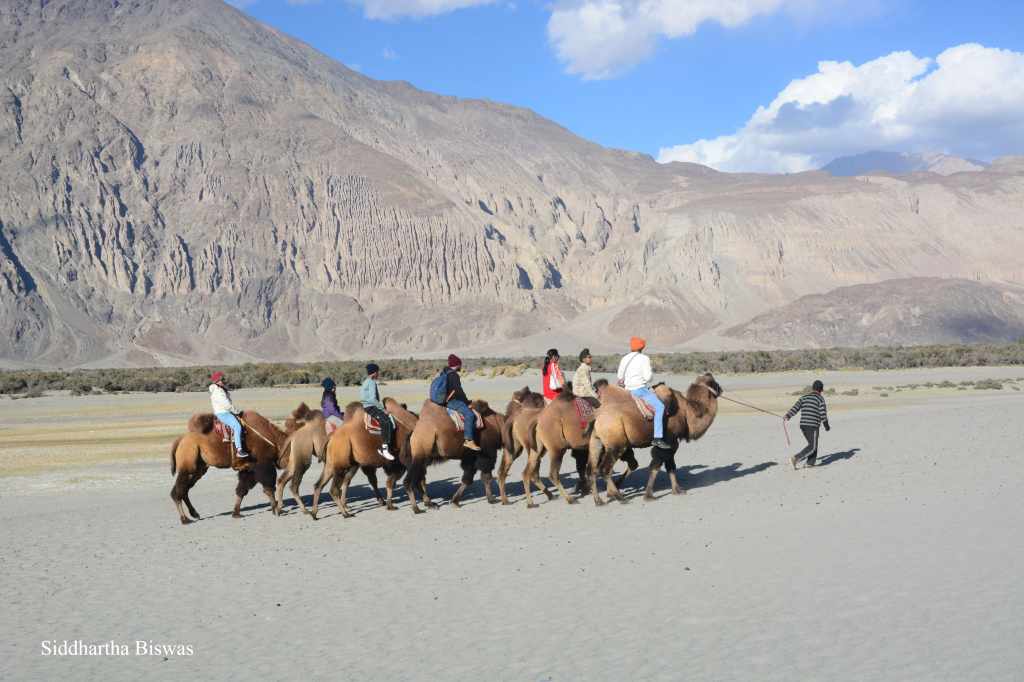

The sand dunes are awesome. And the distant Diskit monastery provides a serene background. You can, if you so wish, watch a short video here.
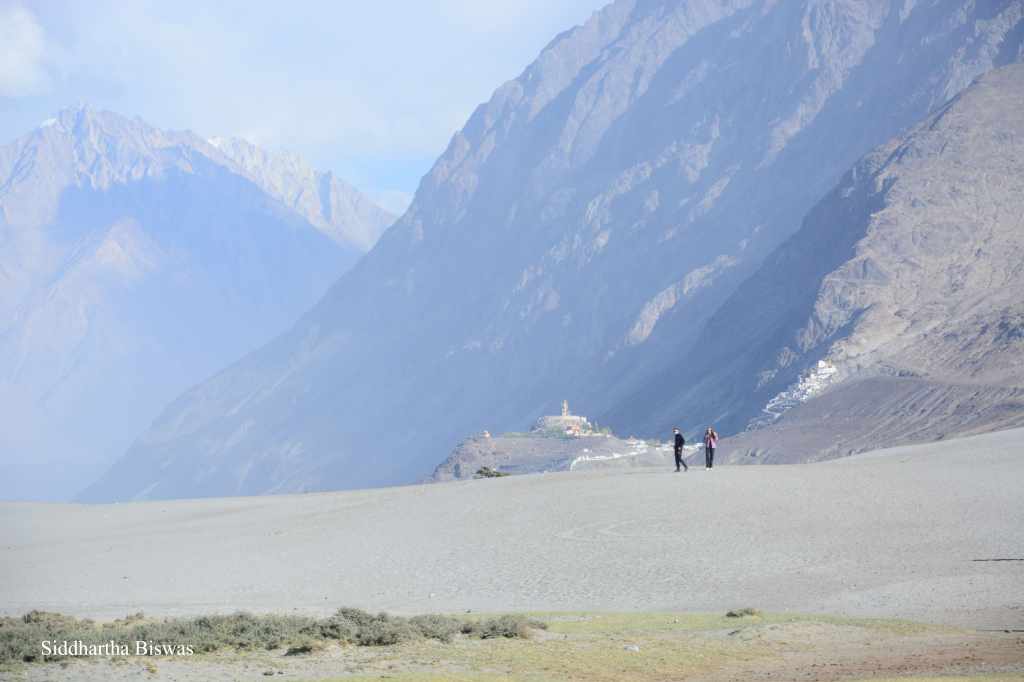


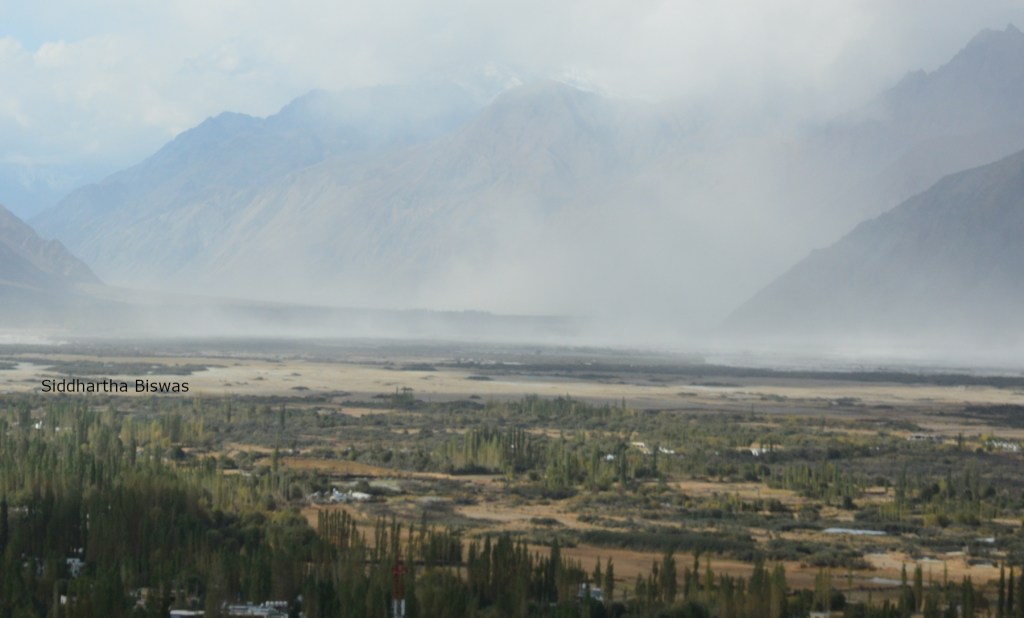
But be aware, there are regular sand storms here. We were fortunate enough to see the sand storm from Diskit, and cross it on the way. By the time we were at Hunder, the storm had gone east.
When you are at the dunes, be prepared to tackle large crowds. Even in October, at the fag end of the season, there were plenty of playful personalities prancing around. From archery to garish outfits to Shah Rukh Khan poses – you get everything here.

Diskit is the last village on the southern side of Nubra Valley area. The monastery is breathtaking (in more ways than one, even if you are slightly unfit, the steep steps at an altitude of 10,315 feet will test you).
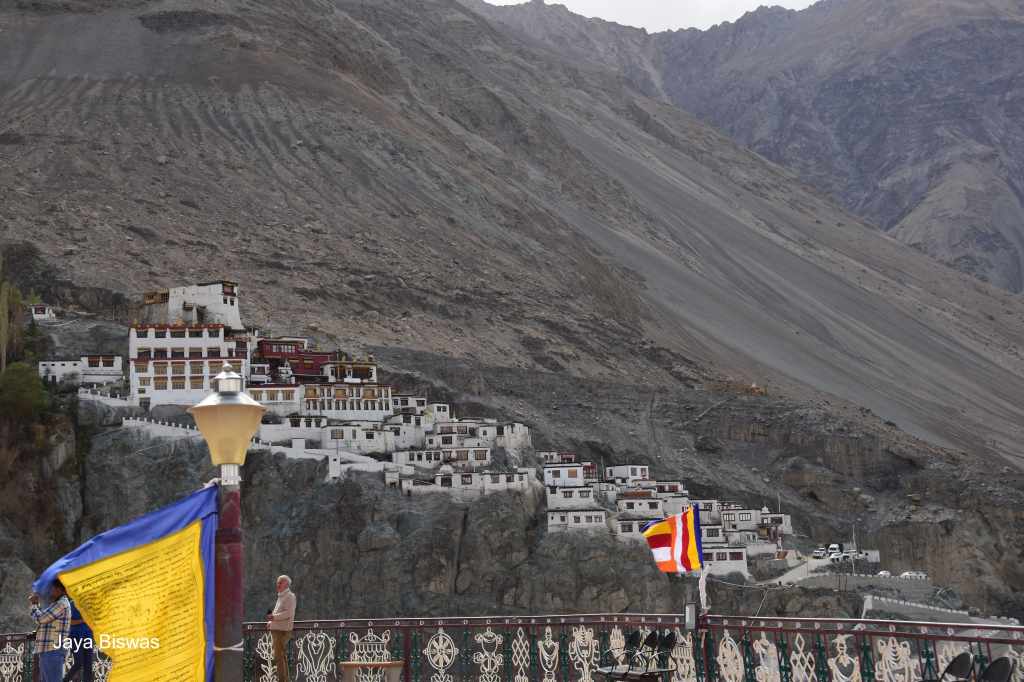
The Mitreya Buddha statue is imposing and it looks over the entire valley.

The main temple of this seven-century old Gompa is particularly engaging as it is devoted to Tantric Buddhism. Most of the idols have their faces covered. Only during special festivals do they have their faces uncovered. It is believed that their powers are such, they should not be toyed with. The figures of Mahamaya, Bhairava and the goddess Kali, along with different manifestations of the Buddha and the Gurus, should not be of surprise, they have been a part of Tantra in all religious forms. The monastery carries not only the spiritual, but presents local history through its murals and the many manuscripts that it anxiously preserves.

The view from the monastery is magnificent.

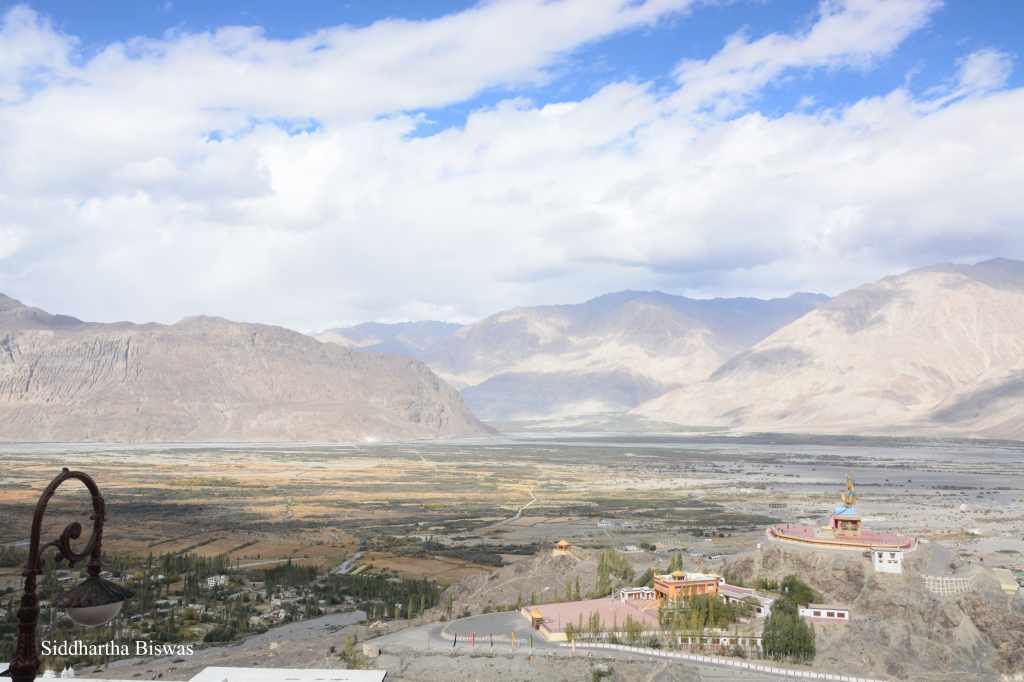
Thanks to our gallant travel companion cum driver, we were treated to something extra. When Dorje-ji asked us if we were interested in ancient cave dwellings, we replied in unison. It was a slight detour from Hunder Bridge, where there is a set of ancient chortens and temples. This was the trek route towards Leh.
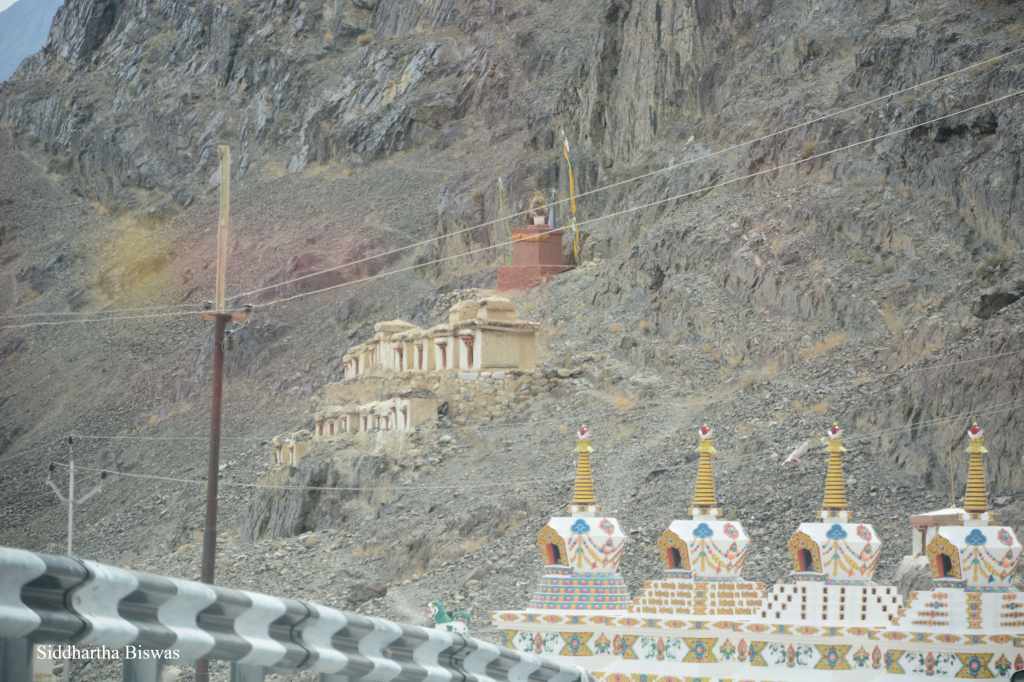

And we were astonished to see a series of caves which housed humans in not so recent history. There was a large cave, known as Pigeon Cave, then there were smaller caves.
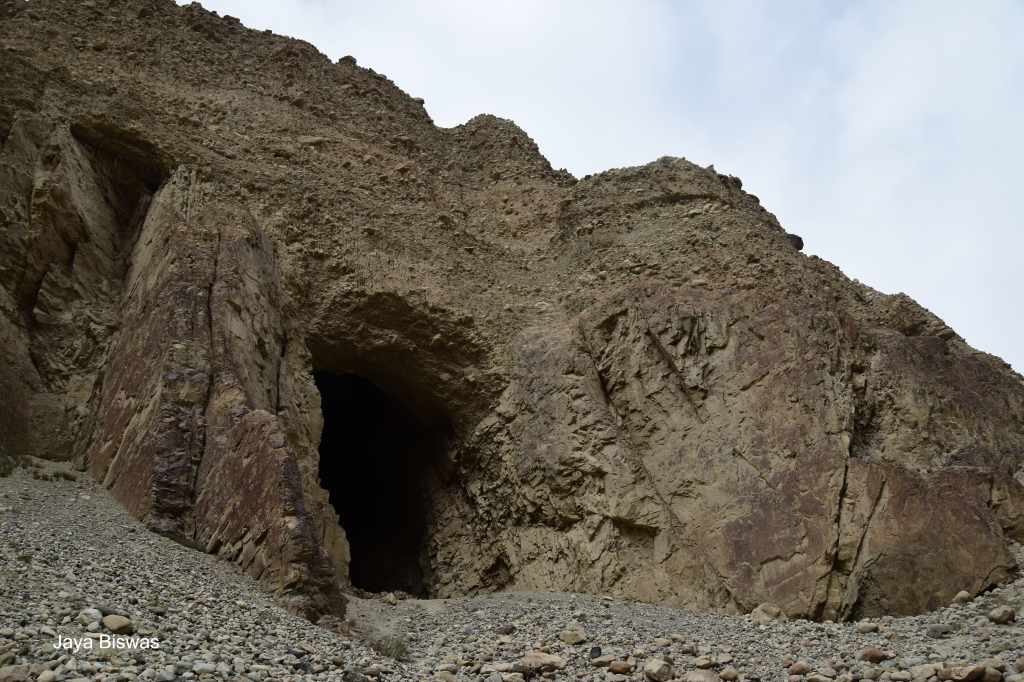
But the most impressive one was perched high above (Dorje-ji nonchalantly climbed up absent paths to them and took a look), far from the reach of danger. These caves are occasionally visited by people and may also be considered holy, as some of them still have religious relics, and there is proof of recent worship.
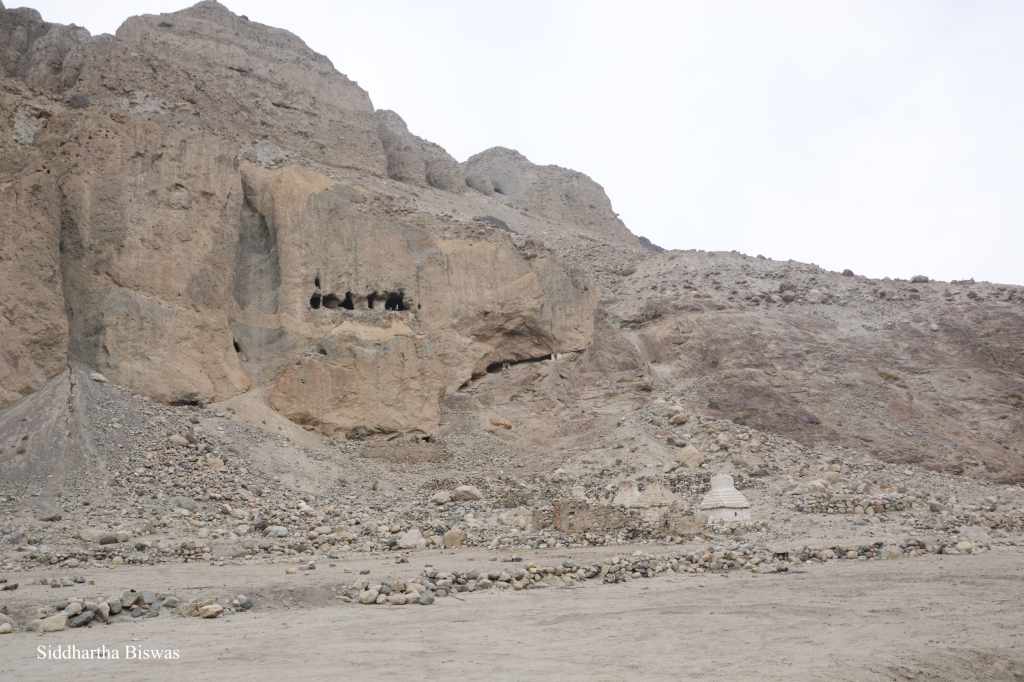

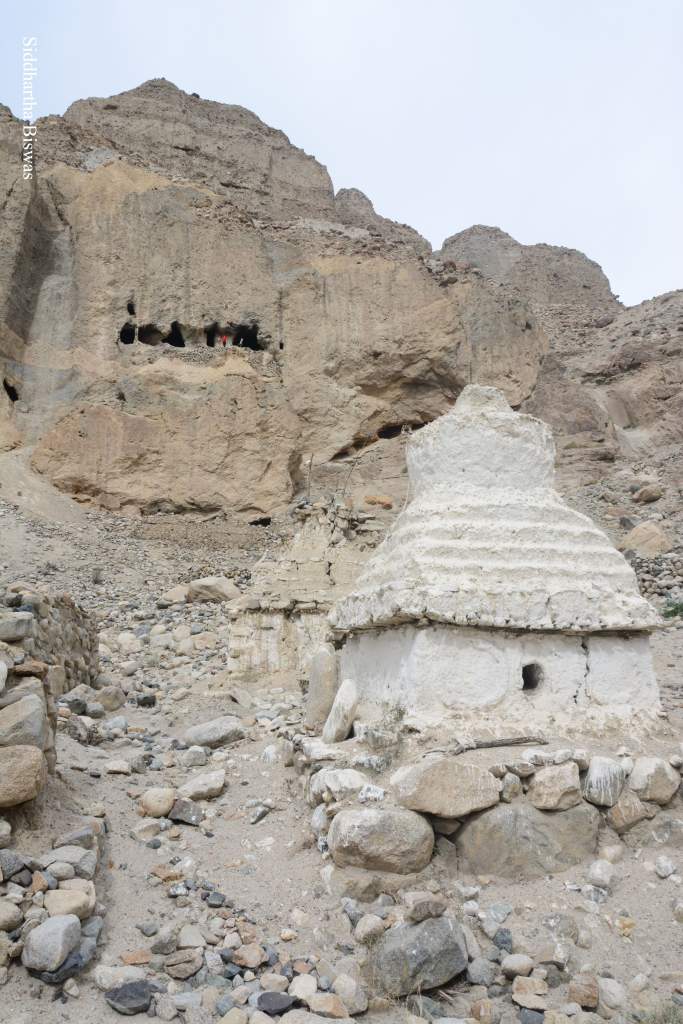

There were many smaller caves all around. You can watch a brief video here.

These small ‘extra’ bits often become highlights of travel in which touristy highlights become bothersome thanks to people who search for urban fun even in the remotest landscapes. And having the right travel companion becomes so significant, as the wrong one can ruin everything. We have history of such ruin, ruining our experience among rare ruins. But the Ladakh adventure was wonderful – one that will feature among the best of all our journeys.

RELEVANT INFORMATION
Turtuk is 206 kilometers from Leh. Hunder is 126 kilometers from Leh.
There is hardly any regular public transport.
There are good places to stay in Turtuk and in Hunder (though high luxury is not be expected).
Turtuk is not very crowded, but Hunder is full of tourists.
The weather is always unpredictable these days, but May to September is usually good.
One can stay Hunder and visit Turtuk if one so wishes.
All monasteries charge entry fees. Yabgo Palace also has a ticket system. In Thang locals act as guides. They charge a minimal amount.
Nearest town and airport is Leh.
The roads are generally great, but there are a few patches of natural damage.
Earlier Posts
1. Old Lucknow 2. Colonial Lucknow 3. Going Downhill – Versey to Dentam 4. Going to Garhwal 5. The Walkers 6. Palamau 7. Rishikesh 8. Kolkata Kolkata 9. The Roar of the Clouds – Santiniketan 10. Of Pests and Men – Uttarey 11. Where Hikers Fear to Tread – Rudranath 12. Old Times 13. History in Ruins – Pushpagiri 14. Once There was a Heaven 15. Serenity 16. Pilgrim’s Progress – Kedarnath 17. Unfinished – Gaumukh 18. Ghatshila 19. Nothing Important 20. Manu’s Alaya – Manali 21. Santiniketan 22. Little Lhasa – Dharamshala 23. From Varuna to Assi – Varanasi 24. Tunganath 25. Transitory Blues 26. Gurudongmar 27. The Beginning 28. Yumesamdong 29. Bangali in Bangkok 30. Mukutmanipur 31. Rasvanti 32. The Old Town and the Sea 33. Budapest 34. The Last Post of 2019 35. Travel Travails 36. Cluj-Napoça 37. Presenting the Past 38. Far From the Urban Crowd 39. Silent Night Sleepless Night 40. Norwich 41. Photo Essay – The Road 42. Photo Story – The Days of the Goddess 43. Badrinath 44. Monumental Mistakes 45. Odyssey Now 46. To the Mountains 47. Keylong 48. Where Moon River is Born 49. Kaza 50. Through the Valley of Spiti 51. Kalpa 52. Sarahan 53. Un-happy Journey (Meghalaya) 54. Shimla 55. Bhalukpong 56. Rissia Nature Camp – Kuldiha Forest 57. Arunachal Diaries – Dirang 58. Arunachal Diaries – Sela to Jong 59. Quest for Quietness – Barot 60. Chindi to Chail 61. Baranti 62. Clouds of Tawang 63. Kumaon Diaries – Binsar 64. Ladakh Diaries – Siachen 65. The Aran Islands – Inishmaan
 Peregrine's Progress