
The clouds seemed quite ominous and there was no shelter anywhere in sight. The walk from the pier was long, as the cluster of ten or fifteen houses, the entire hamlet actually, was quite far. And there wasn’t any signage as such. As this was a small island, all roads took you everywhere. But for someone uninitiated, Inishmaan (Inis Meáin in Irish) seemed a bit tricky.

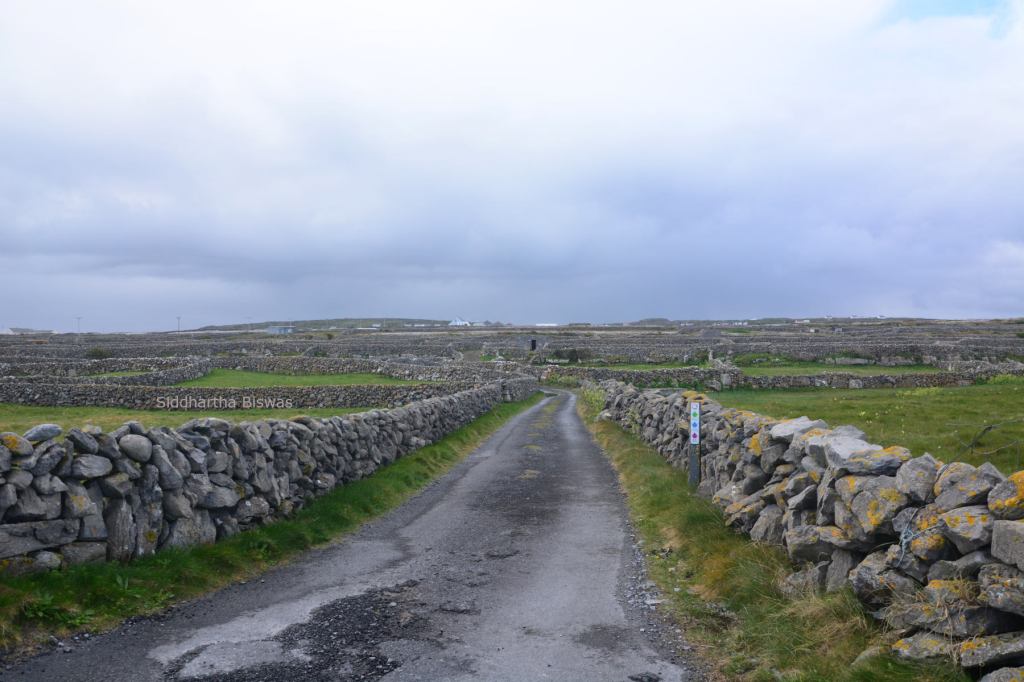
The Old Man and the Sea reference did not help!
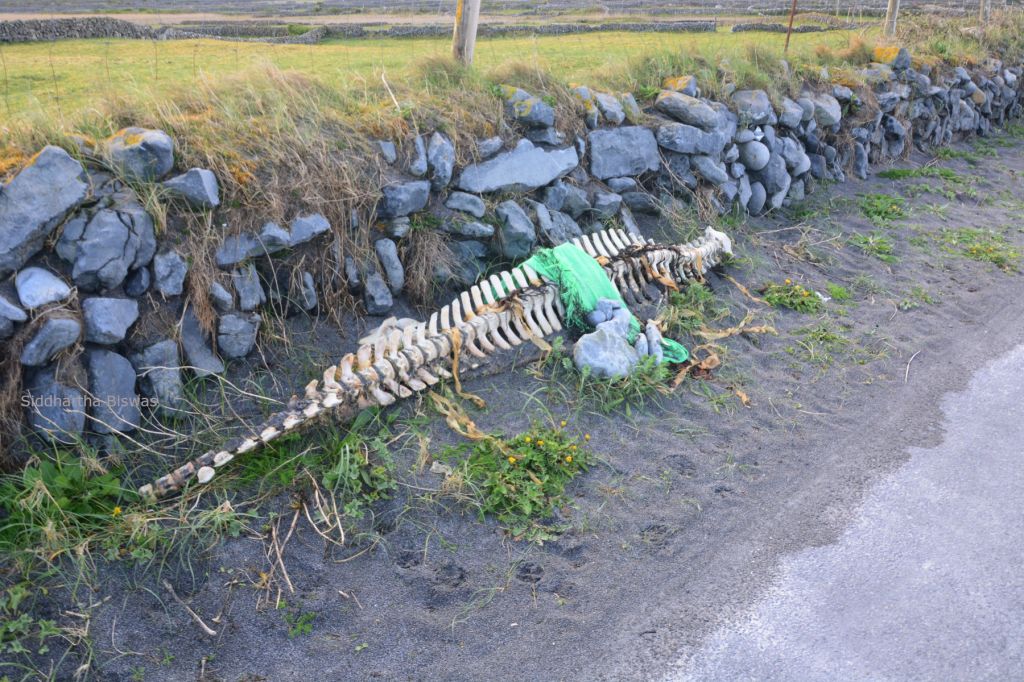
We had travelled halfway around the world to come here, to this island which has a population of about two hundred, and can be fully circled on foot in four hours. There were two reasons why we chose this island in particular. The second reason is that this island is more for travellers. The tourists go to the bigger Inishmore, just a few kilometers away, but separated by an unforgiving sea, connected only by sporadic inter-island connections. Hence leaving this island more at peace. In the photograph you can see Inishmore from Inishmaan.

Inishmore is connected to the mainland by a separate ferry these days. Even now there are only three services per day. Rossaveal, on the mainland, is forty-five minutes away on a ferry that is tossed up and down by this body of water which connects the treacherous North Sea with the mighty Atlantic. On good days the sea is rough, on bad days it is impossible. [If I may add here, few Indians, and even fewer Bengalis have set foot on these islands!]

The first reason we chose to go there was because of a man called John Millington Synge. The Irish playwright who was writing along with luminaries – W.B. Yeats and Lady Gregory and many others – of the Irish struggle. The fact that there is a Republic of Ireland, free of the English dominated United Kingdom of Great Britain and Northern Ireland (UK in short), is a result of the cultural efforts of these great men and women along with years of violence. On Yeats’s suggestion Synge (pronounced “Sing”, as attested by the locals) lived in Inis Meáin intermittently for 4 years. He had initially gone to Inishmore, but found it too loud and crowded. This small island gave him the peace he needed. And the result was a host of amazing plays and the amazing book The Aran Islands. His play Riders to the Sea is read all around the globe and its setting is in these islands.

As I had mentioned, the weather gods weren’t happy with us. Dark clouds were floating in with a strong freezing wind. We were ill-prepared. A bit of misunderstanding had created a rush in the morning that had made us literally run. Our usual meticulous prep had to be sacrificed. Since weather forecasts had cast a shadow on our plans, we decided to go to the island while there was some kind of sun in the sky. We almost missed the bus to the ferry, but the Aran Island Ferry people were kind, and the bus waited for us. The 36 km drive through the amazing Connemara coast, on the Wild Atlantic Coast Highway, is in itself a pleasure. There were two ferries waiting. One was for Inishmore – the bigger and swankier – the other – much more homely – was for the passengers going to Inis Meáin and Inis Orir.
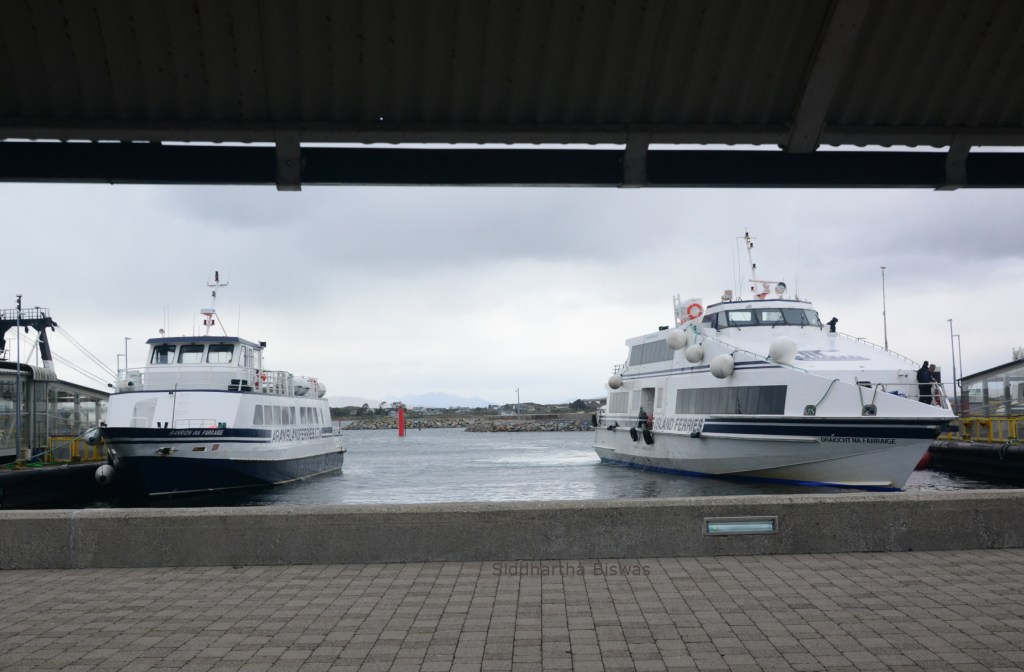
We were happy that Shauna, our host at Westwinds Guestlodge had remembered our choice while booking the tickets for us. The ferry had an enclosed deck where we sat for a moment, but when the journey started we realized that photo opportunities were nil. So we moved to the upper deck and had a thrilling journey taking photos and making videos with one hand, the other hand clung to the railings for dear life. [You can see the whole video here.] The amount of ups and downs and rolls would actually challenge a conservative roller coaster. As a matter of fact, I realized why those rides are called roller coasters! The sea makes you realize whatever rolls you may face in life, it is the coast that is of comfort for most of us mammals.

The Inis Meáin pier was quite interesting. The video will show you best, words are often pressed beyond their capacity.

Then as we started out walk, the rain started. For a good twenty minutes we walked with our umbrellas, fighting the wind, but with cameras and phones not being stashed away.

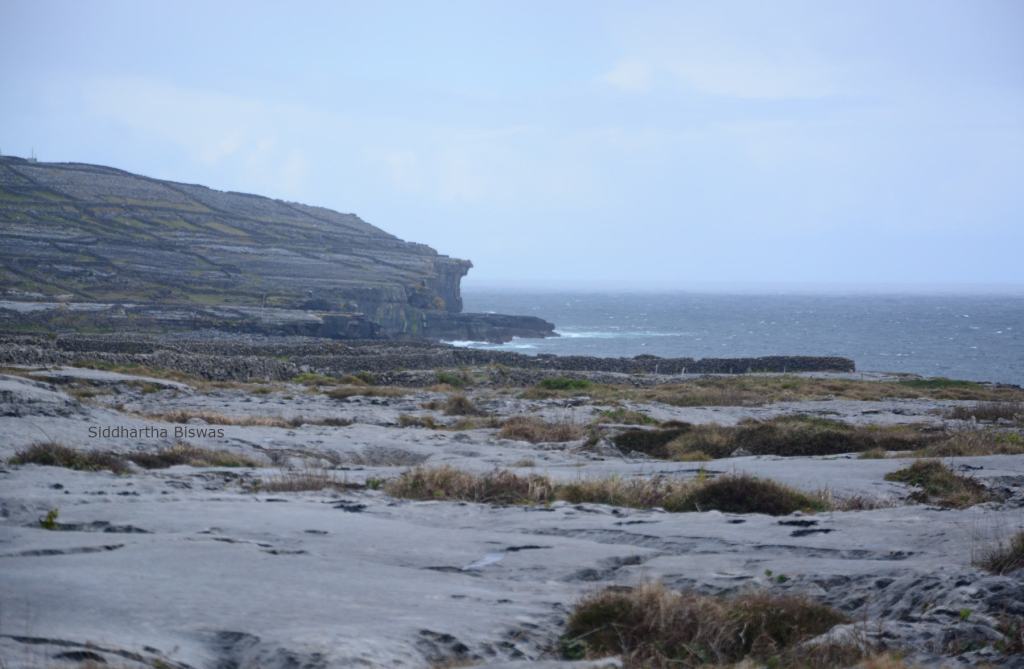
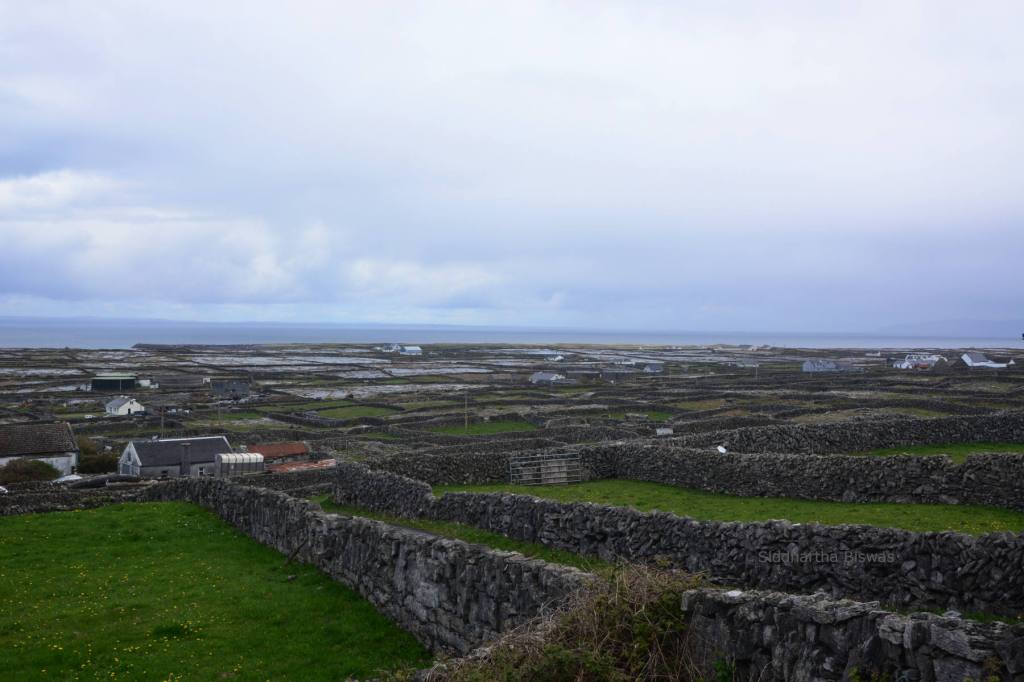
I realized I would have appreciated having four hands. One for the umbrella, one for the camera, one for the phone that was taking videos, and the other for the phone with Google Maps. Yes, that was the best thing. Without Google Maps we would have ended up following the trail and missing our targets. We had two major places to in mind. One was Synge’s Chair – a craggy rocky place where Synge used to sit and see the Sea. We reached it in 40 minutes. Thankfully, there was some signage.


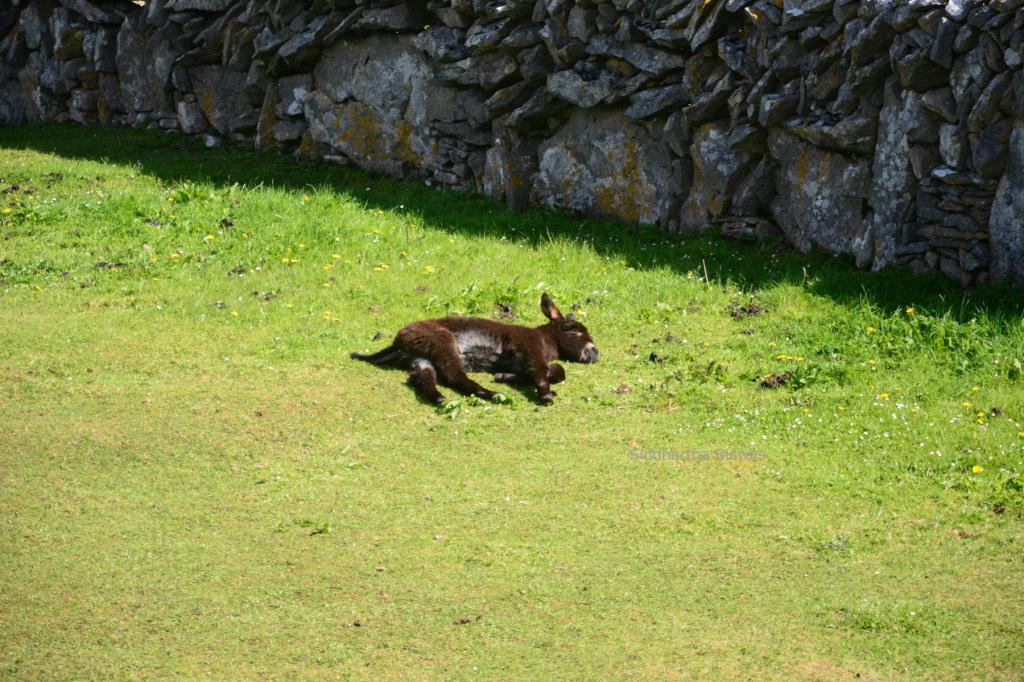
The weather had turned brilliant then. Let me give you another bit of info, in our whole walk we met approximately five local people, a single cat, three cows, two Border Collies, one and a half donkeys and three and one third lambs on the road, and four seemingly European tourists.
The second place was J. M. Synge’s house. By the time we reached it, it was afternoon and the cottage was closed.


We walked a few minutes, crossed the church, and found the shoppa – the only shop cum post office cum ice cream place on the island – and Karen, the proprietor, was incredibly kind.

Hearing about my fascination with Synge, and the fact that we had travelled tens of thousands of kilometres just to come to Inis Meáin, she called the people who take care of the cottage, and they opened it just for us. The rain was back and we had to use our umbrellas as shields as it was not falling, but making a head-on attack on us. A lady called Bridge (short for Bridget?) took us around the small three-room cottage, which used to be the post office in Synge’s time, and showed us everything. They have kept it as it was 120 years ago.

In fact, the family that takes care of the cottage is the same family that took care of Synge. She had wonderful stories (some gave me some interesting insights) and was ultra kind. We thanked her with all our heart and we went out in the sunshine. The rain did come back a couple of times afterwards, but by then we knew how to tackle it.
Then we found the only pub on the island, and resisting all temptation settled for sandwiches and coffee. We had a little chat with the pub owner and an elderly gentleman who took an interest in us. When I told we were Indians, he wanted to know if I was a doctor! There is a handsome number of Indian doctors in mainland Ireland. I had to gently correct it. To be perfectly honest, I have been taken to be a doctor by many in my own zone! We watched a football match for a while and then we took their leave.


We had an hour and a half to reach the pier. We went on a slightly longer path, climbing gently down, passed the small airstrip (€50 to Connemara for locals, our ferry and Galway-Rossaveal bus to-and-fro was €44 pet head), and found two brilliant rainbows on the mainland.
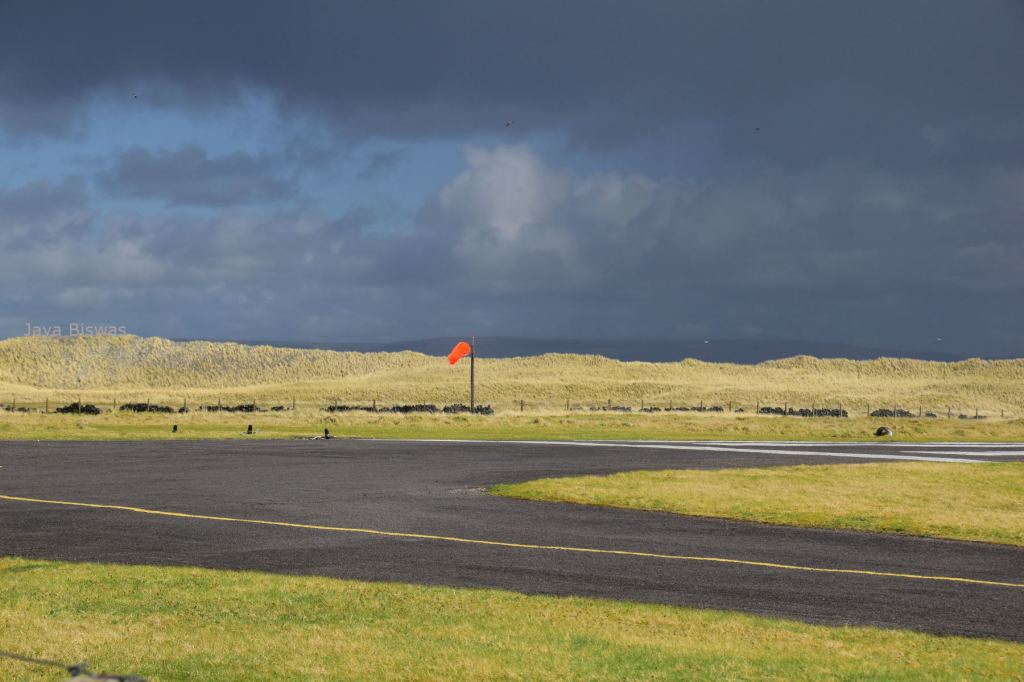


Aran was bidding us farewell in grand style. We had a nice 40 minutes on the pier watching the waves and then the ferry came to take us back.


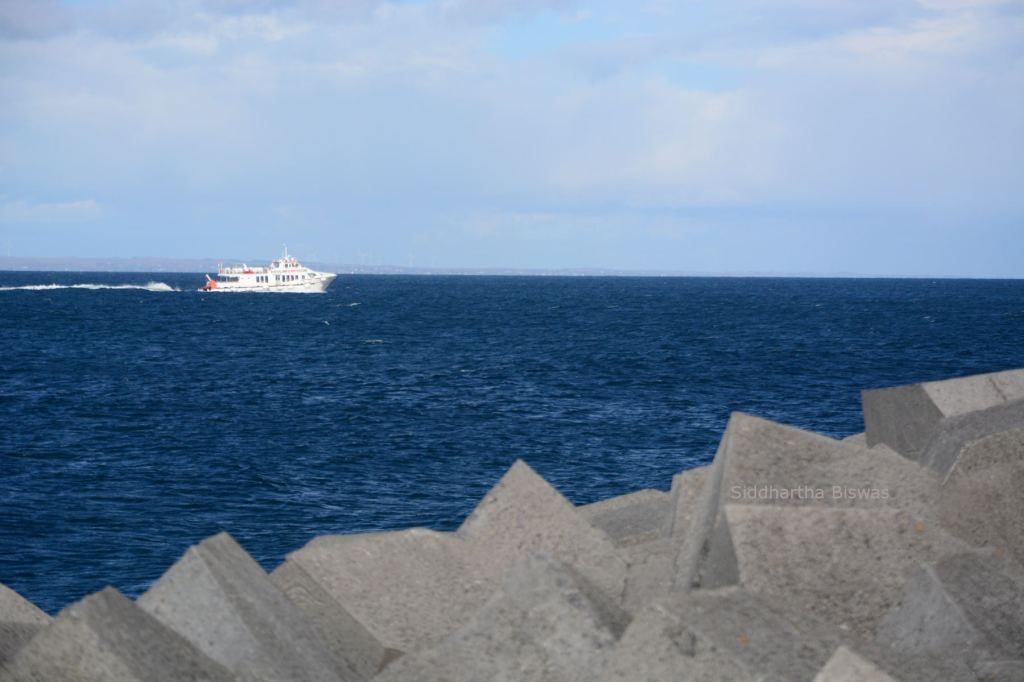
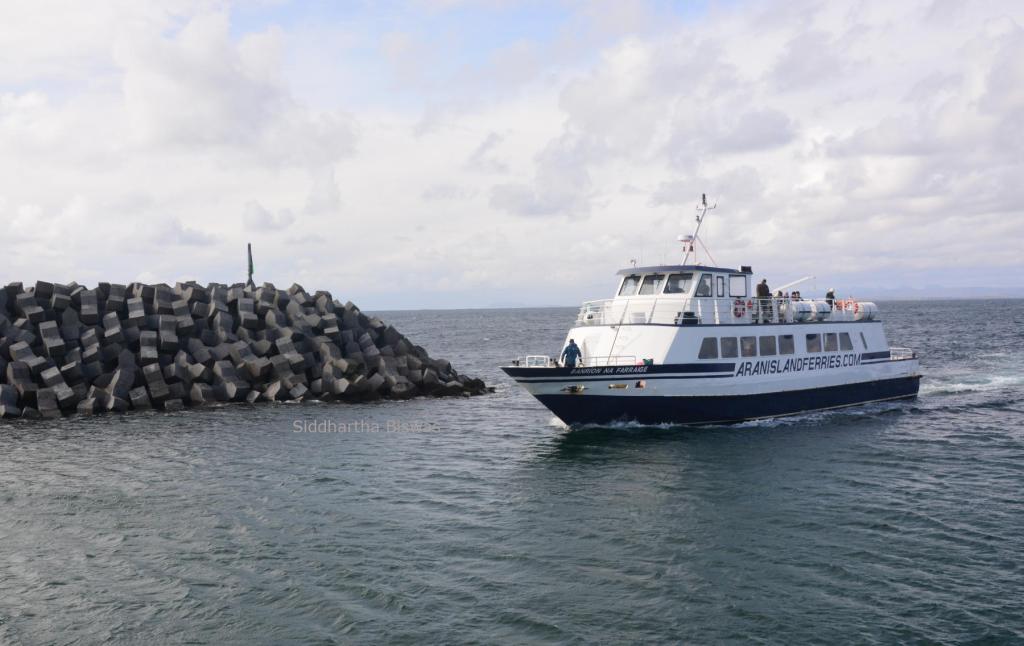
This time we stayed put in the lower deck, enjoying the slightly choppier sea in the safety of the seat. And to top everything up the bus journey back – delayed because the official in charge of tickets was missing – gave us a rain-soaked drive which we enjoyed sitting in the top front seats on the double decker bus. The rain can ruin things, but it can also ads to out stories. Aran rains will remain with us for the rest of our lives.
RELEVANT INFORMATION
The Aran Islands are in the Western Coast of the Republic of Ireland.
There are ferries, planes and expensive helicopter rides available.
There is only one inn in Inishmaan.
The Island is hardly crowded. Getting ferry tickets early is a must.
The weather is always unpredictable and can change hour by hour.
One can stay at Galway or Connemara. Connemara is quite far away from Galway which is the railhead.
Good surface public transport in the region. Taxis are quite expensive for this distance.
Nearest town and airport is Connemara.
Schedules are very strictly followed.
Earlier Posts
1. Old Lucknow 2. Colonial Lucknow 3. Going Downhill – Versey to Dentam 4. Going to Garhwal 5. The Walkers 6. Palamau 7. Rishikesh 8. Kolkata Kolkata 9. The Roar of the Clouds – Santiniketan 10. Of Pests and Men – Uttarey 11. Where Hikers Fear to Tread – Rudranath 12. Old Times 13. History in Ruins – Pushpagiri 14. Once There was a Heaven 15. Serenity 16. Pilgrim’s Progress – Kedarnath 17. Unfinished – Gaumukh 18. Ghatshila 19. Nothing Important 20. Manu’s Alaya – Manali 21. Santiniketan 22. Little Lhasa – Dharamshala 23. From Varuna to Assi – Varanasi 24. Tunganath 25. Transitory Blues 26. Gurudongmar 27. The Beginning 28. Yumesamdong 29. Bangali in Bangkok 30. Mukutmanipur 31. Rasvanti 32. The Old Town and the Sea 33. Budapest 34. The Last Post of 2019 35. Travel Travails 36. Cluj-Napoça 37. Presenting the Past 38. Far From the Urban Crowd 39. Silent Night Sleepless Night 40. Norwich 41. Photo Essay – The Road 42. Photo Story – The Days of the Goddess 43. Badrinath 44. Monumental Mistakes 45. Odyssey Now 46. To the Mountains 47. Keylong 48. Where Moon River is Born 49. Kaza 50. Through the Valley of Spiti 51. Kalpa 52. Sarahan 53. Un-happy Journey (Meghalaya) 54. Shimla 55. Bhalukpong 56. Rissia Nature Camp – Kuldiha Forest 57. Arunachal Diaries – Dirang 58. Arunachal Diaries – Sela to Jong 59. Quest for Quietness – Barot 60. Chindi to Chail 61. Baranti 62. Clouds of Tawang 63. Kumaon Diaries – Binsar 64. Ladakh Diaries – Siachen
 Peregrine's Progress