
Siachen. In the history of India and neighbouring regions, this name has gathered great significance. Geographically, historically, aesthetically and politically, as well as in popular lore – the astonishingly long (~75 km) glacier evokes wonder and reverence.

To a large number of people of the subcontinent, this word signifies violence, warfare and courage that cannot be presented through any description. The constant military presence necessitated by a contest regarding boundary, a contest that is less than a century old, has somehow attached a significance that is restricted to the turbulent relationship between two neighbours who might never possibly become civil to each other. In a world fragmented by global territorial conflicts, amity does seem like a distant dream. It is true that Siachen, the Glacier, must remain an ultra-secure zone. Two neighbours on two sides, both with unhappy demands, make Ladakh an area perhaps more problematic than the state of the rising sun in the North East.

But even with such history, one cannot, should not, overlook the breath-taking beauty that this little nook of the Karakoram Himalayan range presents.
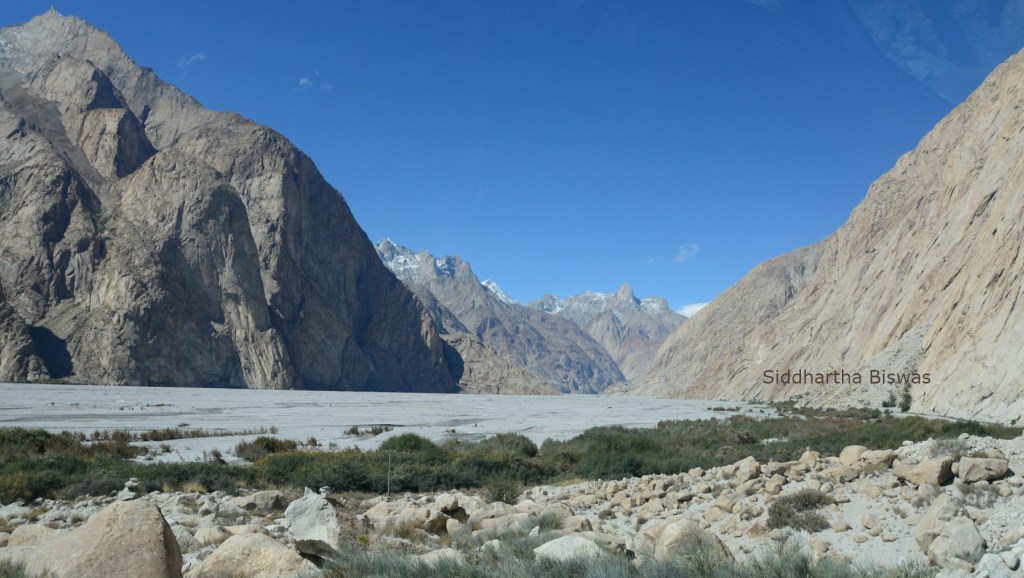


One must visit the War Memorial to see how many brave lives are sacrificed at the never-ending altar of war.


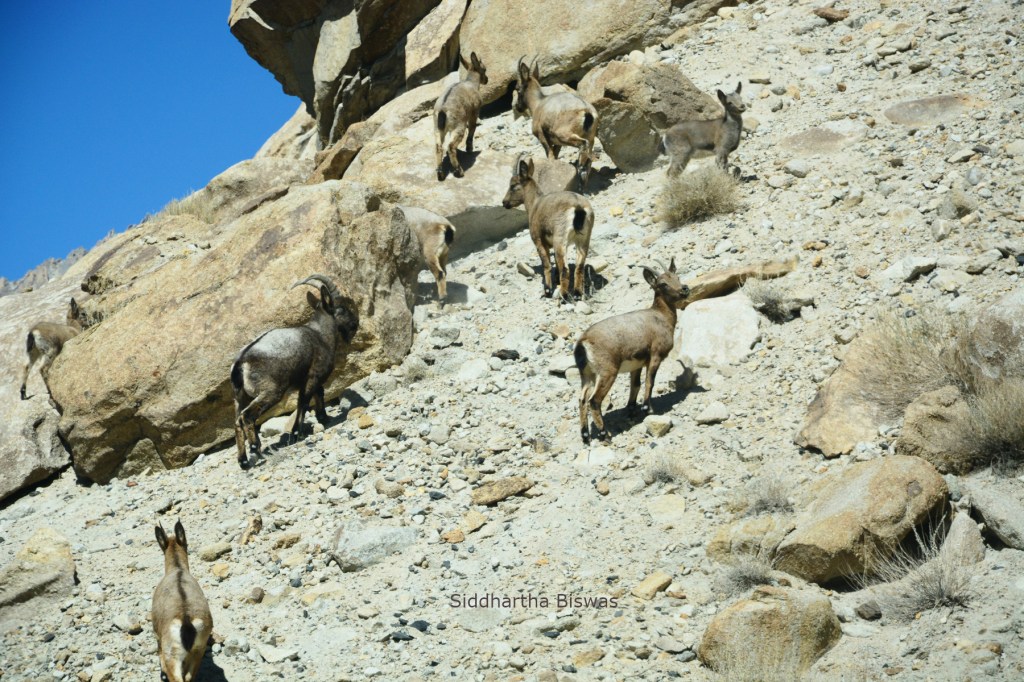
In fact, Siachen base camp, the point till which tourists are allowed to go, is only about a hundred kilometers from the oft-visited Nubra Valley. People throng the Sand Dunes of Nubra. Only a handful go to Siachen. Which is a blessing, for on this road less travelled we were fortunate enough to see a herd of Ibex.
People usually stay at Hunder. We were fascinated by the other side of the valley and our intrepid driver was happy to take us to the Eastern bank of the river Nubra – to a gorgeous small settlement called Sumur. We stayed at a lovely place called Hotel Namgyal Villa (video here). We wanted to stay at another place called De Khama, but there was no vacancy!
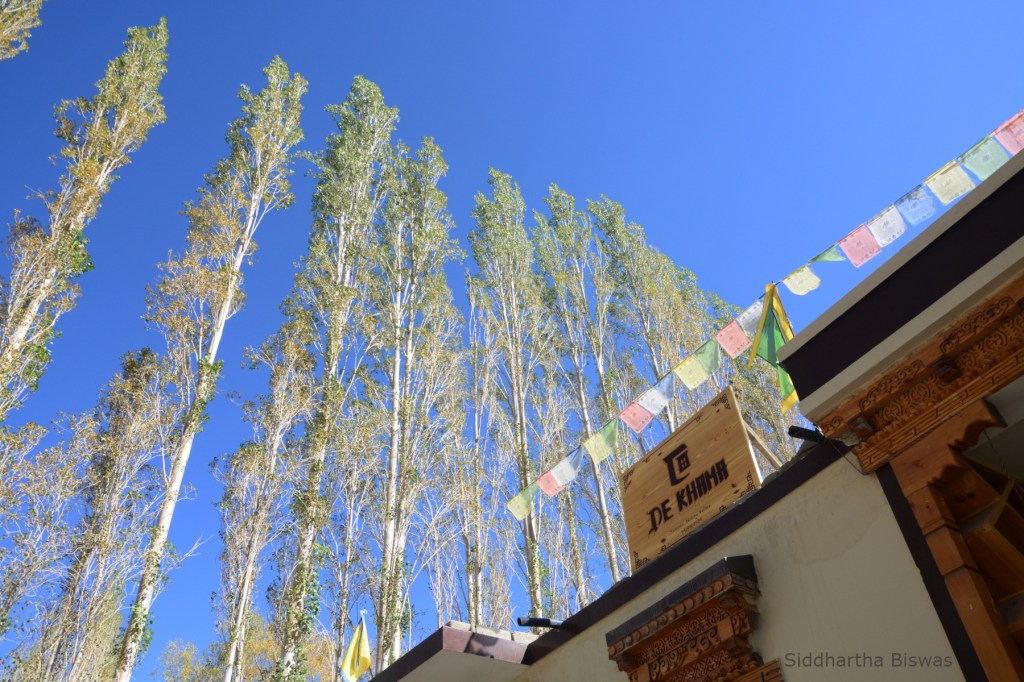
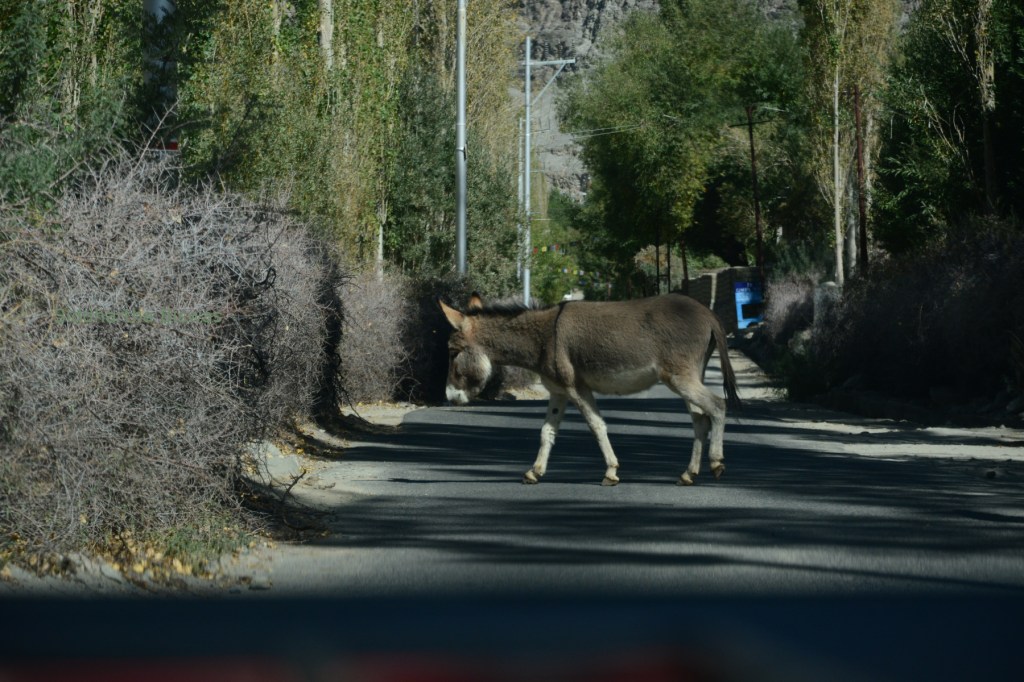
Sumur is essentially the gateway to Siachen glacier. In the lush greenery of Sumur, we were mesmerised. And we also caught glimpse of domestic fauna.
Sumur has one of the oldest monasteries of this region. Unfortunately we were late in coming back from Siachen and missed the timing. We had gone to Yarab Tso, a magical lake hidden within what looks like a sudden large rock formation. The formation is such, it creates a pool of water within, and no one can see it even from the riverside. It is considered holy. There is a slight climb through a path full of loose pebbles and a few steep curves. People with vertigo should be careful. Jaya’s presence allows me to tread through these paths with ease, just as her presence allows me to go through everything else without losing hope.

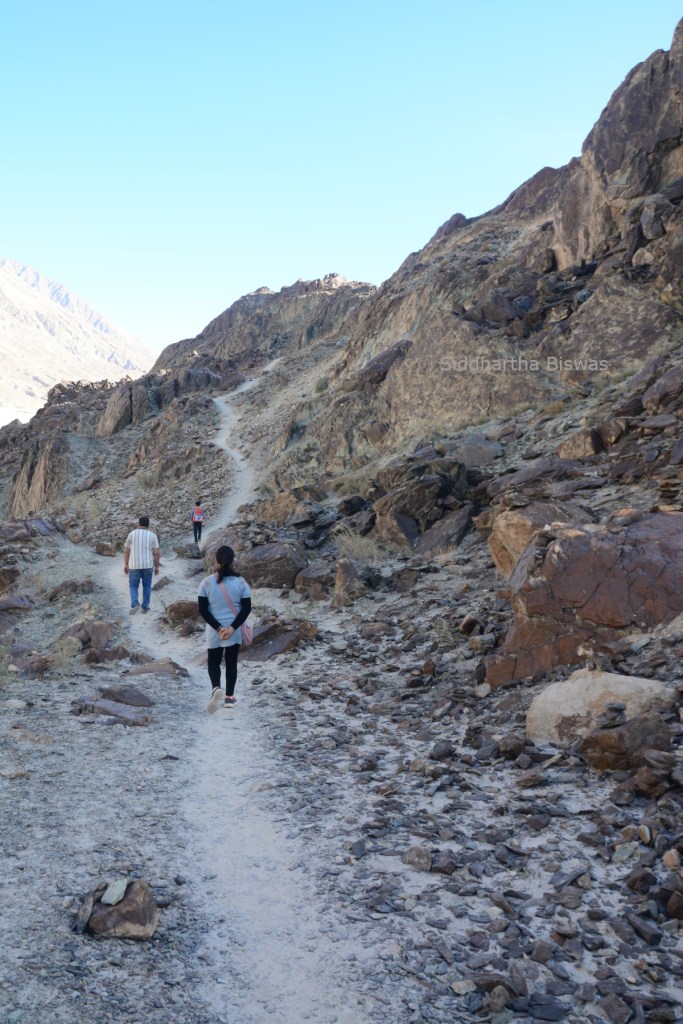
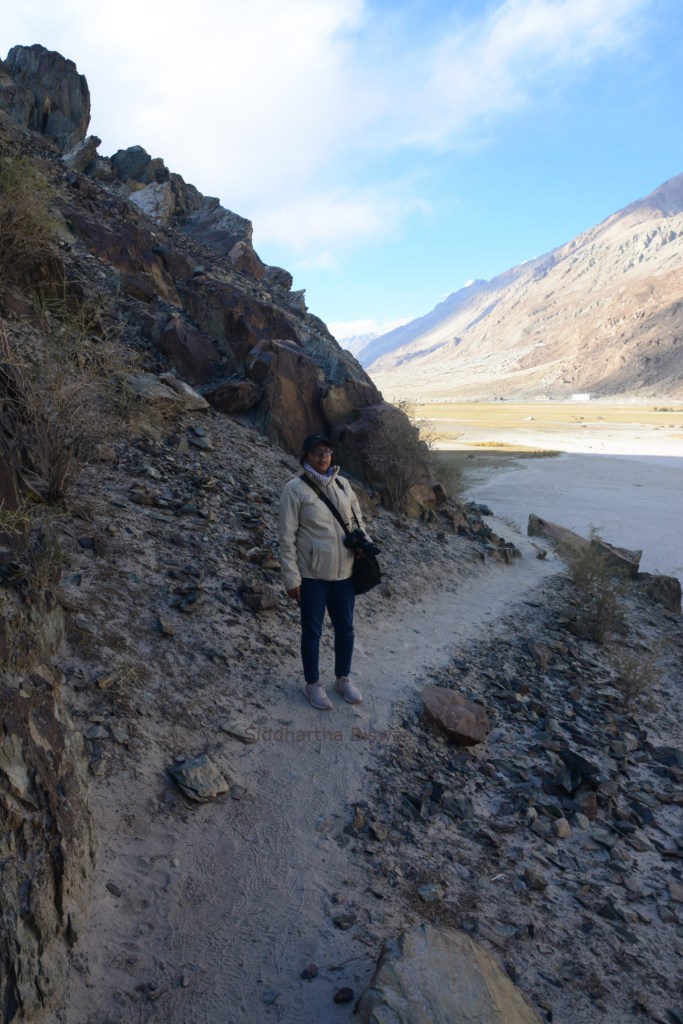
We had company. But they gave up after reaching the first view.


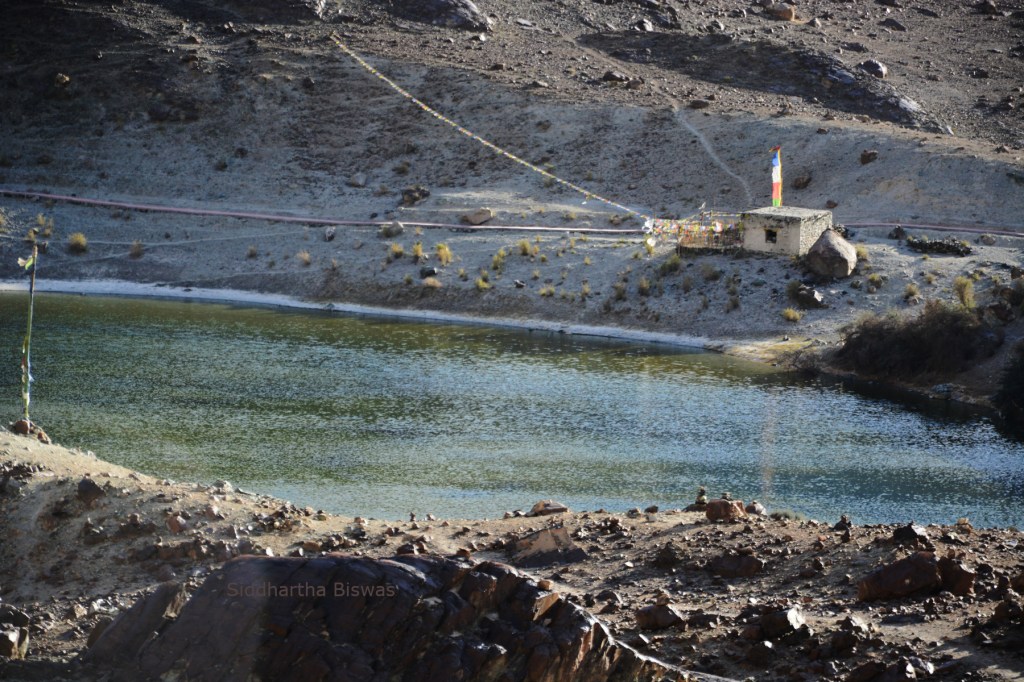

We went to the lake while returning from Siachen. The drive to Siachen itself is amazing and I do not use the word lightly (you can see the short video via this link).

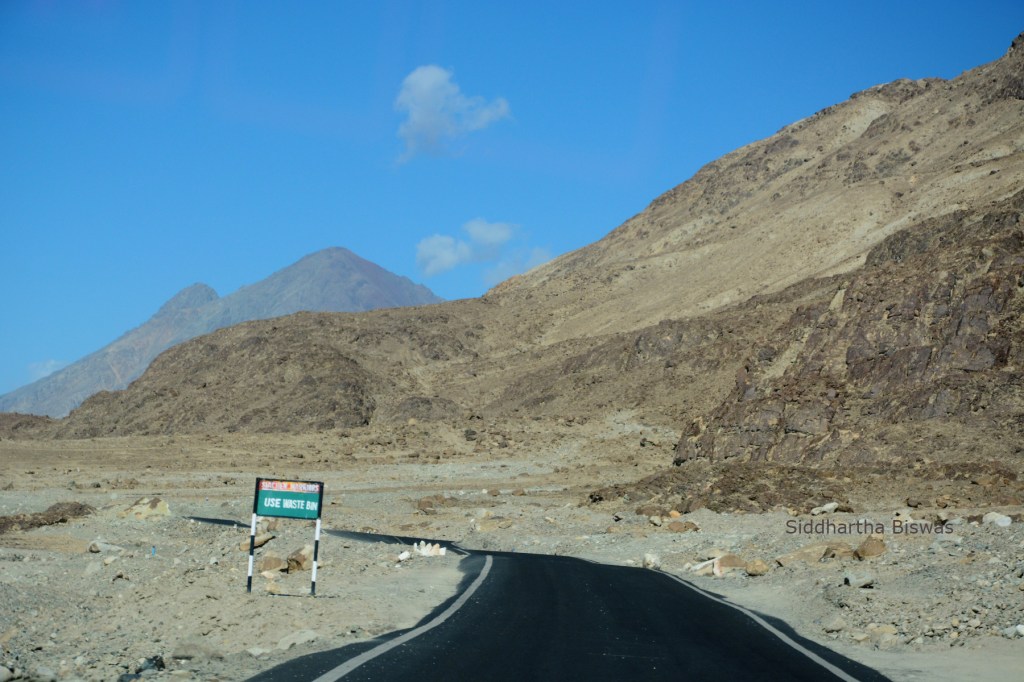
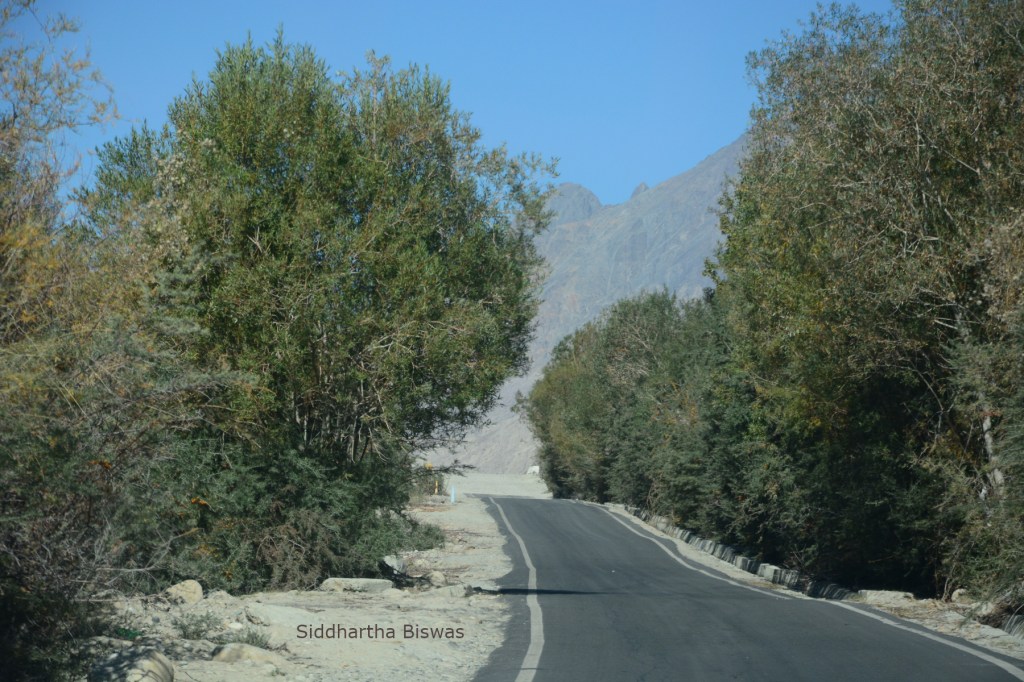
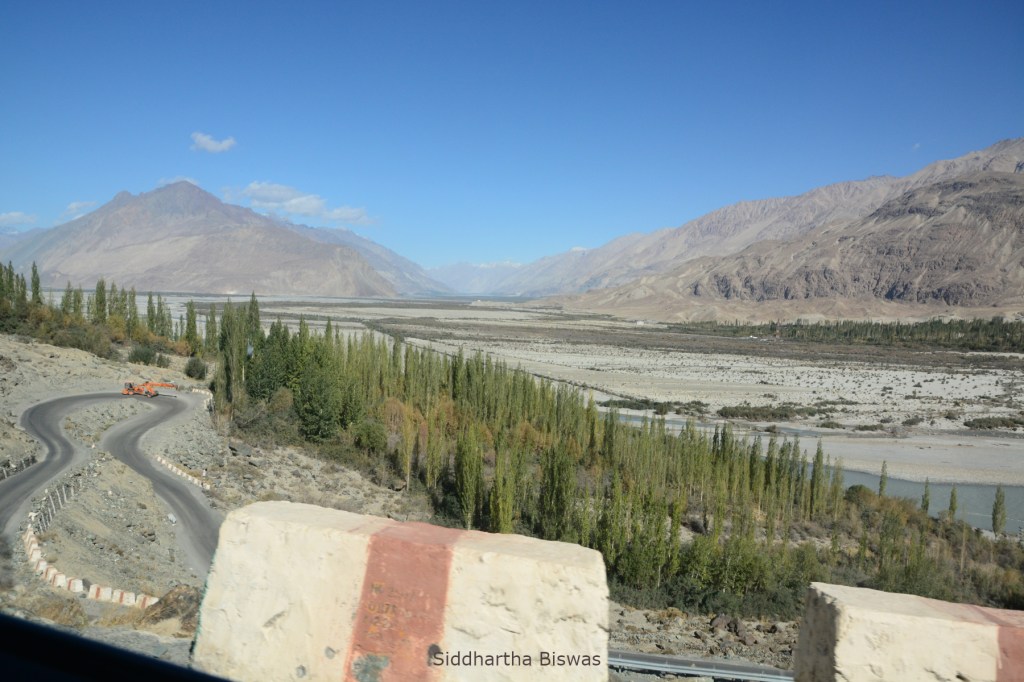
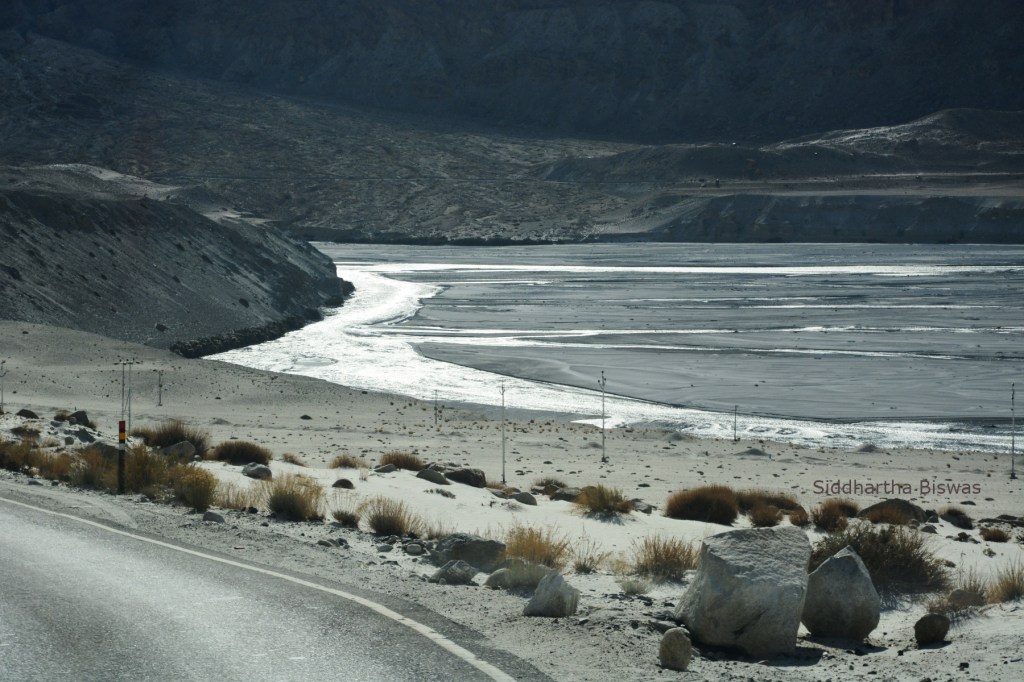


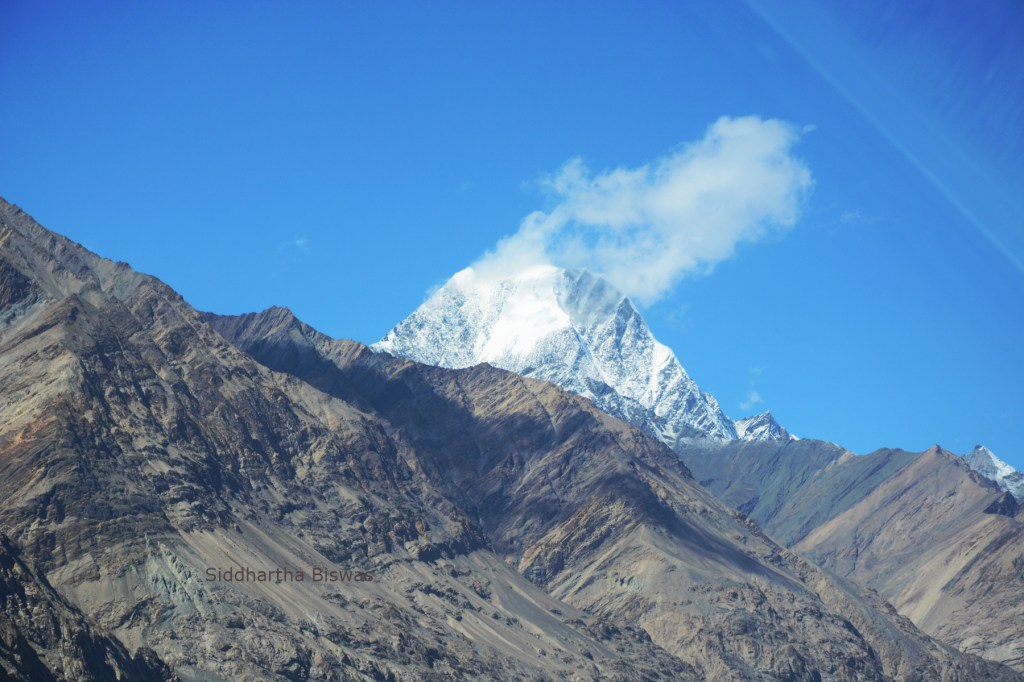
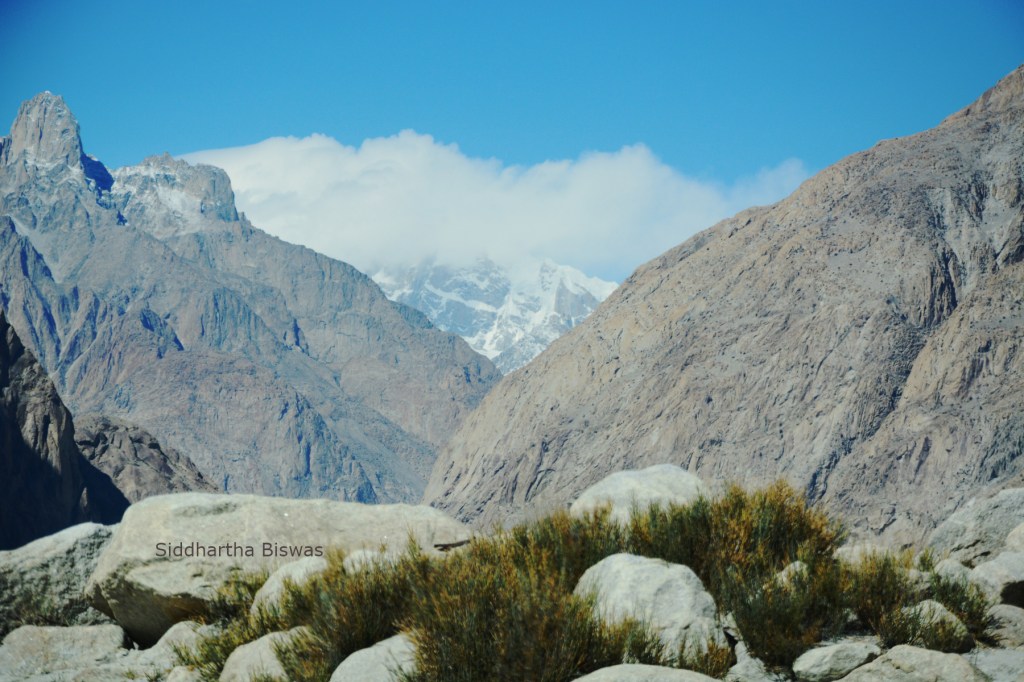
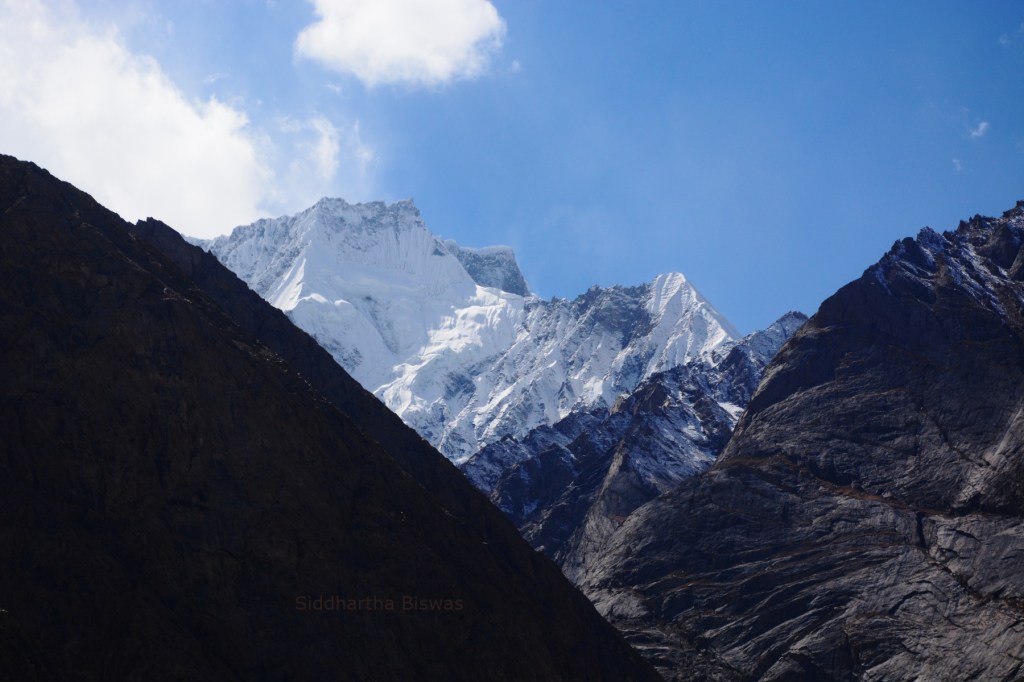
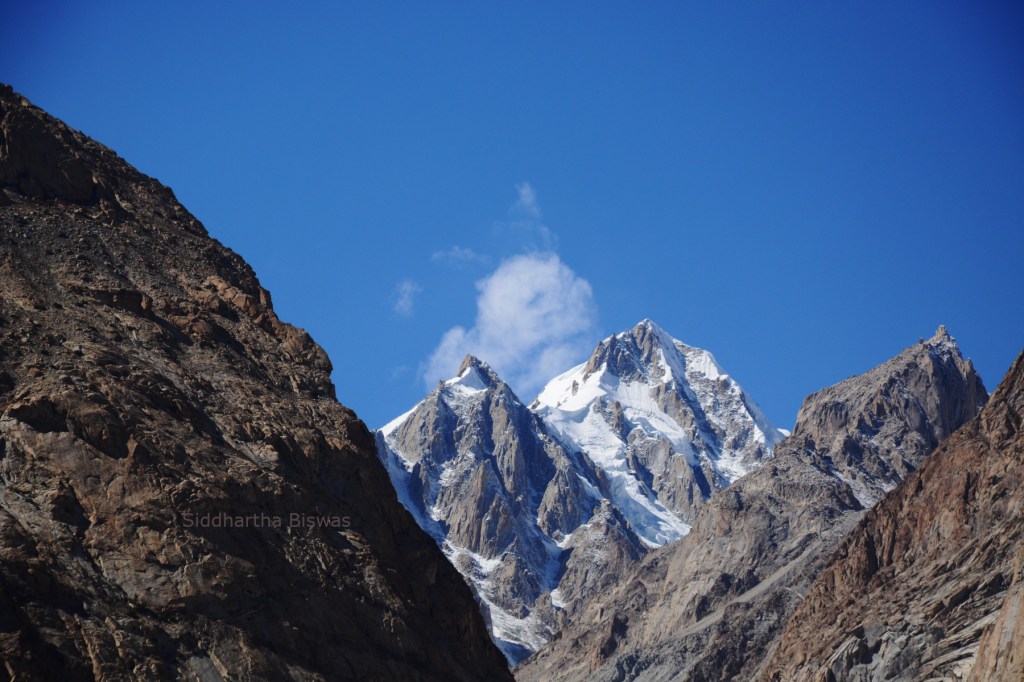
There are such variations in landscape, majestic snowpeaks and curiously shaped mountain tops waiting for the winter snow, you will not have even a moment’s boredom.
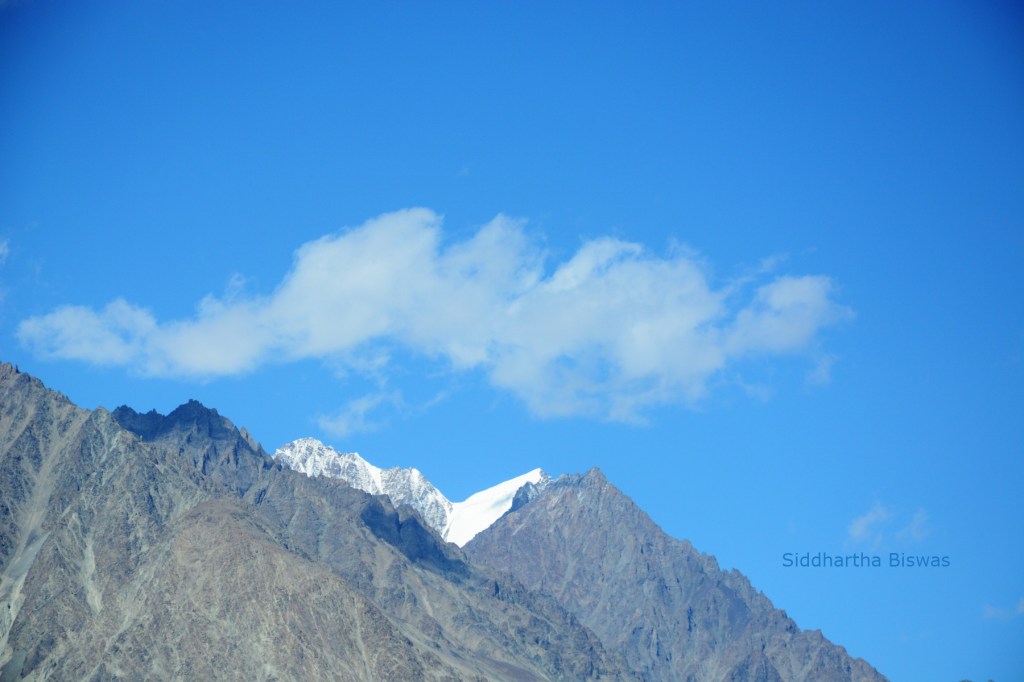

And you have the hot springs of Panamik.


There are sudden spurts of vegetation, hiding miniscule villages, and there are a handful of rock huts and tents for nomads.
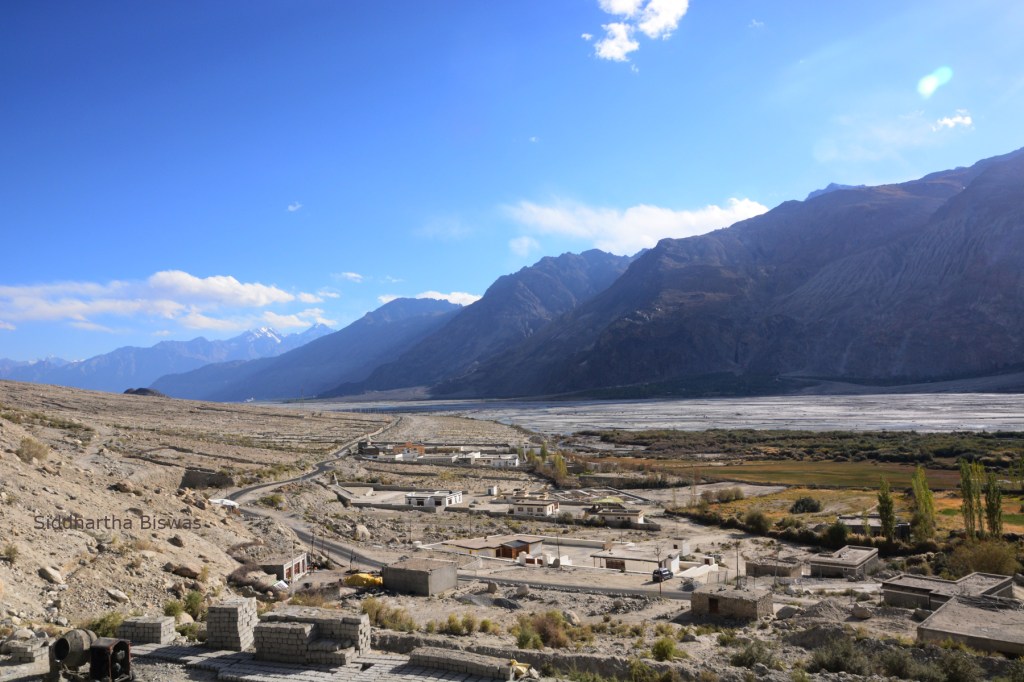
But all the habitation stops miles before the actual glacier. The first look at the glacier is when I stopped making videos. We were in this high security zone. There is no heroism in disrespecting the rules, especially when the nation’s security is concerned.

In the photograph, the small black and white patch right in the middle is the snout of the glacier. As a matter of fact, tourists were allowed to go quite close to the glacier. But some chump took videos and posted them on social media, despite there being special instructions forbidding all that. As a result, you can now go only till the gate of the base camp.

And if you are so inclined, flaunt your patriotism in the manner a group from West Bengal was doing.
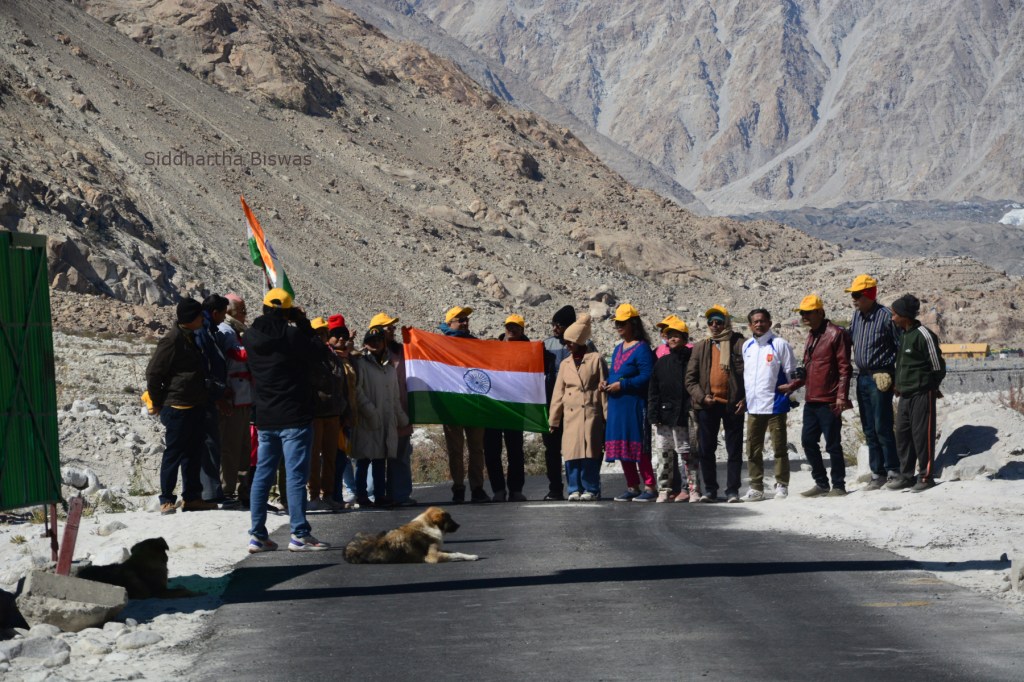
They wanted to go inside the camp, but good sense prevailed. And they just went a couple of meters within, and then came back. Outside the campus is the small Memorial and the hallowed Baba Mandir.
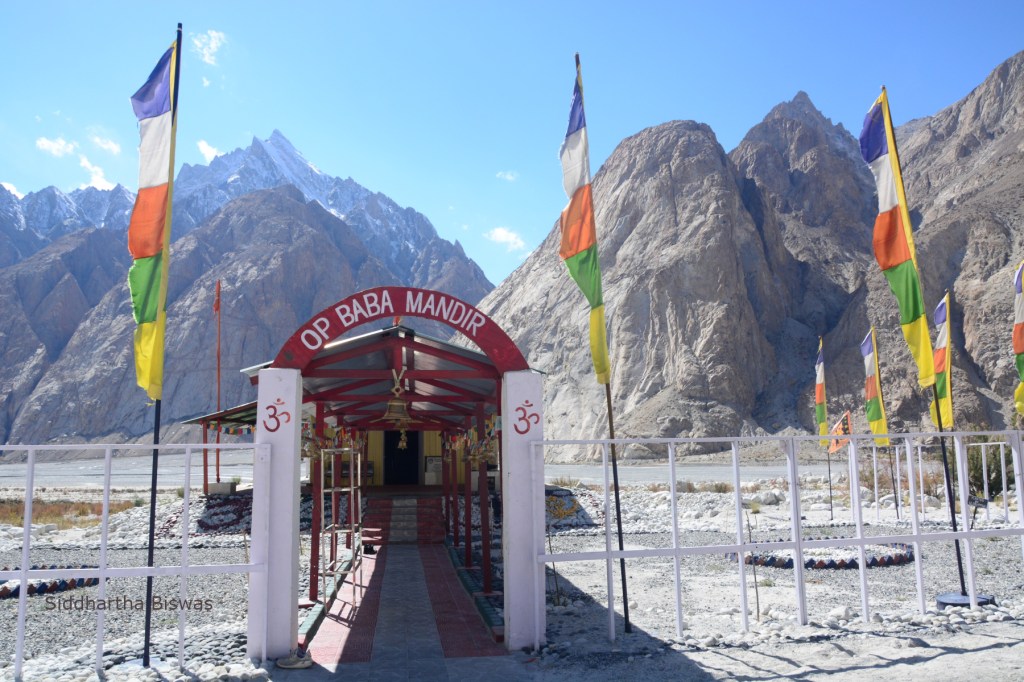
Legend says, OP Baba had saved the spot from an incoming attack singlehandedly and then had disappeared. Each month, on a special day, his spirit visits the zone and watches over everything. If a sentry falls asleep, OP Baba gives him a tight slap. Defending the nation is not to be taken casually.
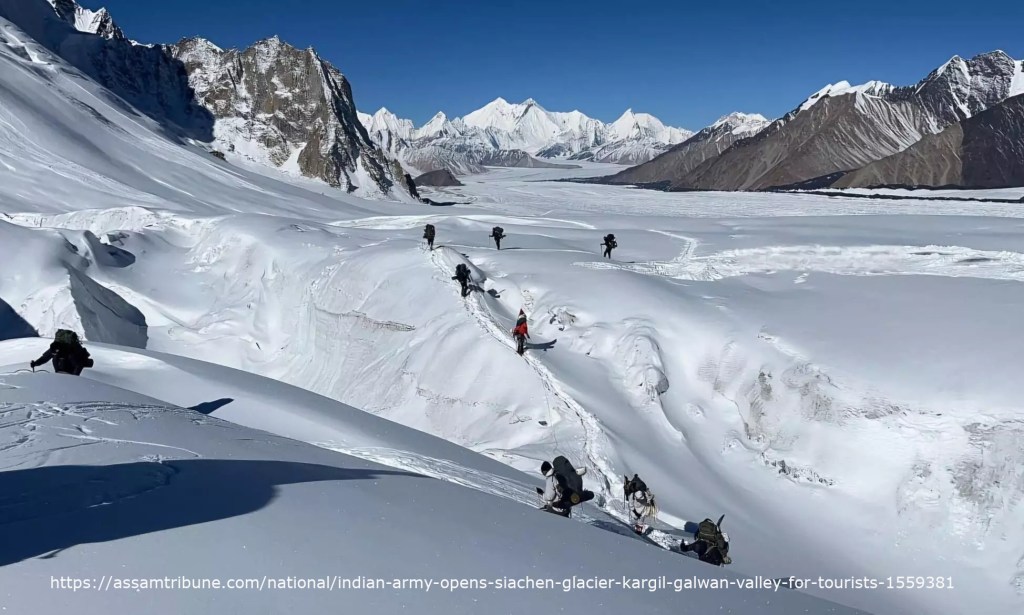
With all my travels all around the map, I have never been this awed. The majestic glacier is not merely a geographical wonder, but also a deadly space – with crevasses everywhere and temperatures going down to -50º and with hostile presences – in which our boys serve for months at a stretch. As I said earlier, it doesn’t matter what your a/political views are, you cannot but admire the strength of will of these soldiers who patrol tirelessly in the name of the nation.
RELEVANT INFORMATION
Siachen is around 100 km from Hunder.
Located in the northern tip of Ladakh.
There are quite a few good staying options in Sumur.
Prior booking is a must if you visit in season (May to August). Day trip from Sumur is advised.
The entire region becomes inaccessible to tourists in winter.
Multiple checkpoints, one must keep ones papers ready.
Rare public transport in the region. It is best to have prearranged vehicle.
Nearest town and airport is Leh.
Permit required for visiting most of the regions.
Earlier Posts
1. Old Lucknow 2. Colonial Lucknow 3. Going Downhill – Versey to Dentam 4. Going to Garhwal 5. The Walkers 6. Palamau 7. Rishikesh 8. Kolkata Kolkata 9. The Roar of the Clouds – Santiniketan 10. Of Pests and Men – Uttarey 11. Where Hikers Fear to Tread – Rudranath 12. Old Times 13. History in Ruins – Pushpagiri 14. Once There was a Heaven 15. Serenity 16. Pilgrim’s Progress – Kedarnath 17. Unfinished – Gaumukh 18. Ghatshila 19. Nothing Important 20. Manu’s Alaya – Manali 21. Santiniketan 22. Little Lhasa – Dharamshala 23. From Varuna to Assi – Varanasi 24. Tunganath 25. Transitory Blues 26. Gurudongmar 27. The Beginning 28. Yumesamdong 29. Bangali in Bangkok 30. Mukutmanipur 31. Rasvanti 32. The Old Town and the Sea 33. Budapest 34. The Last Post of 2019 35. Travel Travails 36. Cluj-Napoça 37. Presenting the Past 38. Far From the Urban Crowd 39. Silent Night Sleepless Night 40. Norwich 41. Photo Essay – The Road 42. Photo Story – The Days of the Goddess 43. Badrinath 44. Monumental Mistakes 45. Odyssey Now 46. To the Mountains 47. Keylong 48. Where Moon River is Born 49. Kaza 50. Through the Valley of Spiti 51. Kalpa 52. Sarahan 53. Un-happy Journey (Meghalaya) 54. Shimla 55. Bhalukpong 56. Rissia Nature Camp – Kuldiha Forest 57. Arunachal Diaries – Dirang 58. Arunachal Diaries – Sela to Jong 59. Quest for Quietness – Barot 60. Chindi to Chail 61. Baranti 62. Clouds of Tawang 63. Kumaon Diaries – Binsar
 Peregrine's Progress
Fantastic
LikeLiked by 1 person