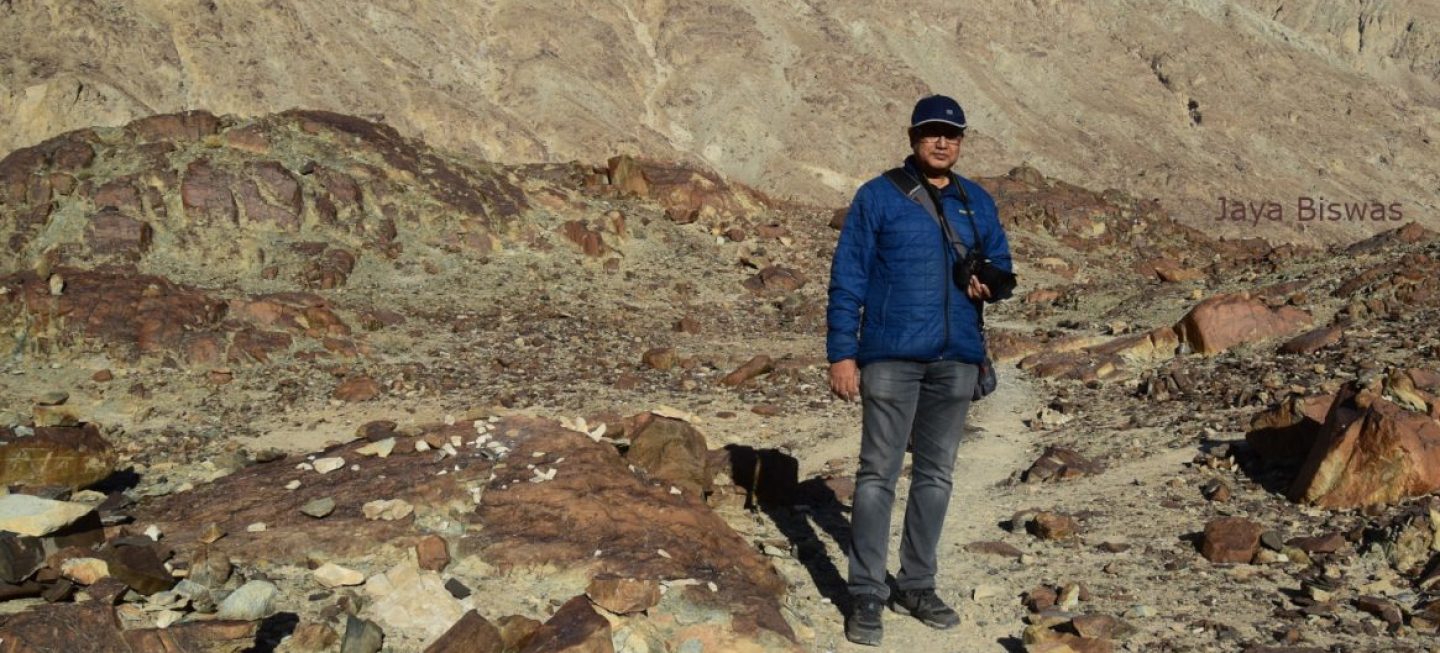

If you belong to my part of the world, then the river Indus has this incredible association as far as history and our heritage are concerned. The significance lies not only in the fact that this was the cradle of one of the most ancient civilizations, but also because it is the cradle of a geopolitical issue that has shaped our past and will continue to shape our future. And when you have this ever so meaningful river as your companion, then you can imagine just how momentous the journey becomes.
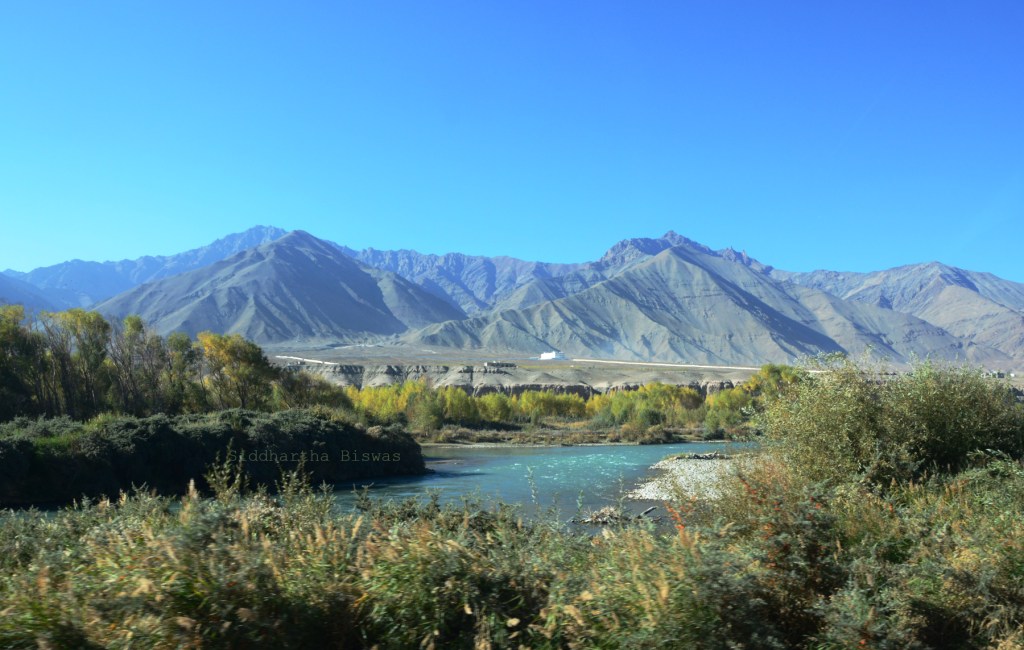
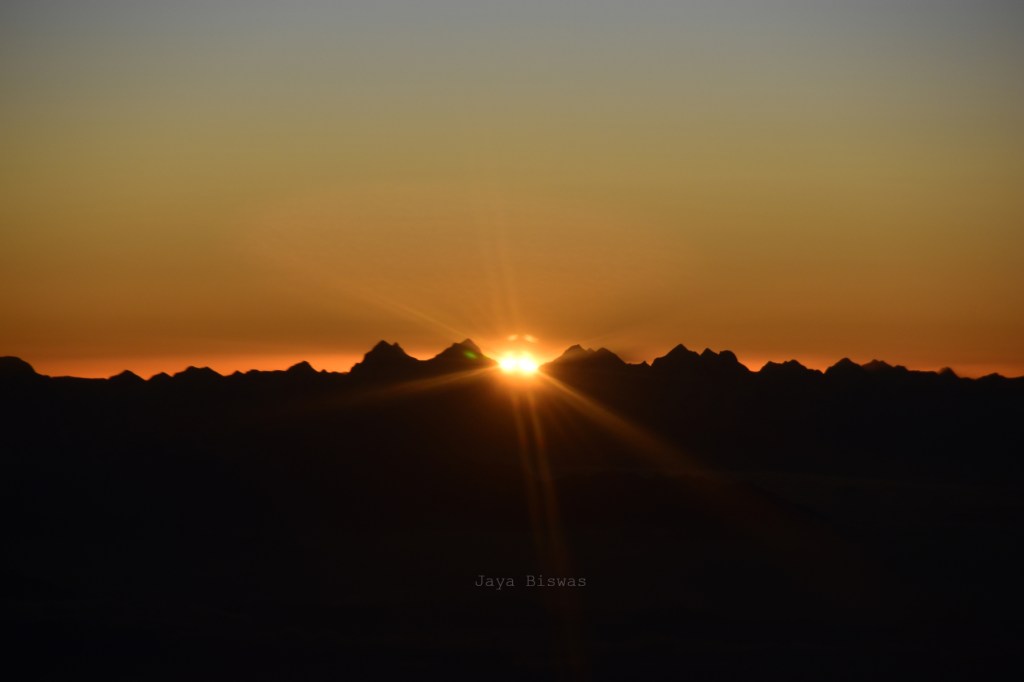
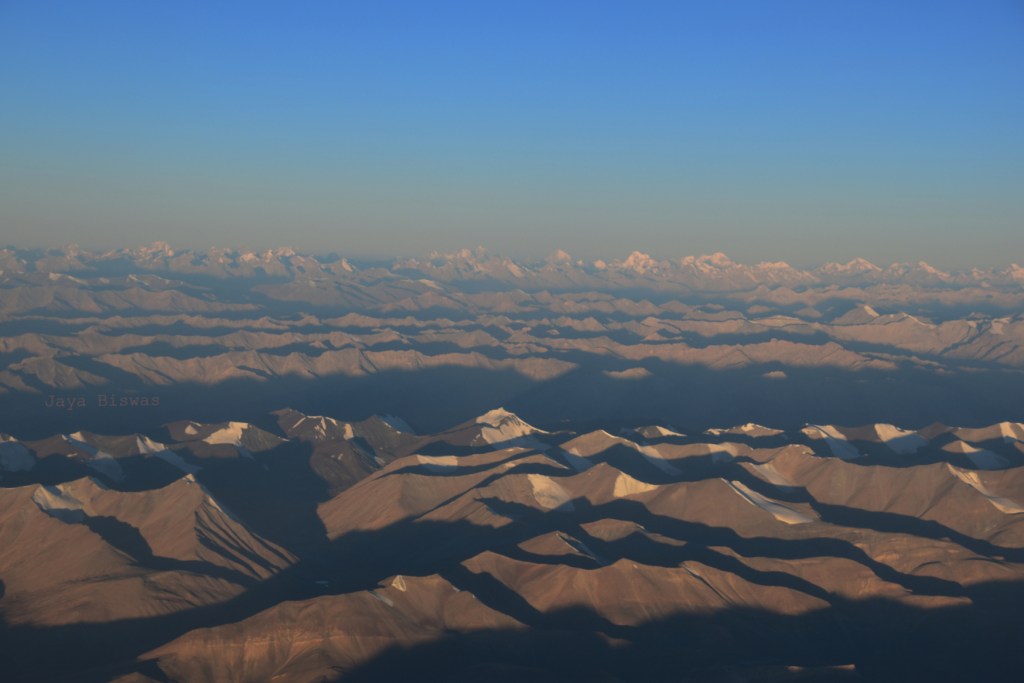
As the plane swerved and slowly descended towards the runway, glimpses of the unique landscape of this portion of the Indus Valley, with the river flowing through majestically, greeted us. Here is a small video if you are interested. We had a very early flight and thanks to airline drama we had no sleep the night before. Our flight from Delhi left while it was still dark. And we were treated to a magnificent sunrise.
Even though there was a city-wide shutdown going on as a protest for an administrative decision, our hosts arranged a pickup and we were safely in the hotel by 8 a.m.
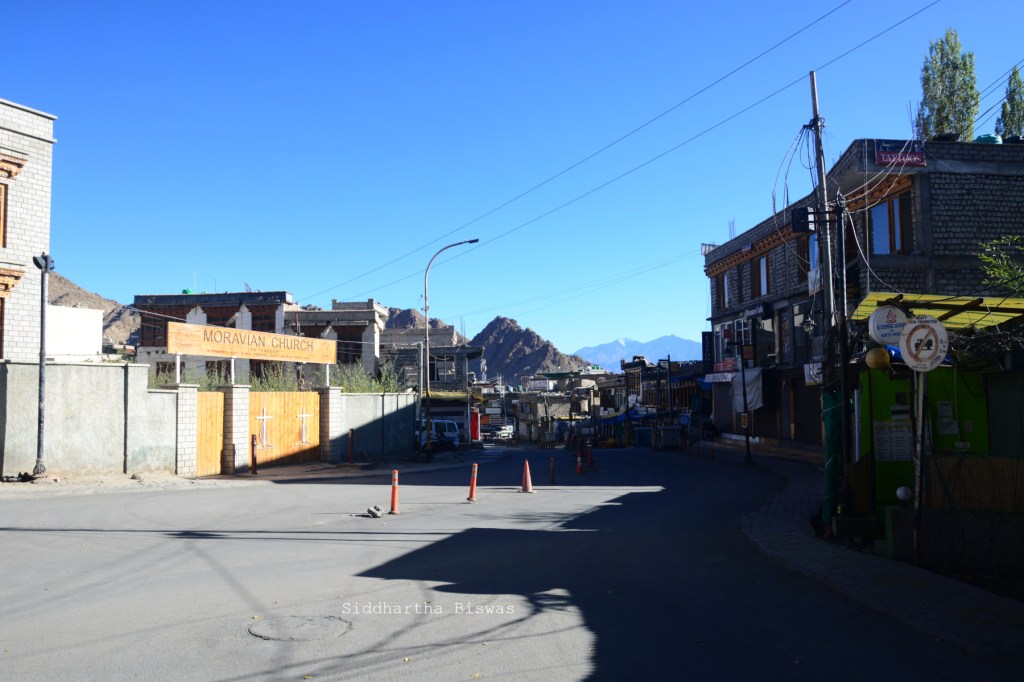
This was in 2024, and the major upheavals were still in the offing. The airline fiasco was a blessing in disguise. Our hosts advised us to take rest and take sips of warm water, which we obeyed gladly. The 7-hour sleep – inspired by the anxious eyes wide open airport experience – that followed allowed us to acclimatize and be fresh. By evening the strike was lifted for the season and the beautiful Main Market welcomed us with its assortment of shops, restaurants and cafés. Leh is as much a foodie’s delight, as it is for a shopper.
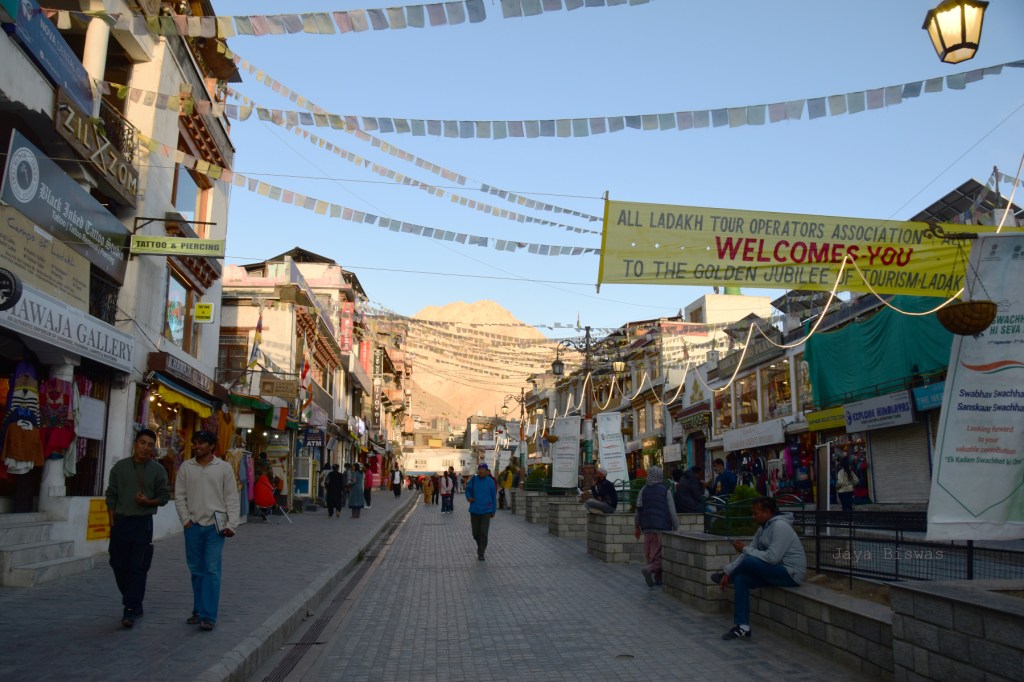
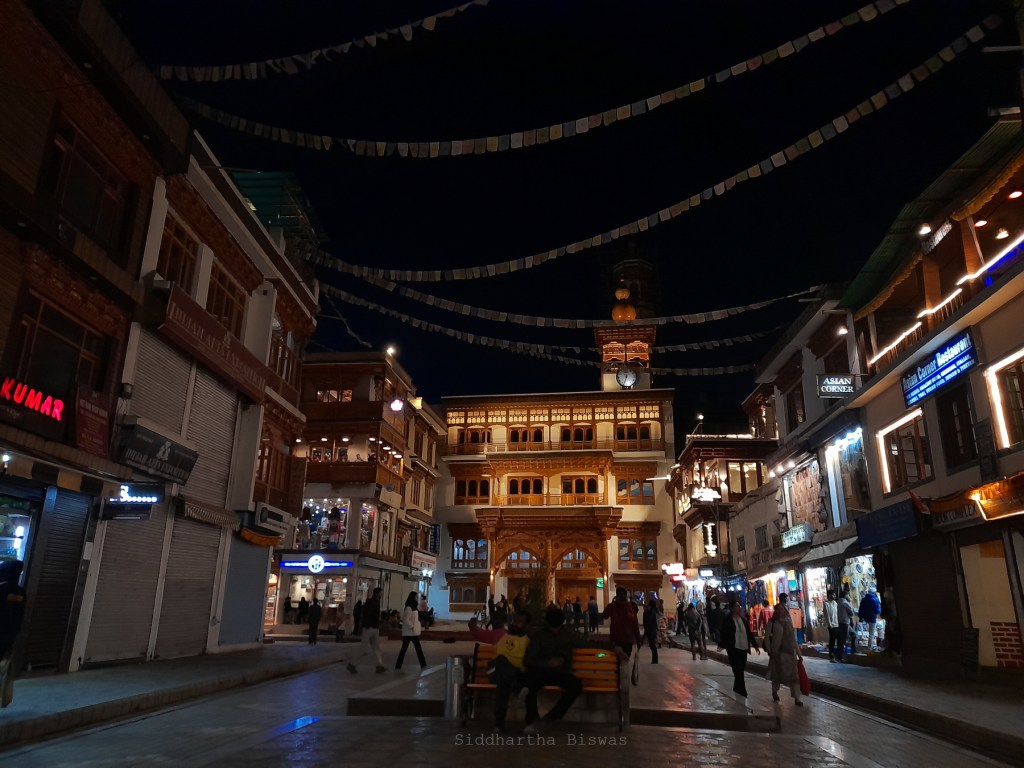
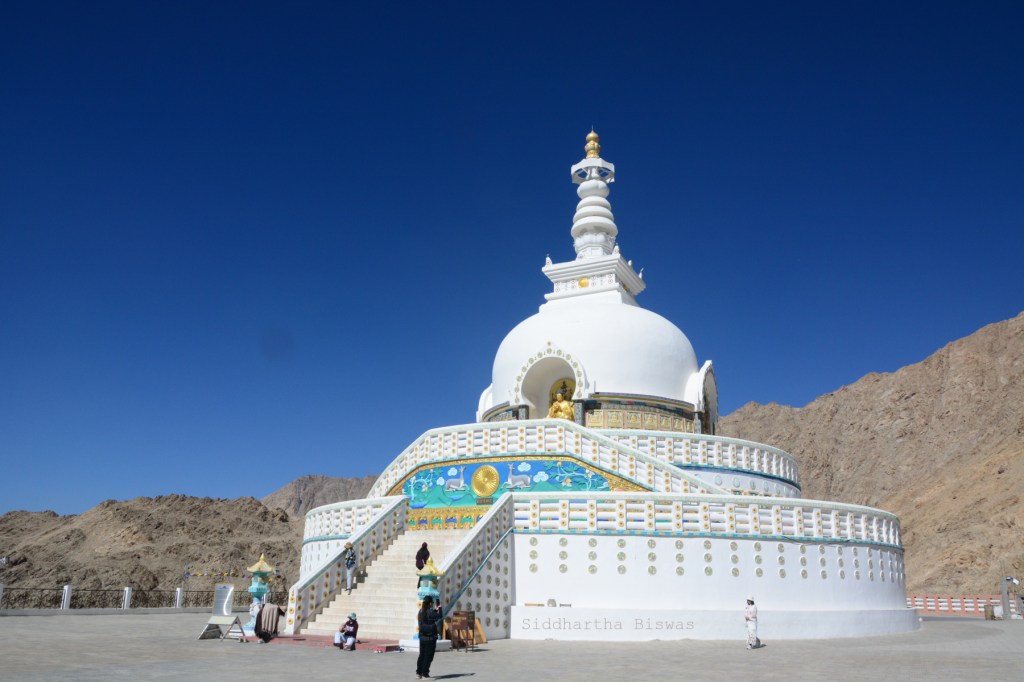
We stayed for three nights before moving on to Turtuk. Most people spend a maximum of two days. But this allowed us to relax and connect. On the second day we went to the awe-inspiring Shanti Stupa, which gave us brilliant views along with a peacefulness that is rare.
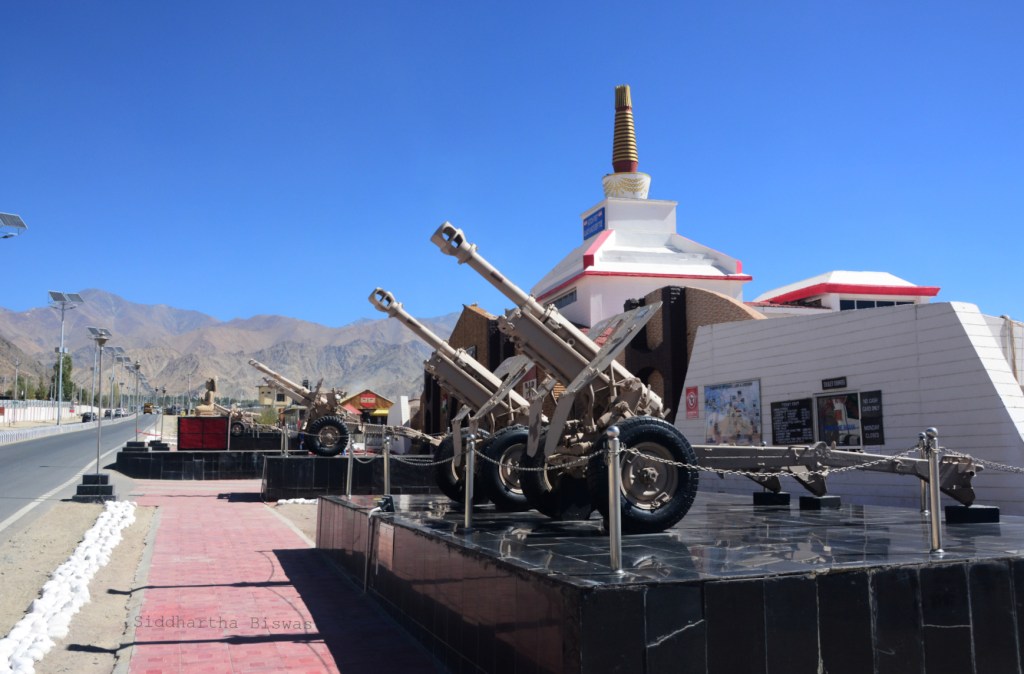
Then we went to the Armed Forces Hall of Fame. It is another compelling place. There is a ticket to be bought for the museum. We bought it gladly. And the show, presented with military efficiency, left us impressed. Ladakh shows you exactly what our boys and girls in uniform go through in those exacting locations. We can but honour them and remember their sacrifices with deep contemplation. We had a nice cup of coffee in the adjacent army-run canteen. We have always found such canteens preferable, as the money ultimately goes to the forces.
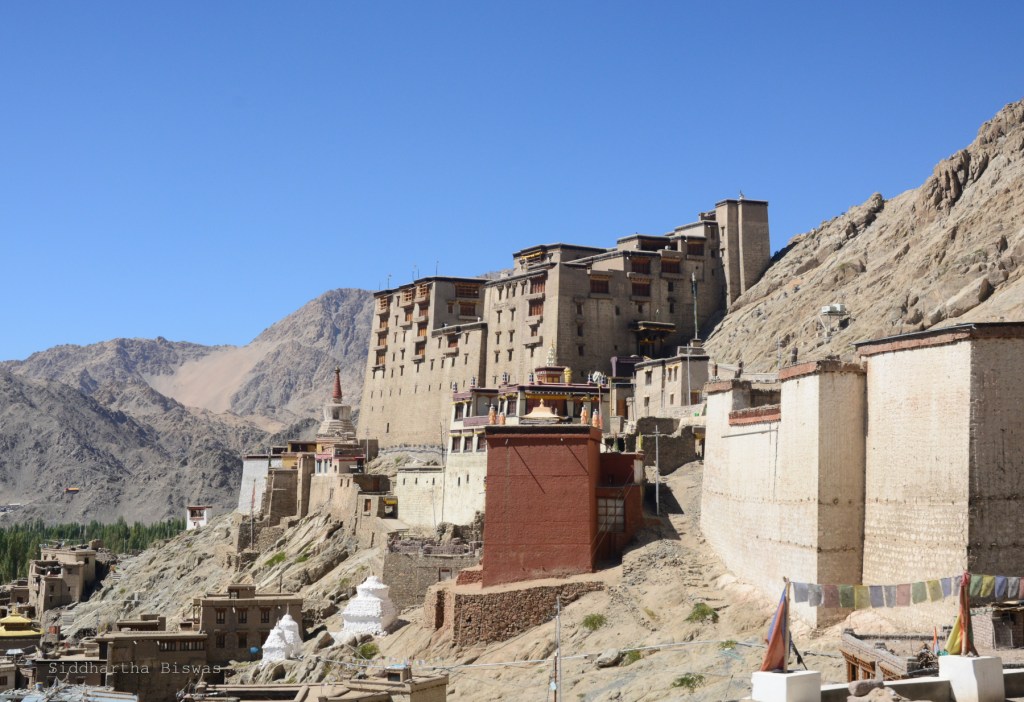
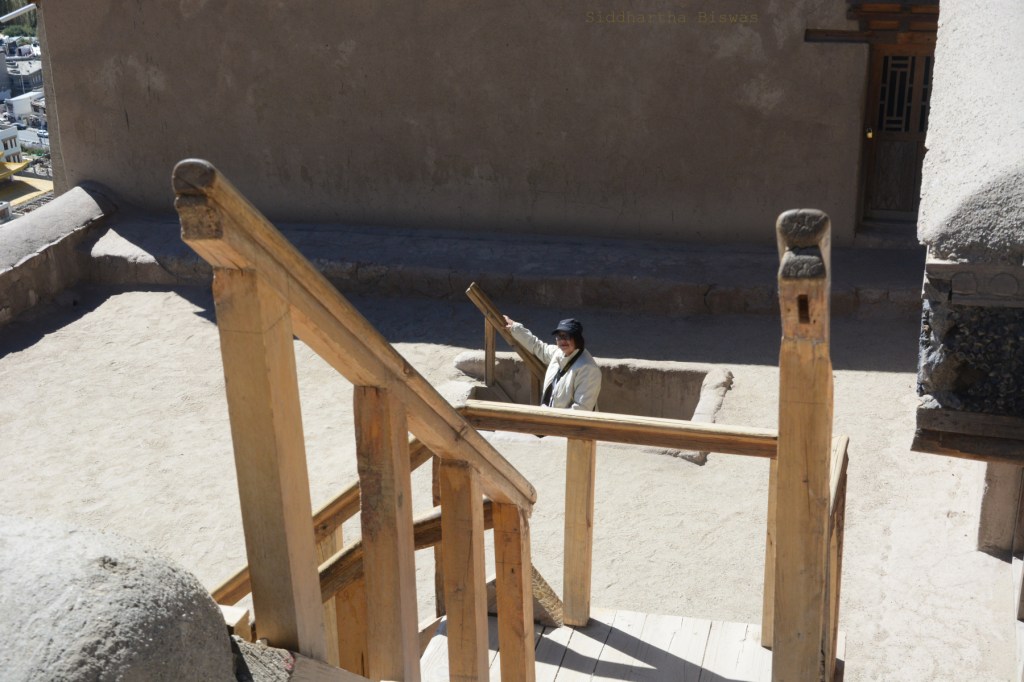
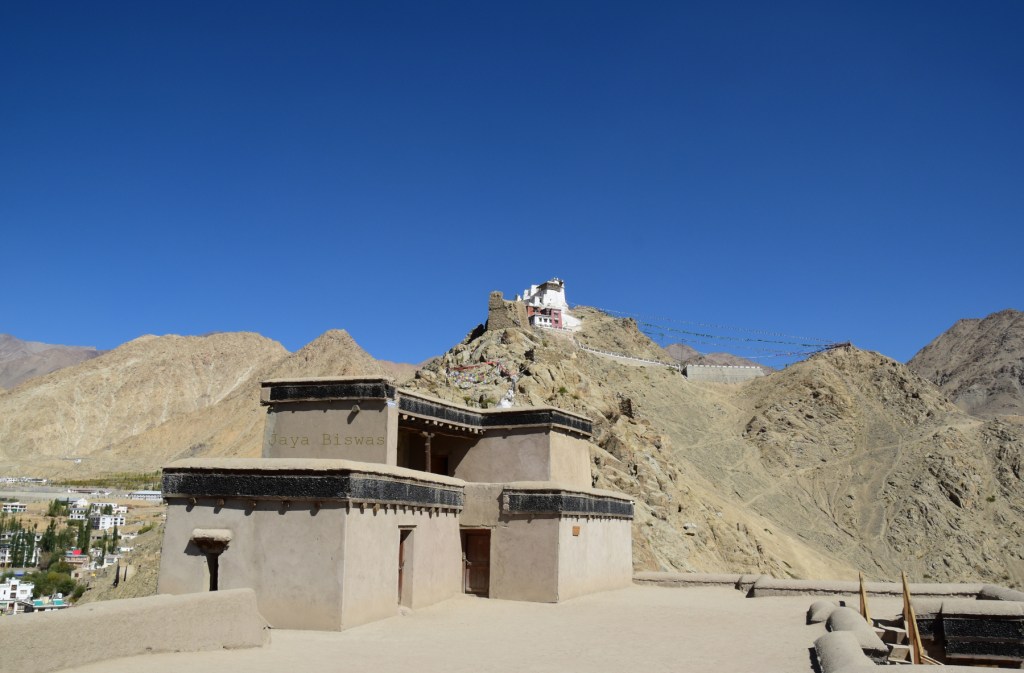
Then we climbed the steep stairs of Leh Palace. The location is old Leh, a part that is almost three centuries old. One gets a glimpse of the old Buddhist memories – recollections of a past when there was a strong connection with Tibet. The Palace is to be savoured. The long series of steps takes the traveller to different zones that present different vistas. The palace was built in the 17th century following the pattern of the Potala Palace in Lhasa. It was conquered by the Dogra forces and the royal family moved to a nearby palace, where they still live.
The next morning, we drove to Lamayuru (also known as Lamayouro). Dorje-ji, our driver, insisted that we go to the farthest spot first and then come back. We couldn’t agree more. Driving through the immaculately maintained 127 kilometres, we reached Lamayuru quite early.
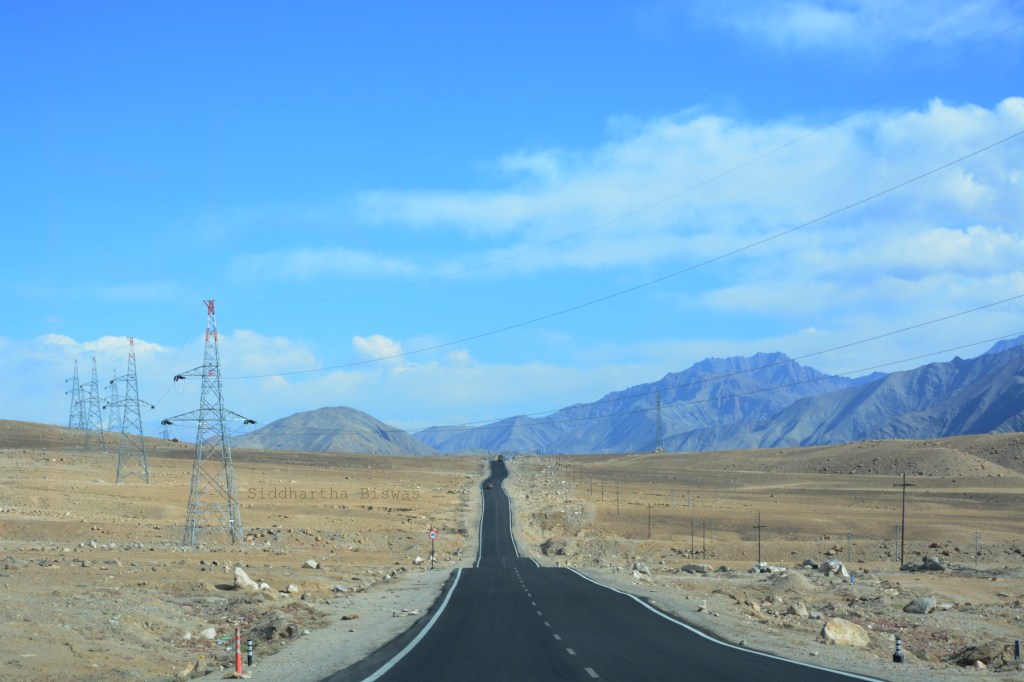
The historic Monastery, belonging to the Red Hat Sect of Buddhism (combining the three oldest primary schools of Tibetan Buddhism—the Nyingma, Sakya and Kagyu) is quite impressive.
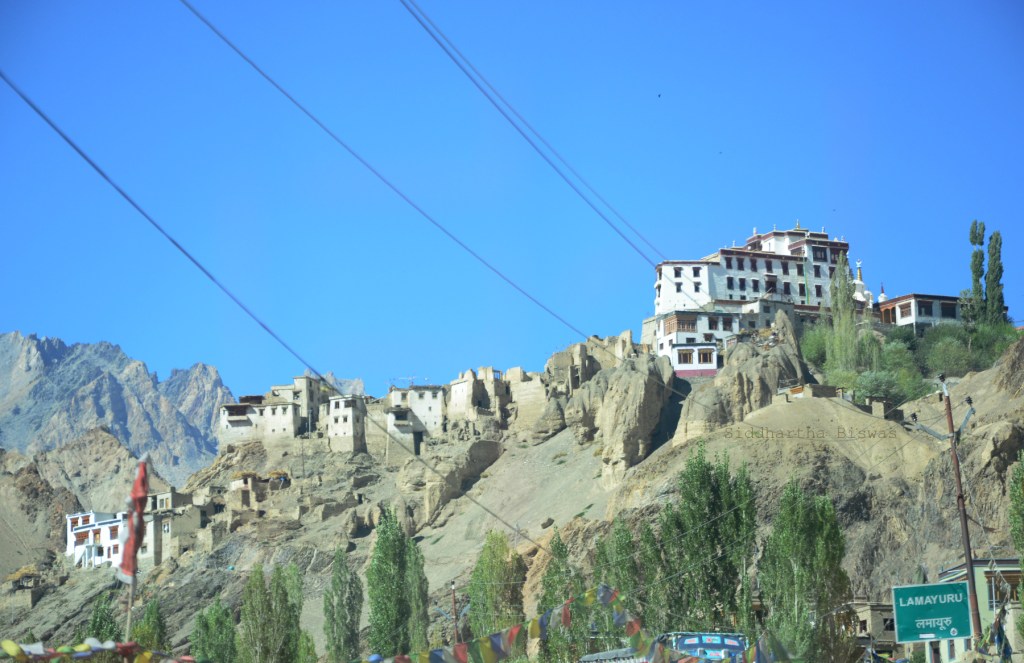
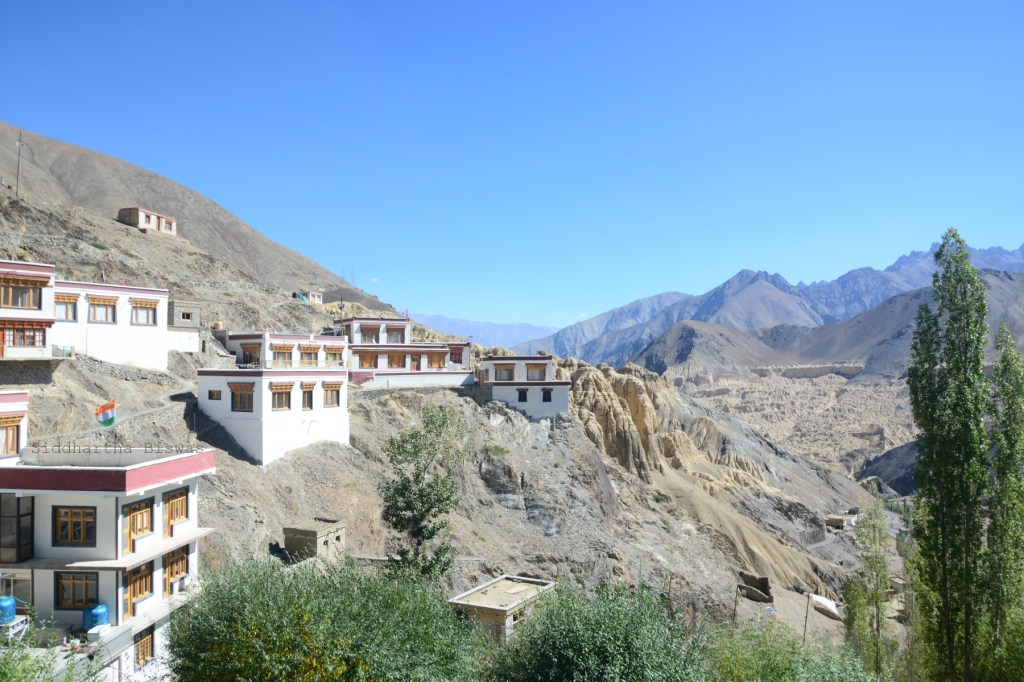
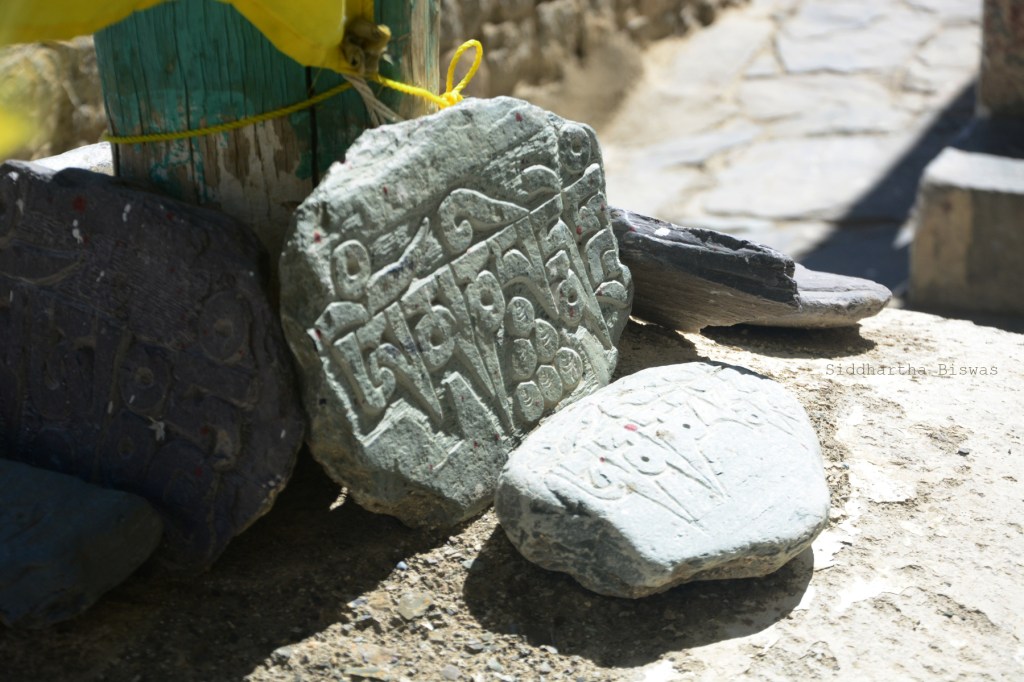
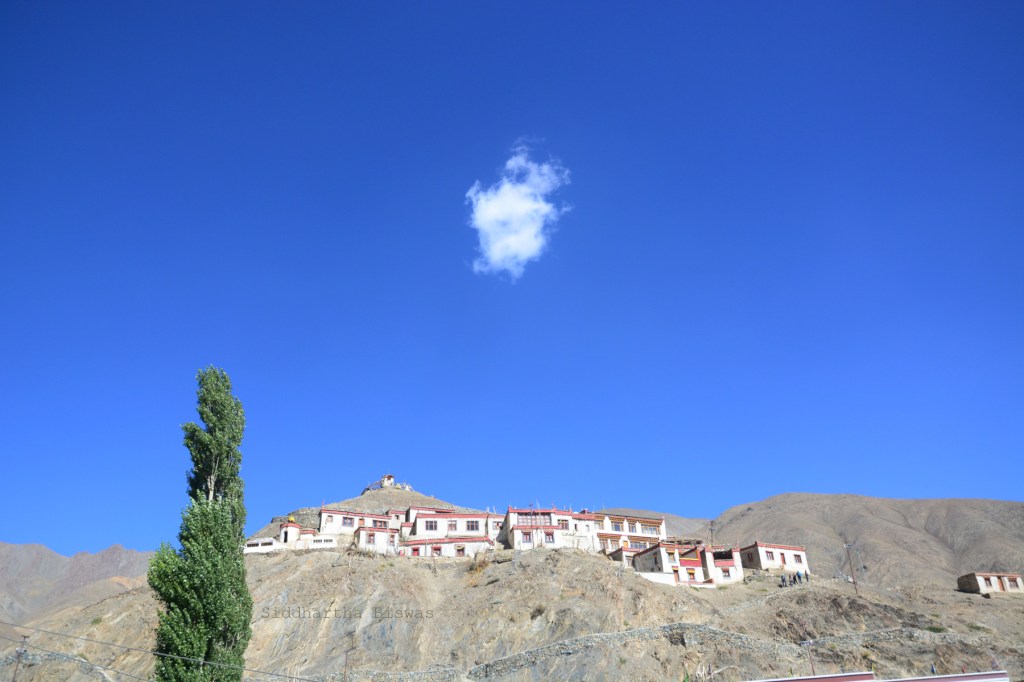
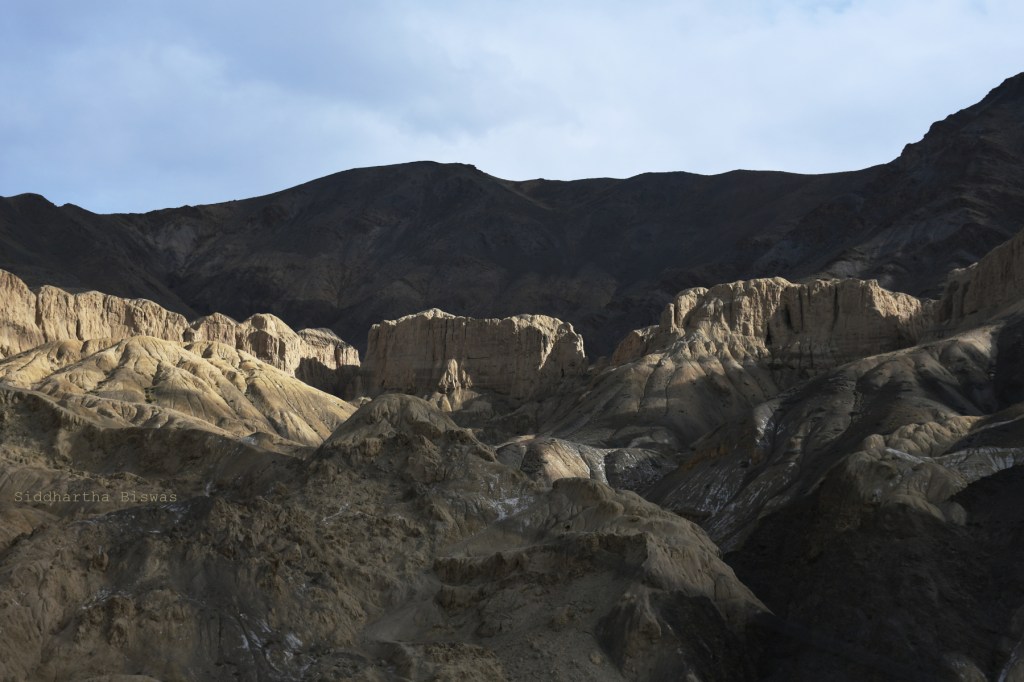
The Monastery was made even more memorable as it has excellent views of what is known as Lamayuru Moonland. Here is a somewhat unstable video.
(Within a year we did have a chance to stay at Lamayuru and have lunch from a café that looks directly onto the Moonland.)
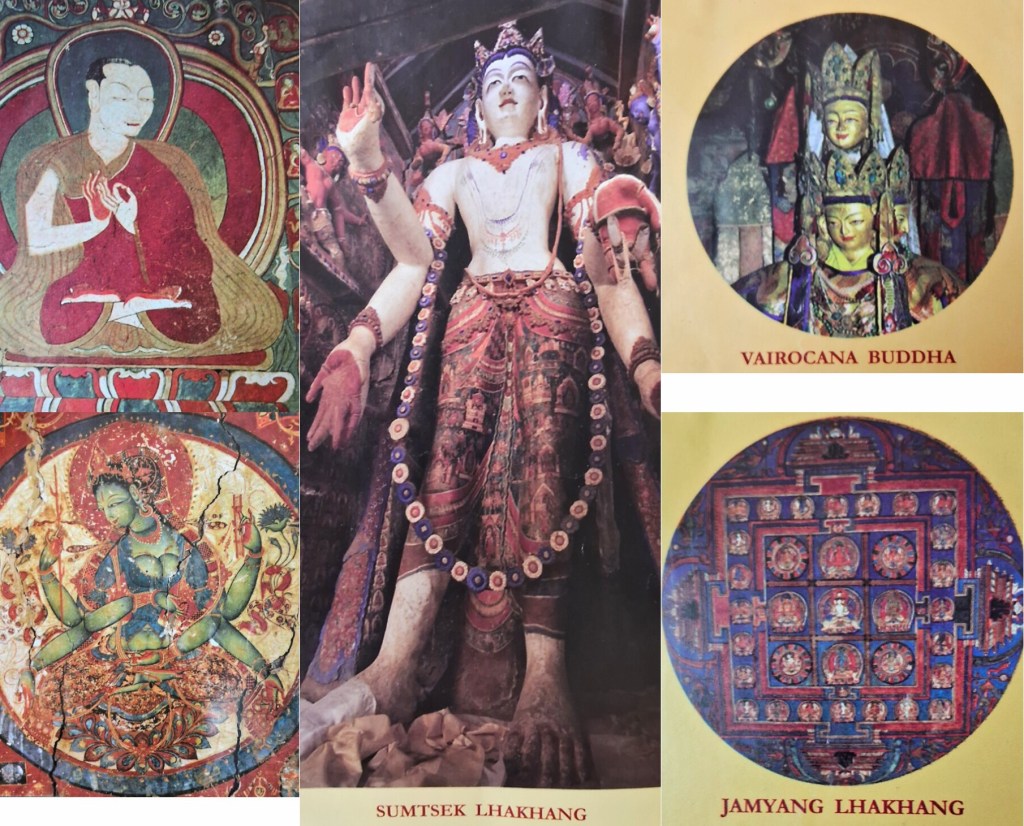
Then we drove back towards Leh and the first stop came after a detour that took us to Alchi. Built in 11 A.D., this is the oldest monastery in the region. Alchi is unique as it has a series of brick small temples (called Lhakhangs), each with intricate paintings and carvings. There are five major ones, and three constructed much later. The Monastery reminded us of the larger (and grander) Tabo Monastery in Spiti. Alchi Monastery has a daily afternoon break, so one must get there before then, or there is an hour’s waiting involved. There are strictures about photography here, we had to leave our cameras in our car. The collage below is made from the photos from the brochure.
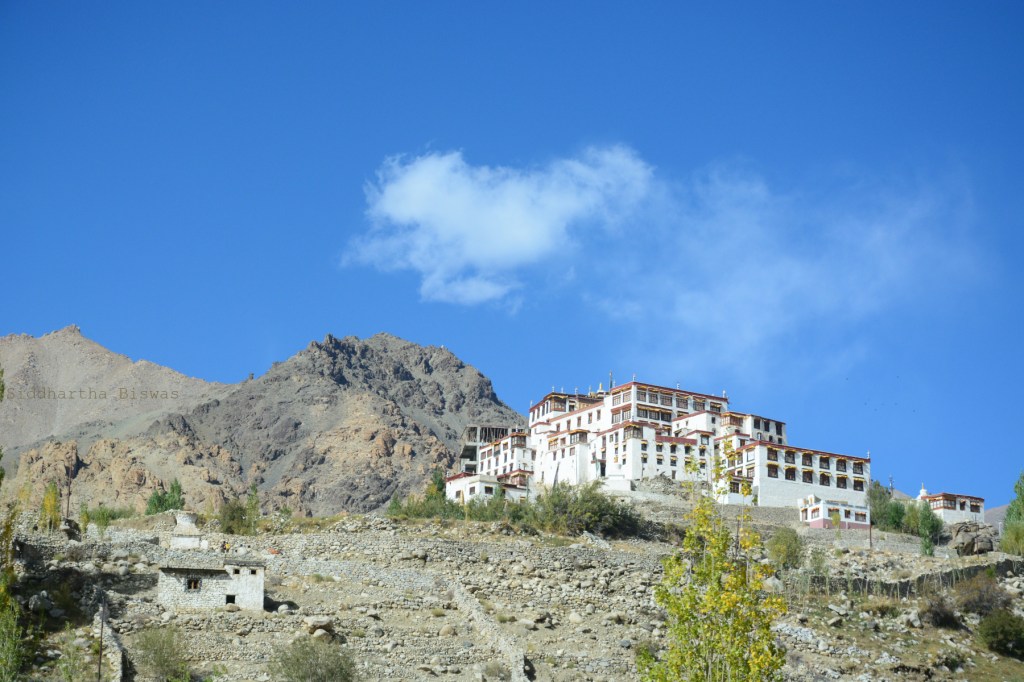
Speaking of lunch breaks, there is a rather famous Ladakhi restaurant in the village. We went in. It was too crowded – which is always unappetising. Thus, we left and found a nice garden restaurant (Zimskhang) and were happily surprised by the quality of food. After lunch, we came back to the highway and took the road to Likir. To our disappointment, Likir Monastery (established in 1065 AD) was closed.
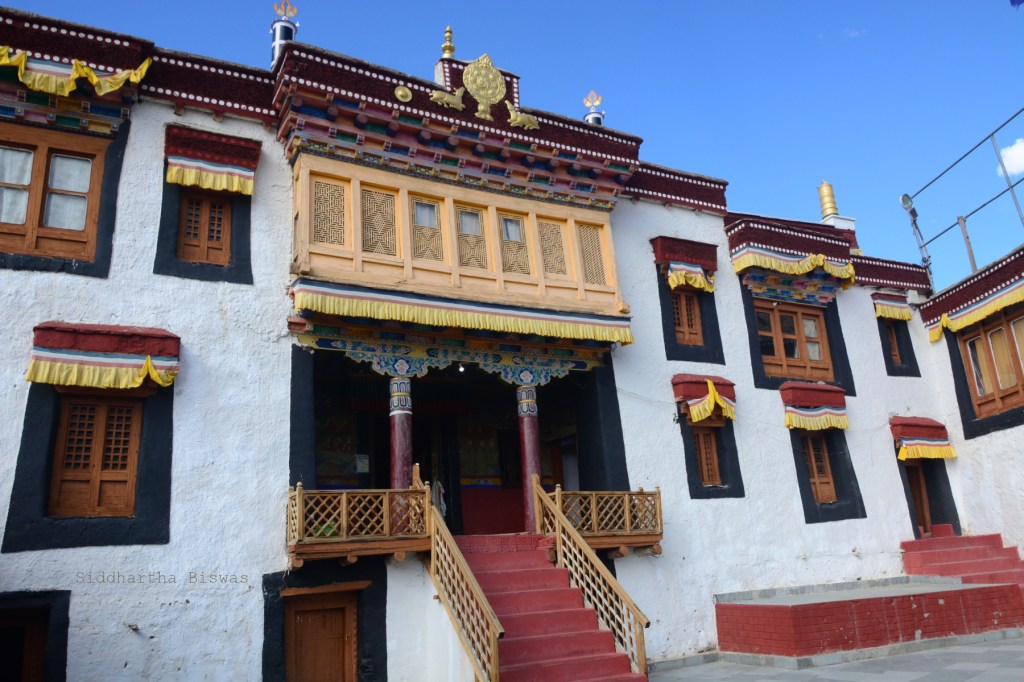
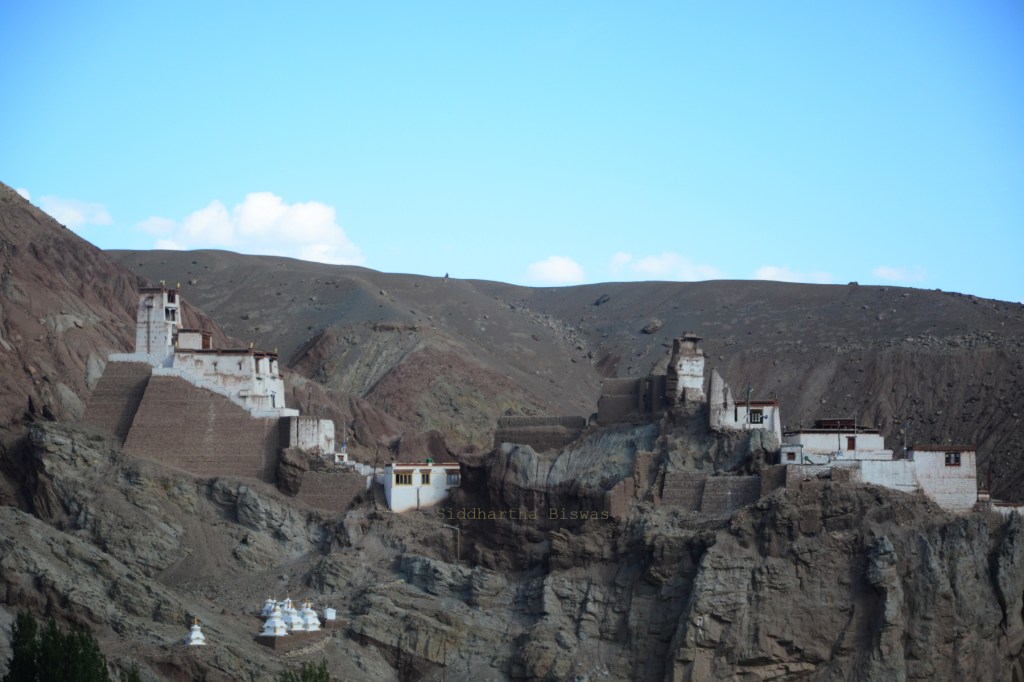
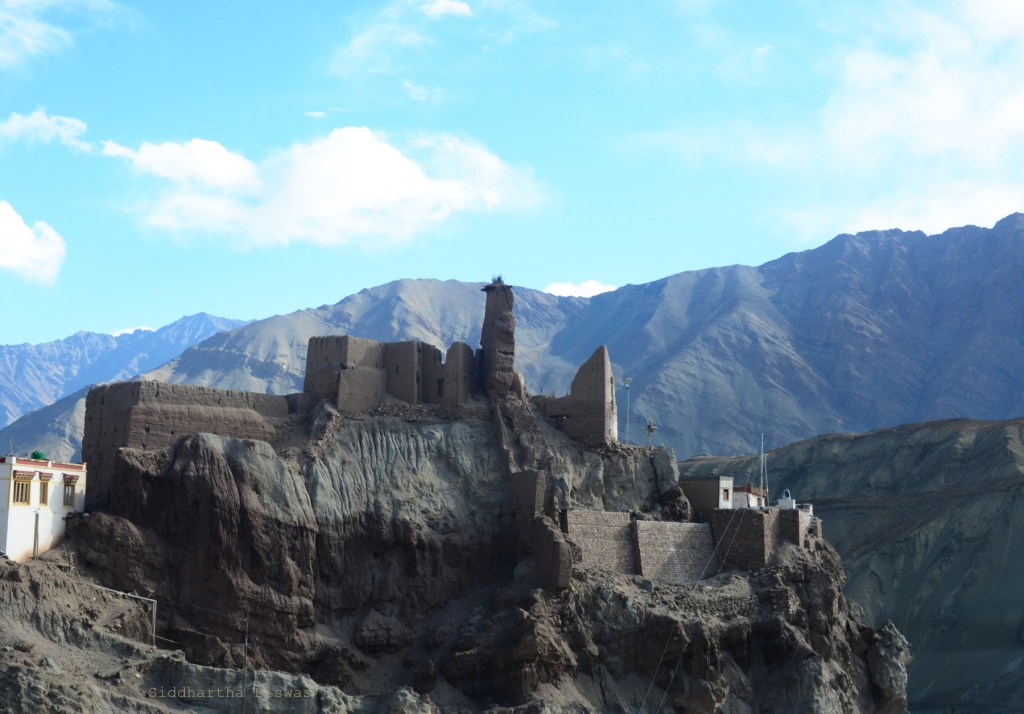
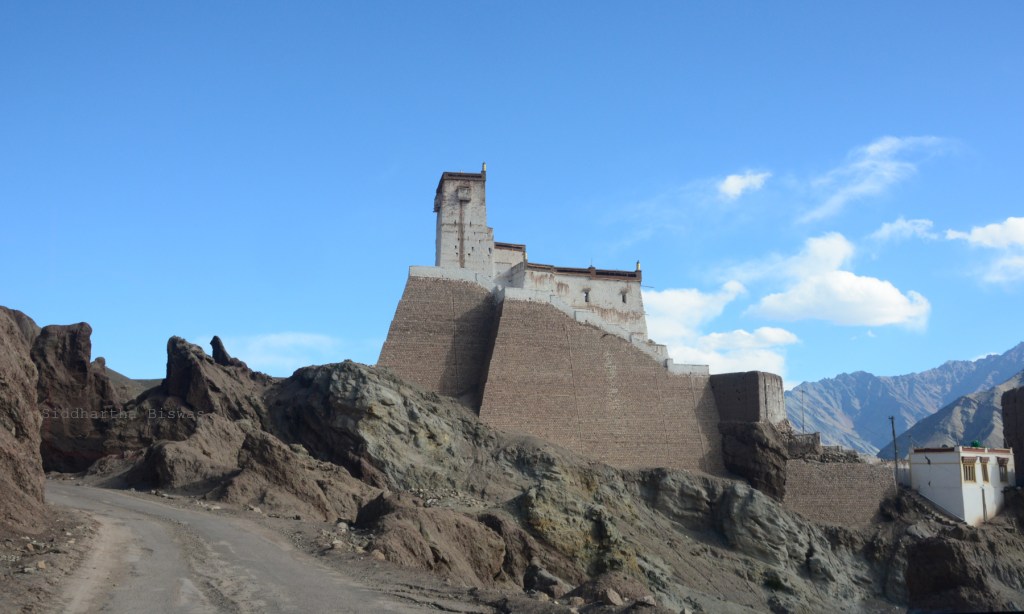
After Likir, we insisted that we should be taken to the ruins that we had seen next to the highway. It wasn’t on the itinerary, but it wasn’t quite out of the way, and the intrepid Dorje-ji obliged. The mud-brick and stone Basgo Palace and the Basgo Gonpa are situated next to each other. The ruins speak of an ancient heritage that is slowly disappearing from this region. It was made five centuries back. Old Ladakh is turning into new Ladakh. As it should. But for people like us who love ruins and history, there is always a touch of sadness in losing the yore.
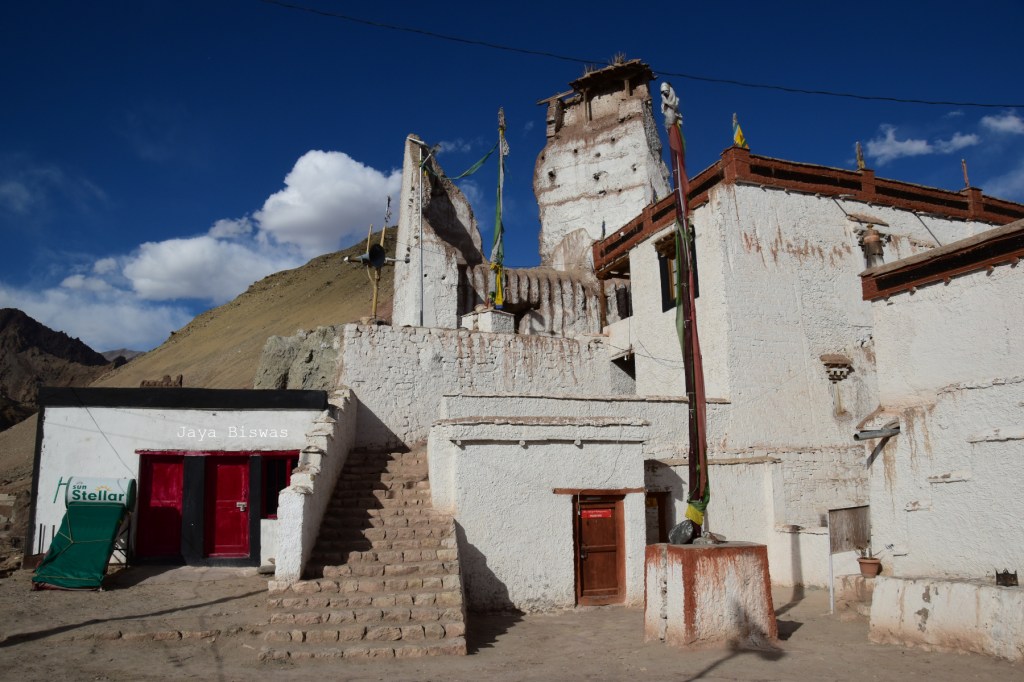
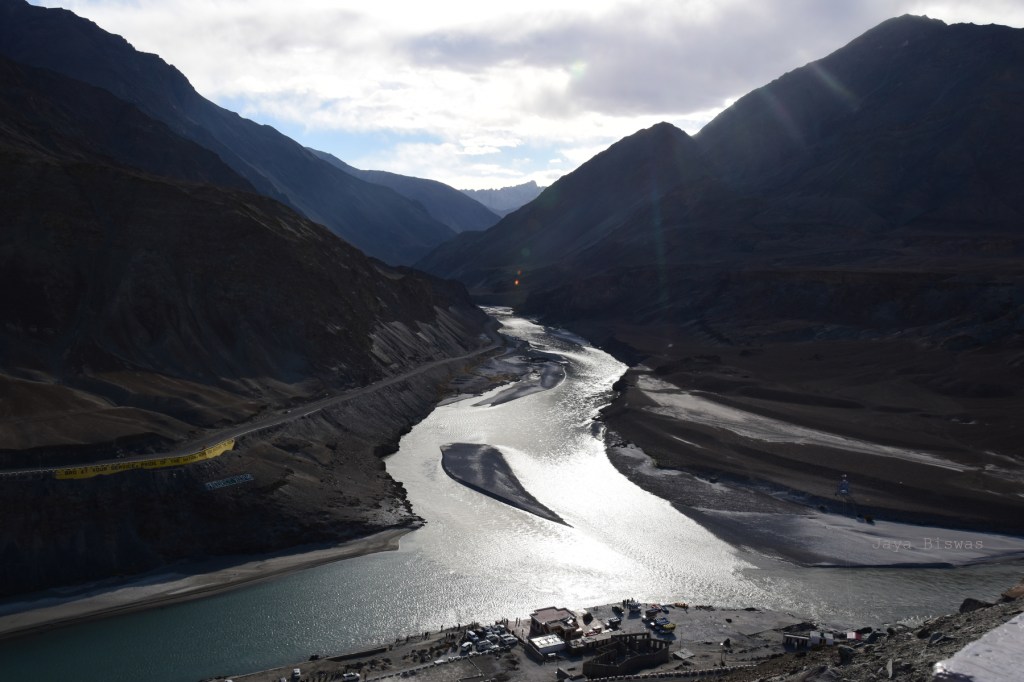
After Basgo we stopped at the Sangam of Indus and Zanskar at Nimmu. A new road is being built to facilitate travel to Zanskar along the river. To this day it isn’t fully operational, traffic being allowed only twice a week. But pretty soon it will make life easier for people in the still remote Zanskar region.
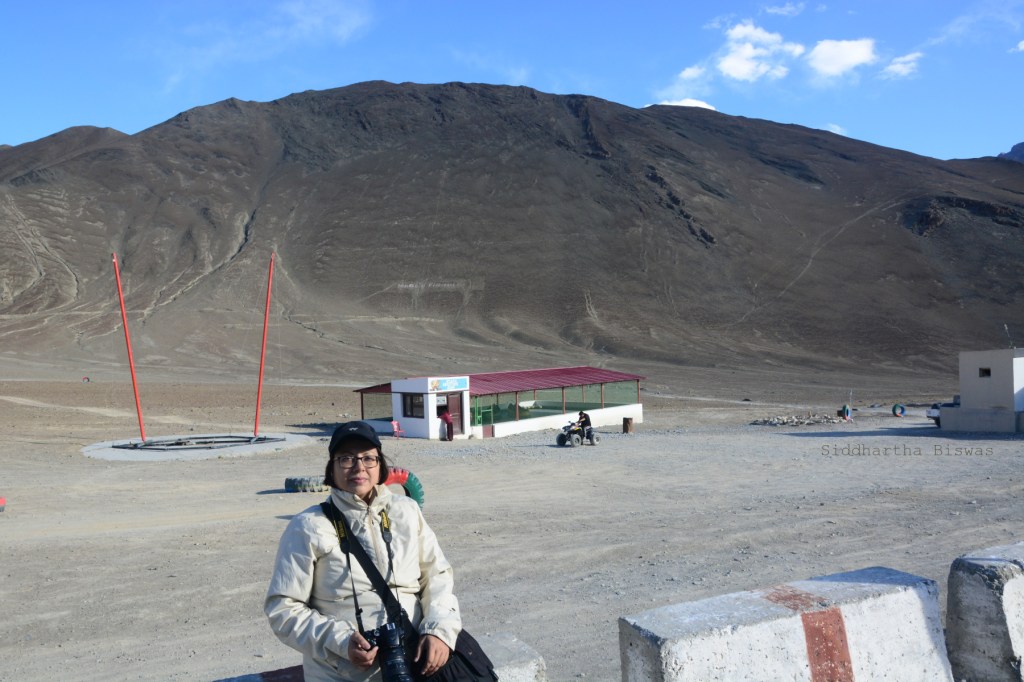
Then comes the tragedy called Magnetic Hill. Since people learned of its magnetic appeal, so many have tried it out, it has all but lost its pull! Dorje-ji, and later Asif (our driver in Zanskar in 2025), confirmed that it is now the polar opposite of anything magnetic. Still, it attracts a lot of people.
If you ask me, this should be the end of the day’s tour. It is already quite hectic. The big names that are still left should be visited the next day. Otherwise, the mind would be satiated and all will fuse into one big blob of experience.
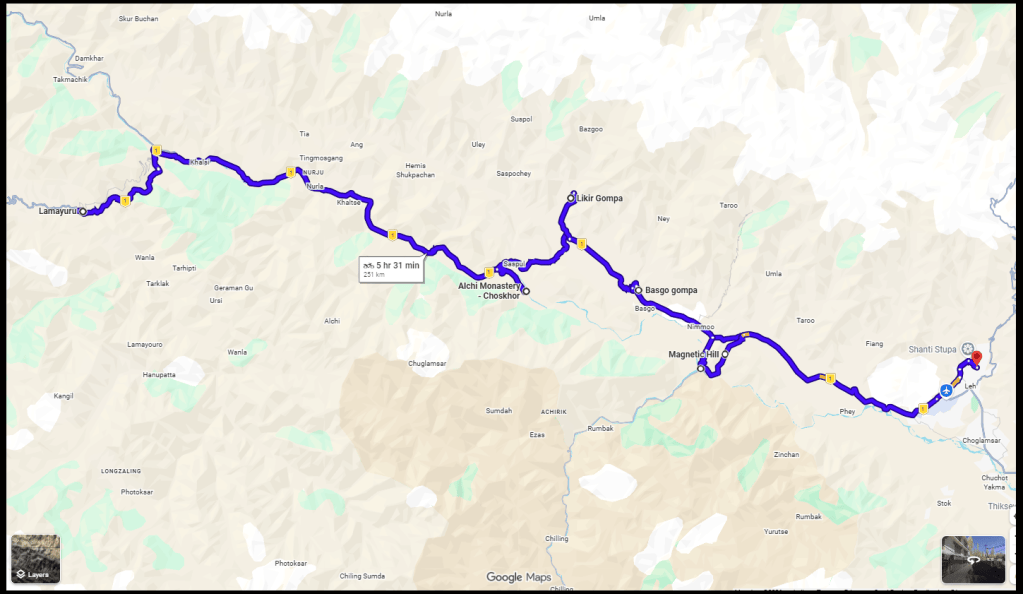
The next day (which in our case was about a week later, after completion of the Nubra Valley and Pangong-Hanle-TsoMoriri drive) started with the nearer and ended with the nearest. This was primarily because of the proximity of all the places to the town of Leh and the map allowing a circle.
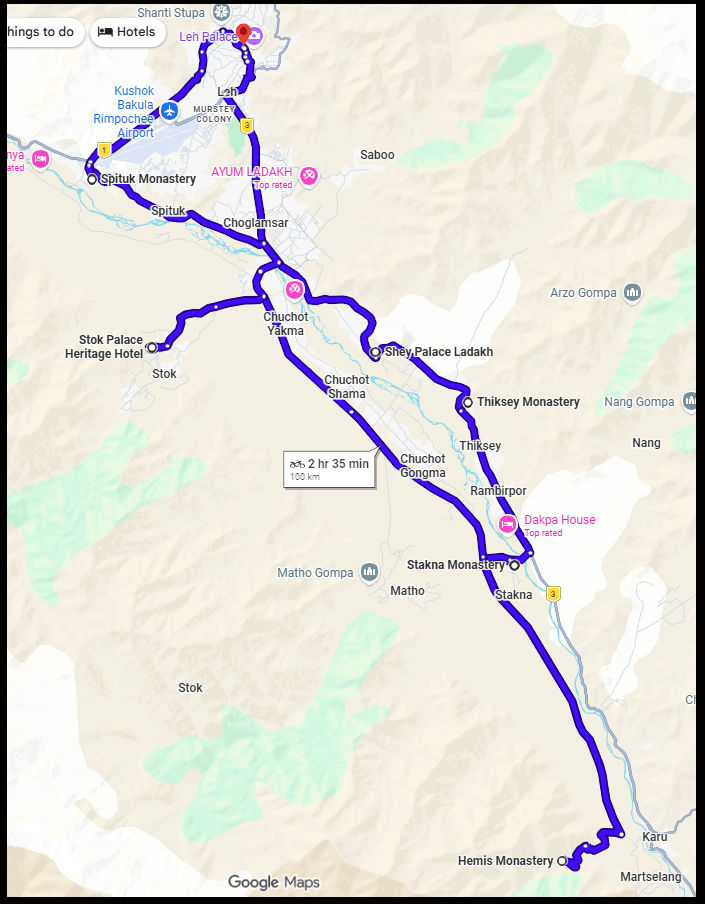
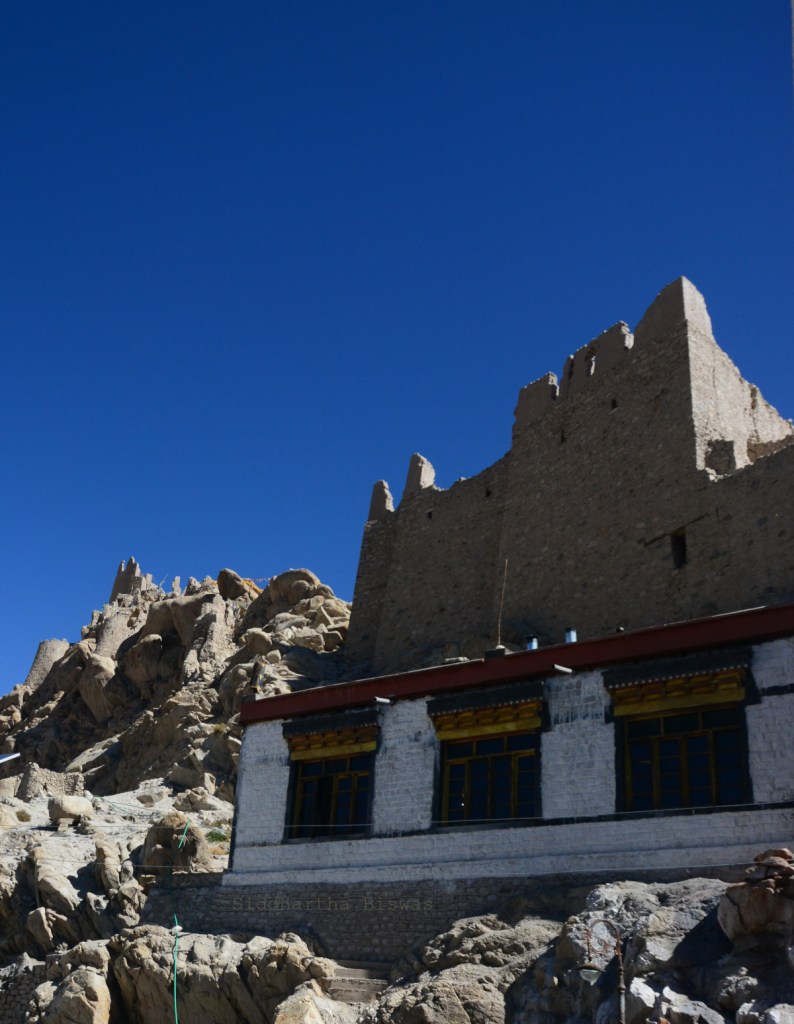
Our first stop was Shey Palace along with the Shrine. Probably built in the 10th Century, this palace was the seat of the now vanished Maryul dynasty of Ladakh. These ruins are well maintained and they give you a brilliant view of the marshy valley and a deep sense of history.
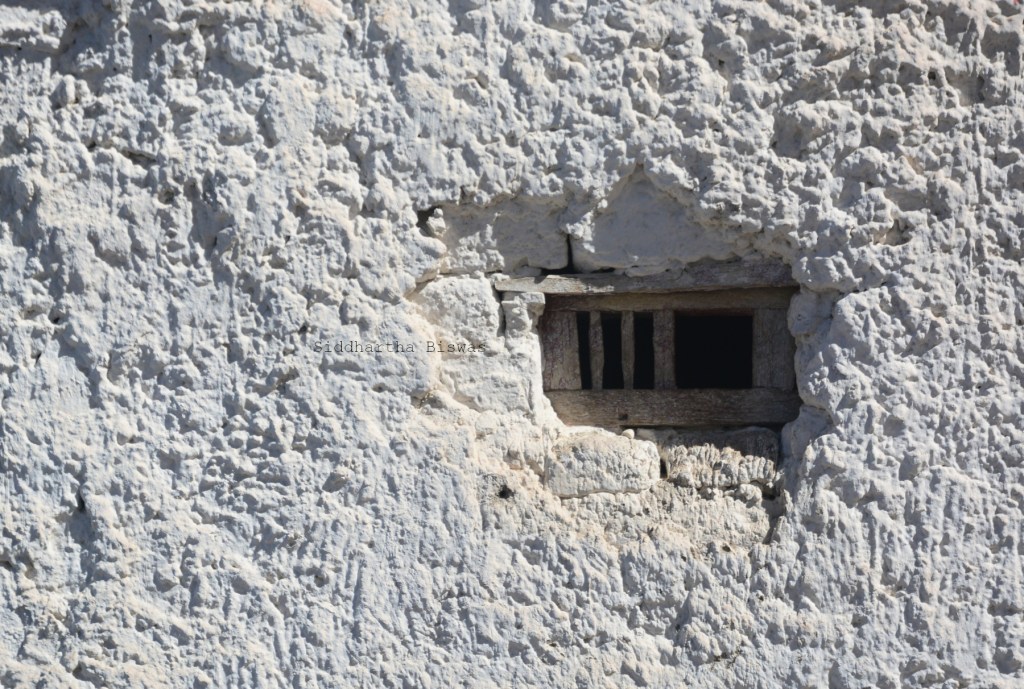
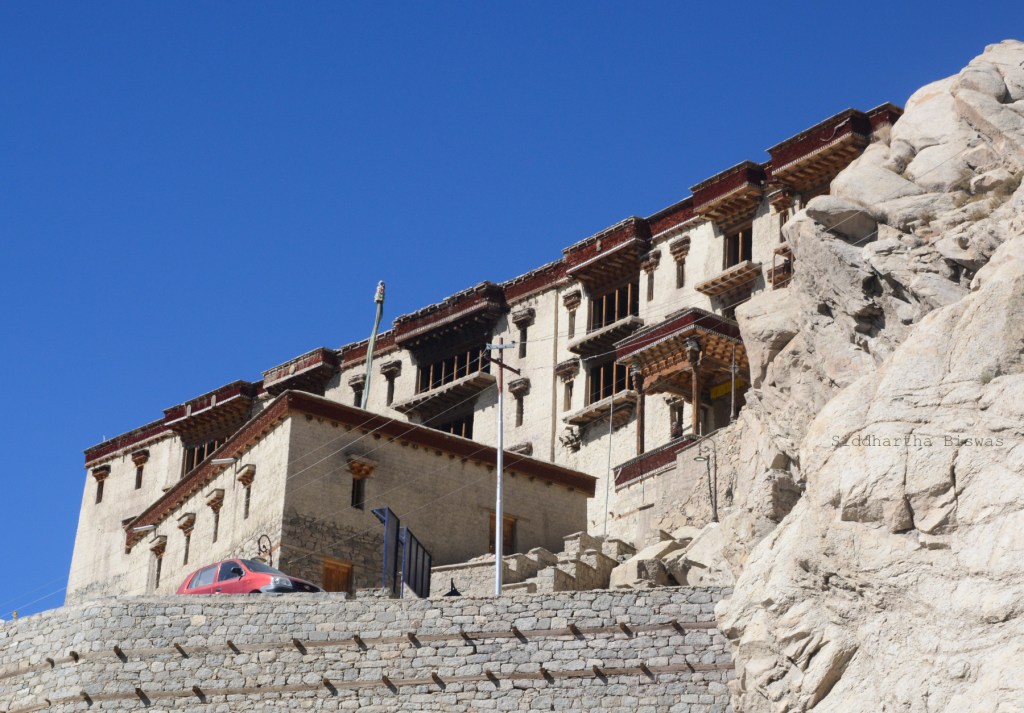
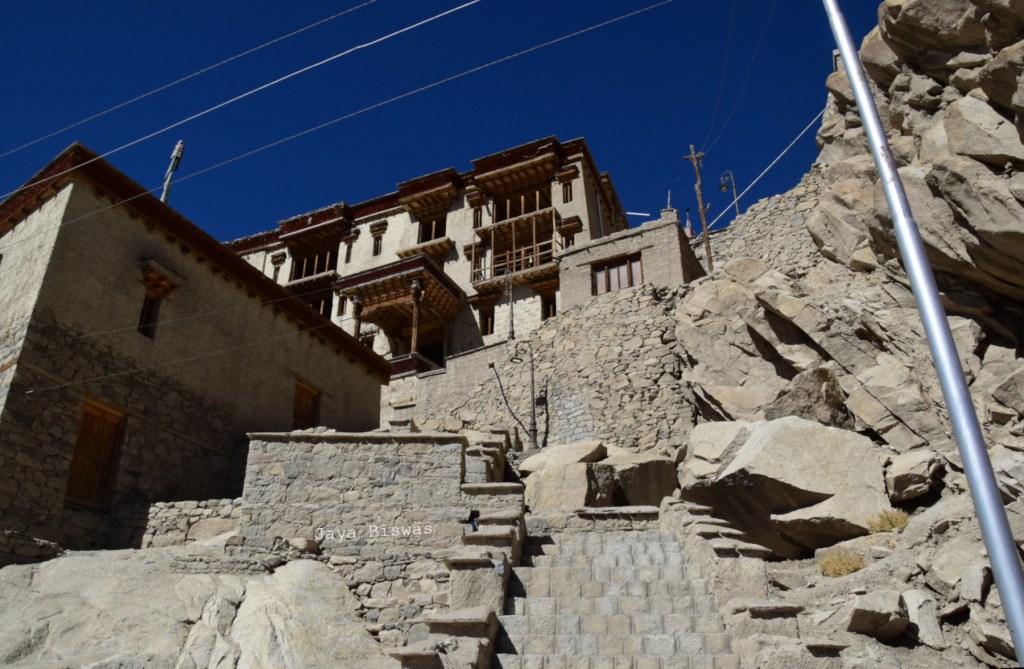
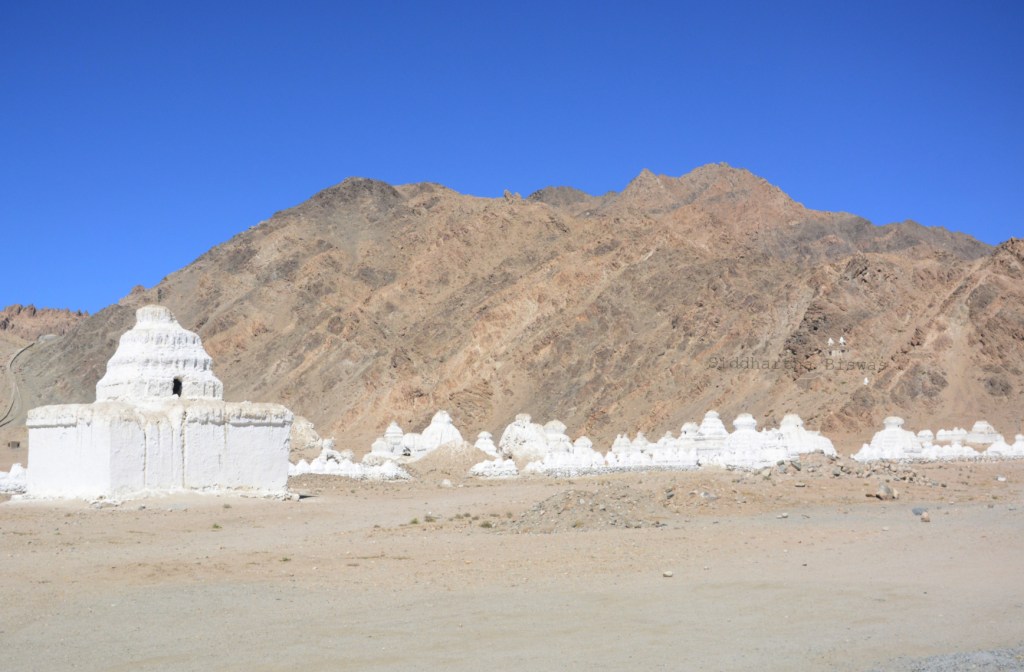
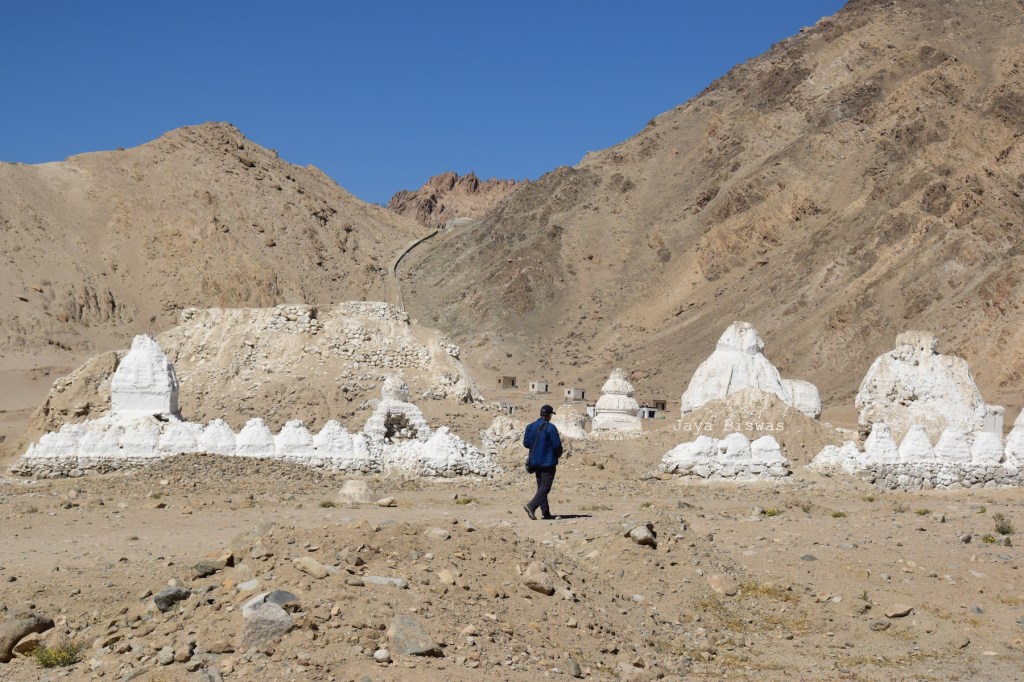
You jump into popular modernity as the next point is Sonam Wangchuk’s school. Mr. Wangchuk is a person of note, and his innovations (and his voice) are tremendously significant for Ladakh. However, people do not flock to this place for respect; they just want to see it as the location of a film about three idiots. As a matter of fact, the amazing Pangong Tso also came to popular consciousness after the film merged it as a location of the school. Needless to say, we did not bother to bother the school people, but concentrated on the series of mystical Stupas that are right next to it.
The first thing one notices about Thiksey Monastery, the next stop on our route, is the abundance of colours. Most Buddhist temples flaunt the ‘monastery white’, but Thiksey has a variety of hues. It is also called mini Potala as it resembles the palace in Lhasa.
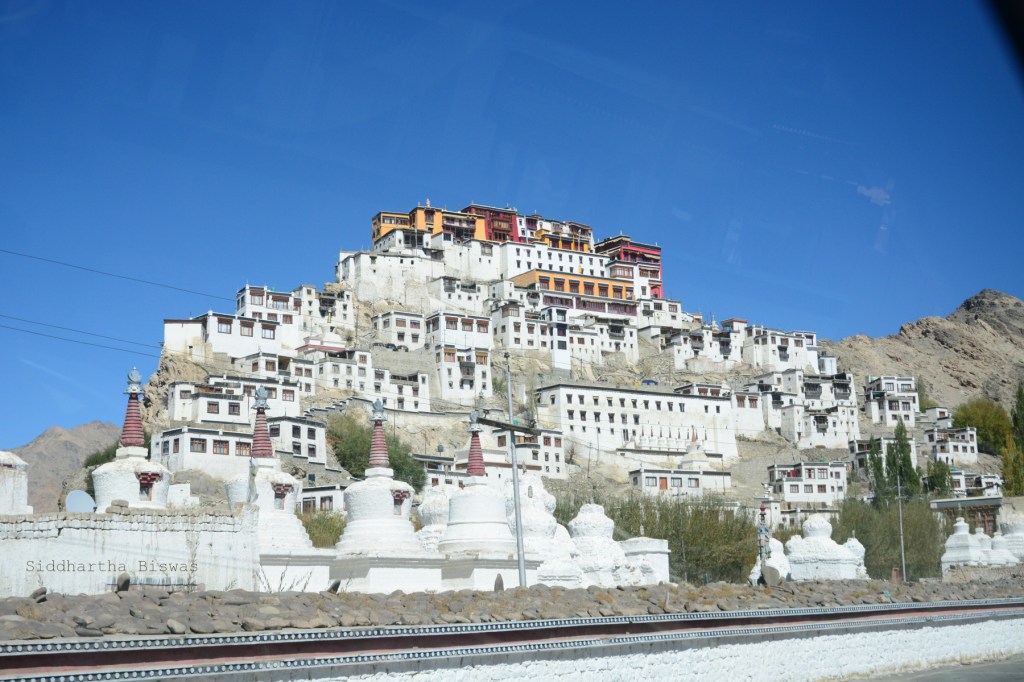
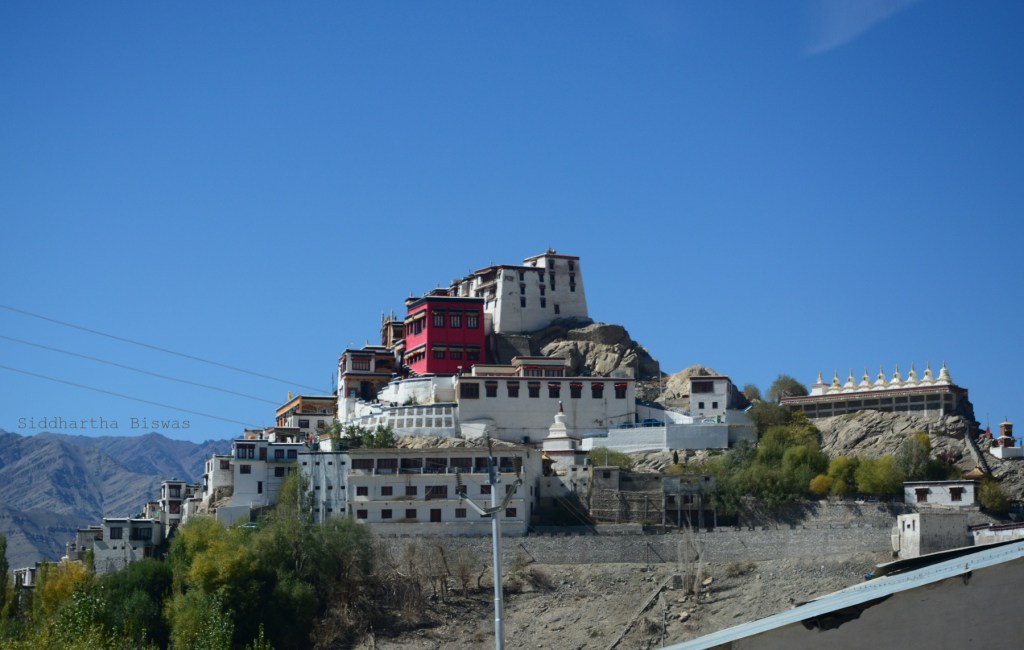
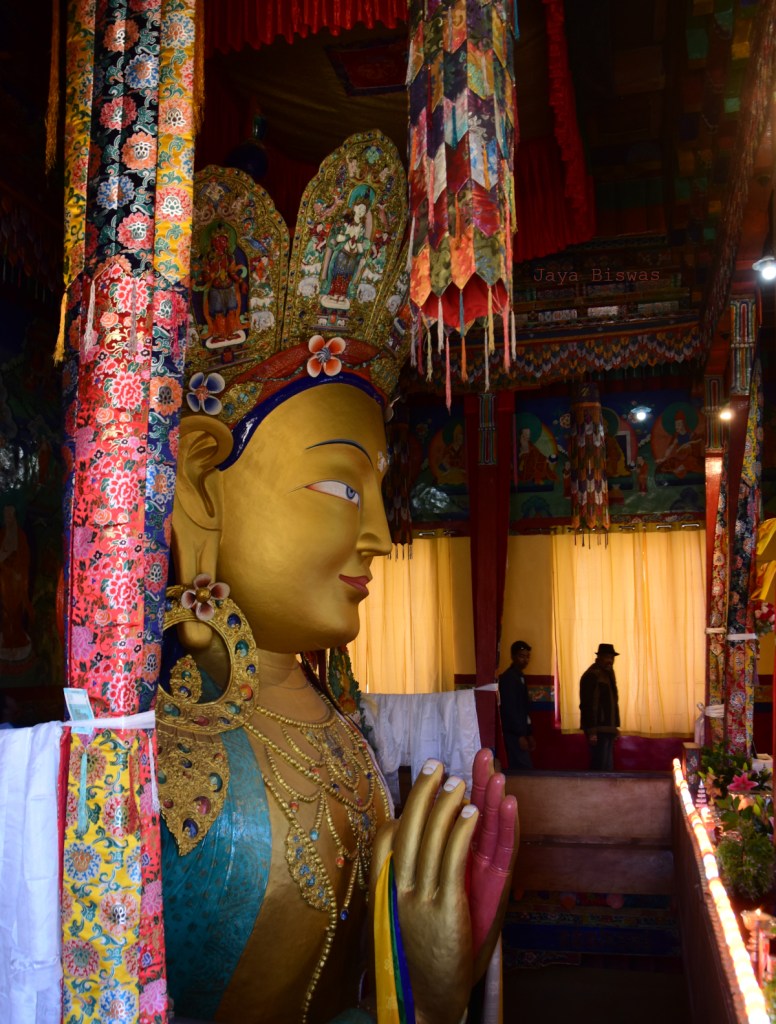
The main temple, as always, comes after many flights of steep steps (it is a 12-storey building), reserving the steepest for the final climb. Being among the oldest, Thiksey presents many attractions including relics of Tantrik Buddhism. The 40 feet Maitreya Buddha statue and the Goddess Tara temple are not to be missed.
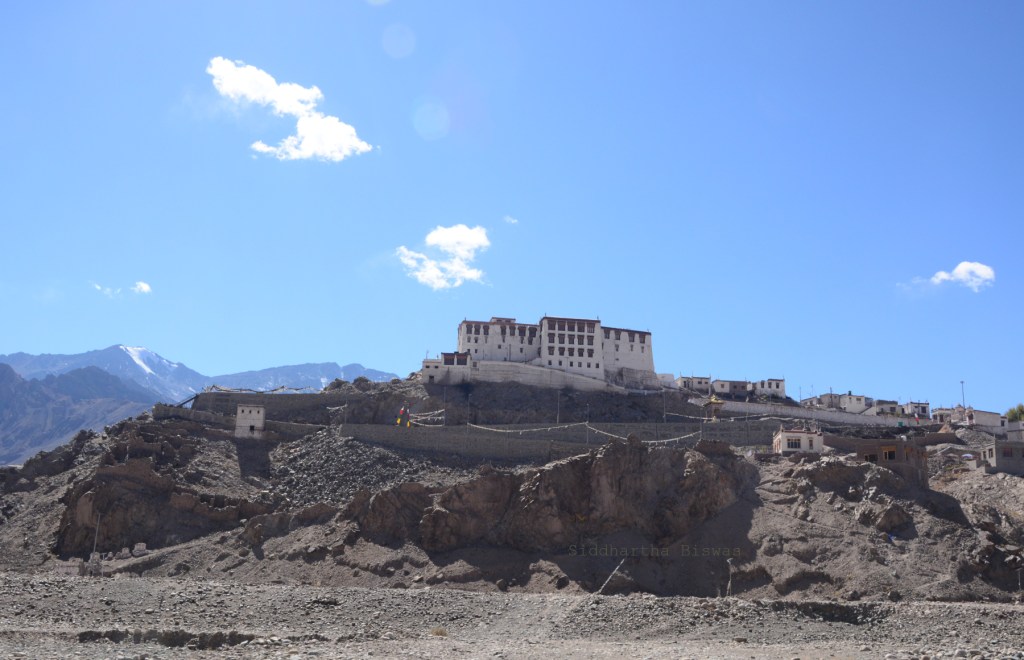
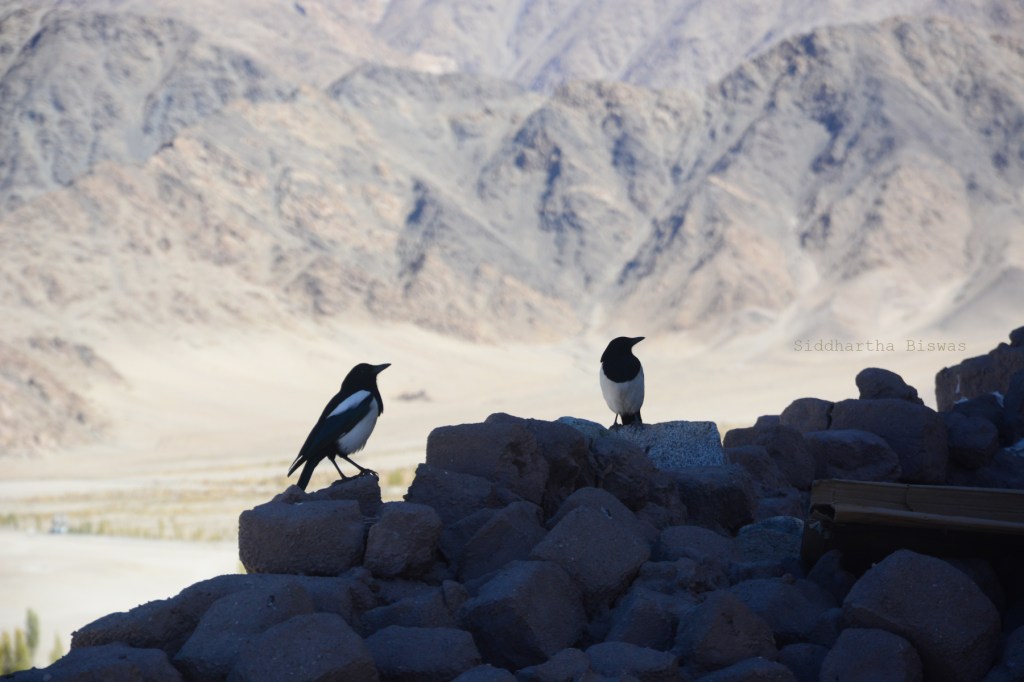
From Thiksey one may choose to take a small detour, crossing the Indus, and visit the oft neglected Stakna. The Monastery, belonging to the Drugpa sect, is on a small hill called Tiger’s Nose and is visible from all around. Unfortunately, it was closed. But the surrounding landscape made the visit more than worthwhile. A few Magpies (known also as Sabun Chor or soap stealer) seeing our disappointment, decided to entertain us.
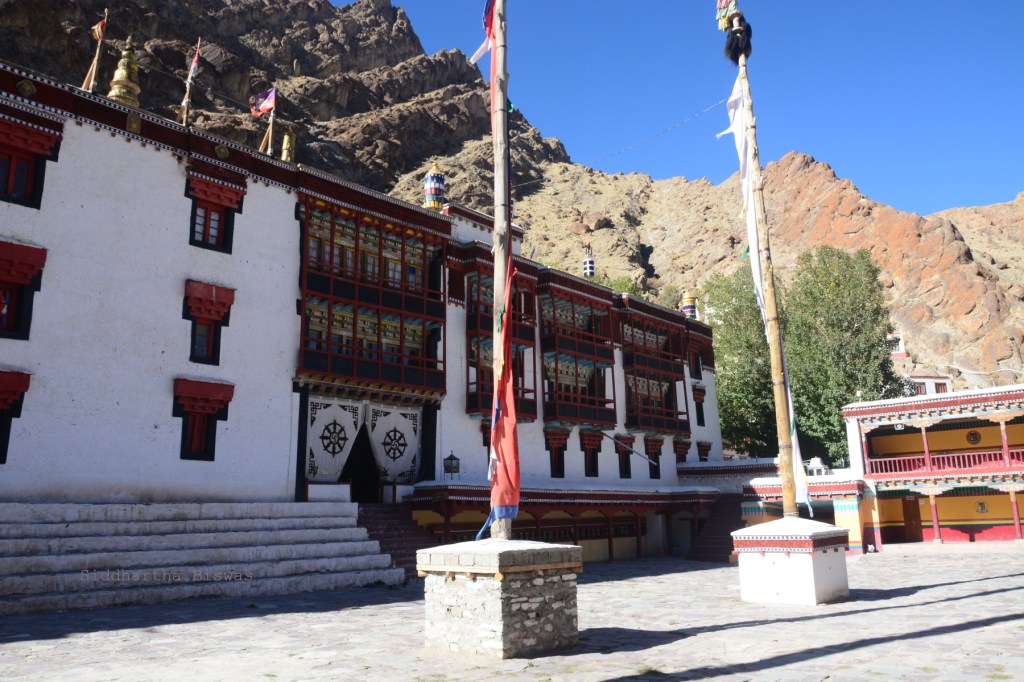
The next stop for us was the Hemis Monastery. This Drukpa lineage monastery was built around the 11th century, but it was re-constructed in 1672 by the king of Ladakh Sengge Namgyal. According to the ticket bought in 2024, the history is somewhat different.
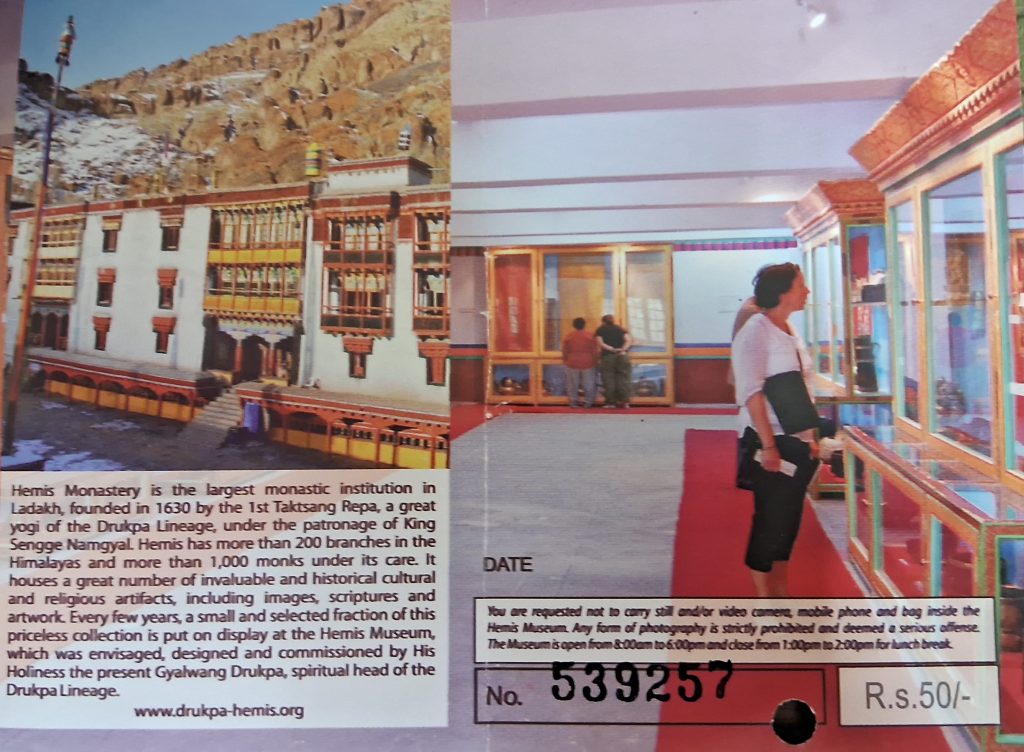
Hidden in the hills in such a way, this Monastery escaped plunder that plagued this region for much of history. Probably visited by most who come to Ladakh, this Monastery does not disappoint. There is a brilliant museum (and a gift shop) which is not to be missed.
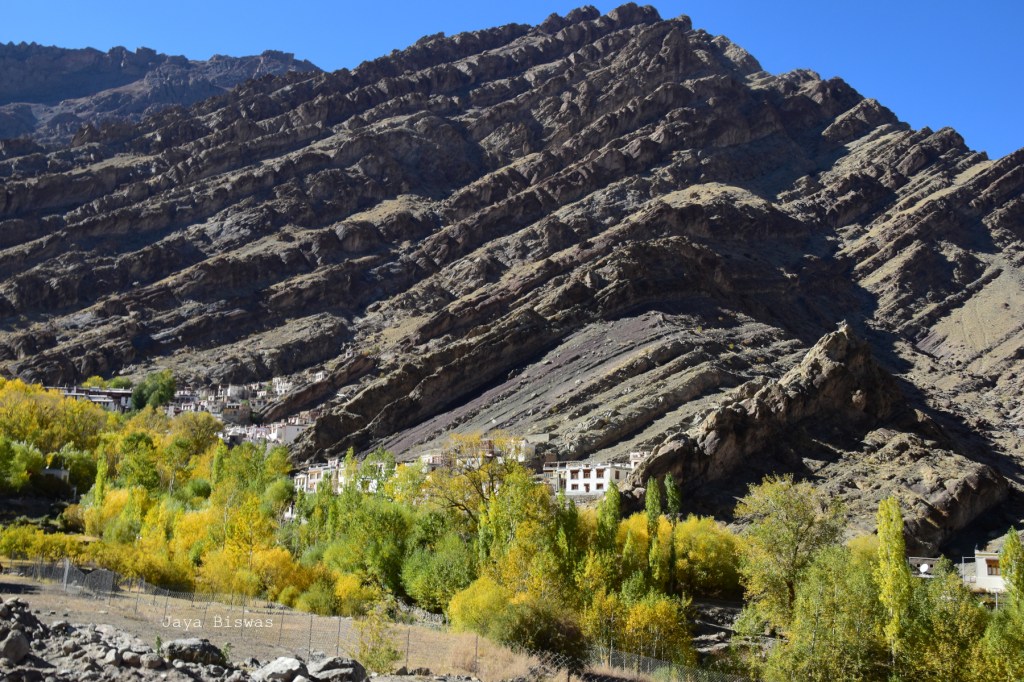
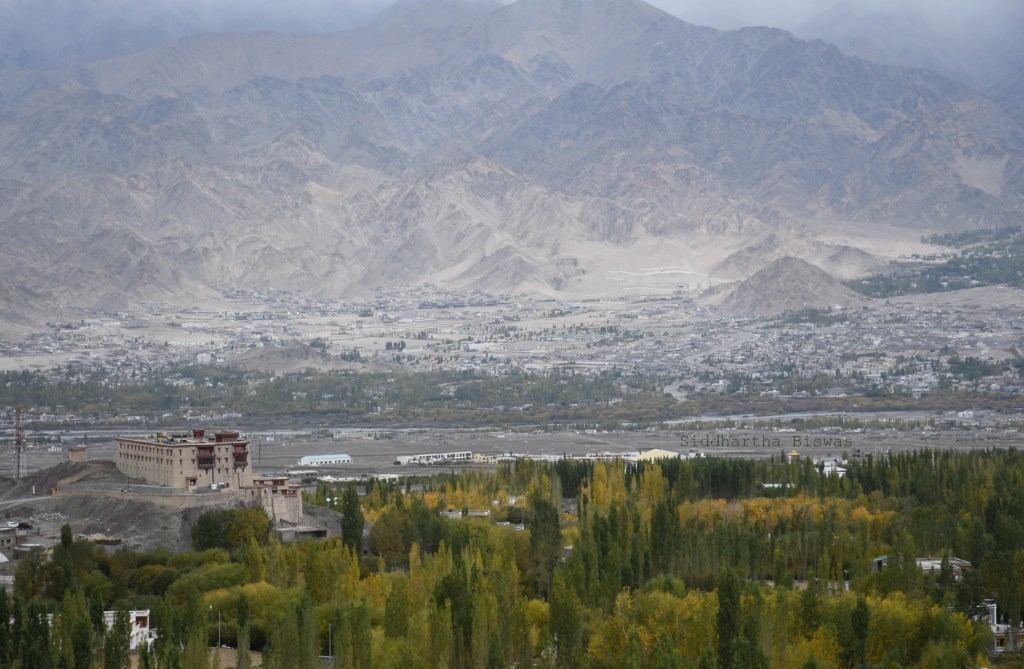
From Hemis there is a new road on the other bank of Indus that will take you to Stok Palace. Stok has a distinction; this is where the royal family shifted from Leh Palace. The royal family still lives in parts and they run a heritage hotel. There is a small quaint museum. But the most exquisite thing is the view of Leh and surrounding areas.
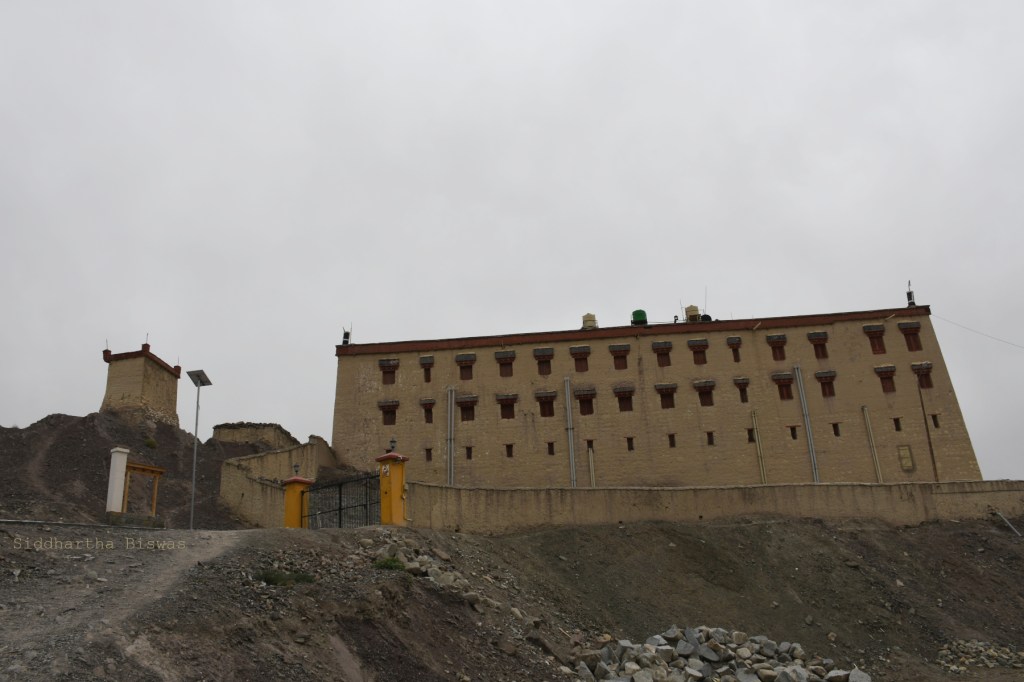
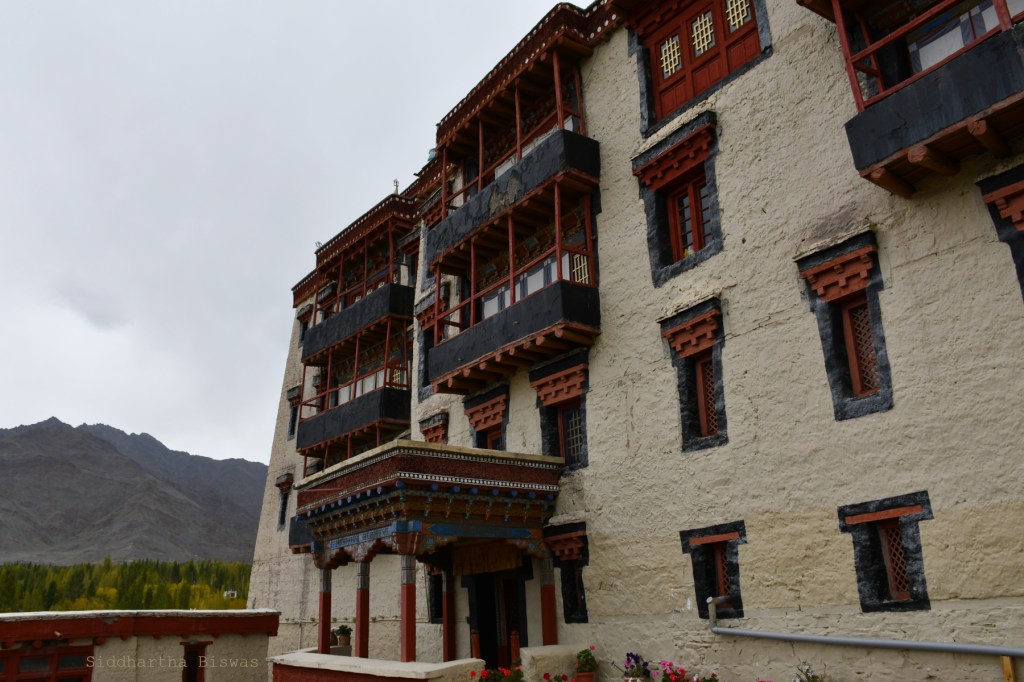
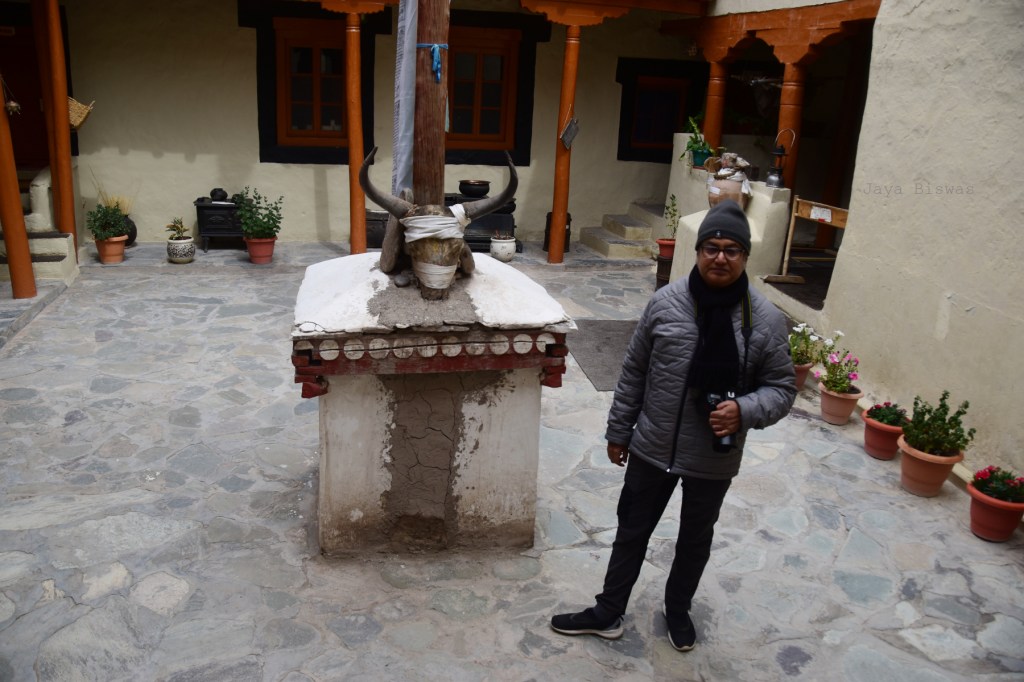
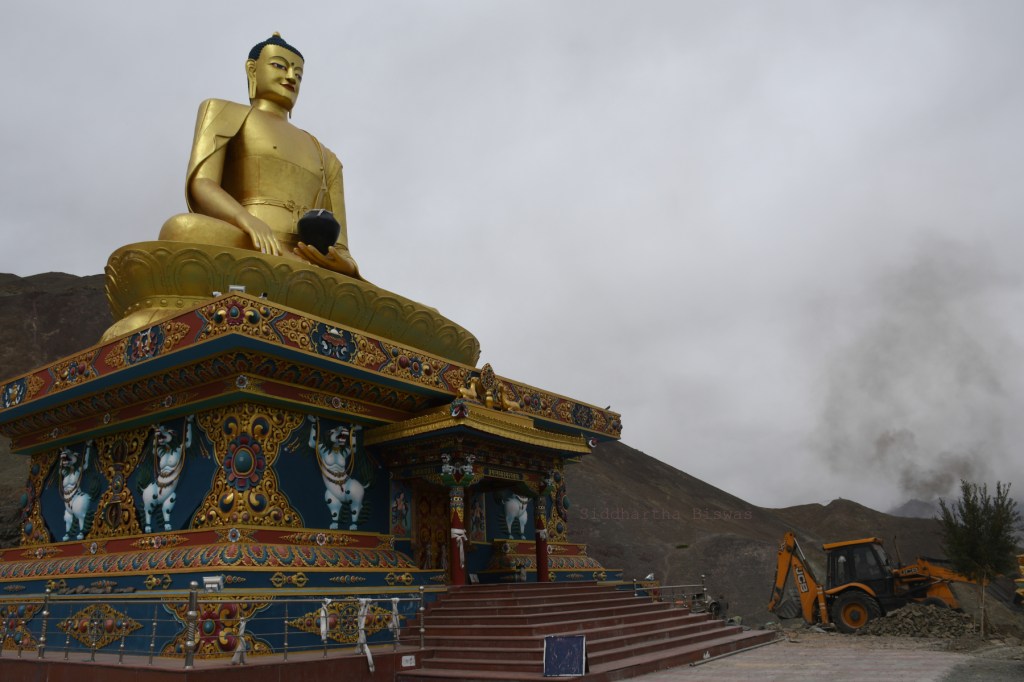
And if you drive up to the large Buddha statue above, you get a wider view.
From Stok, the next destination, the final one for the day, can be Spituk Monastery. On the outskirts of Leh, with a magnificent view of the airport on one side and of the Indus Valley on the other, this is another ancient place of worship. One can also visit this place on their way back from Lamayuru. As this place is closer to town, it draws a huge number of crowds. There is a Kali Temple above the monastery. Built in the 11th Century, the name of the monastery means “exemplary”, as it was said this place will become a model site of worship. There are certain artefacts here which must not be missed. It isn’t large like Hemis or Diskit, but it is certainly amazing because of the Tantric statues. As in Diskit, the faces of these statues are covered throughout the year, except when the ritual worship takes place. These faces are thought to be far too powerful and can influence one and all. Some forces are best kept in as much control as possible.
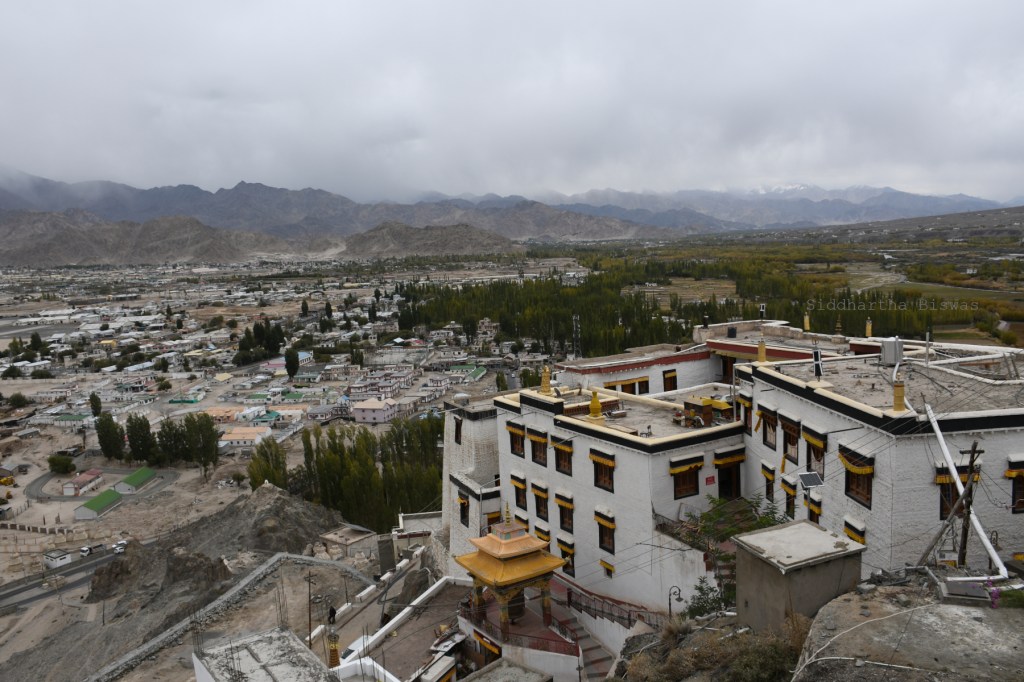
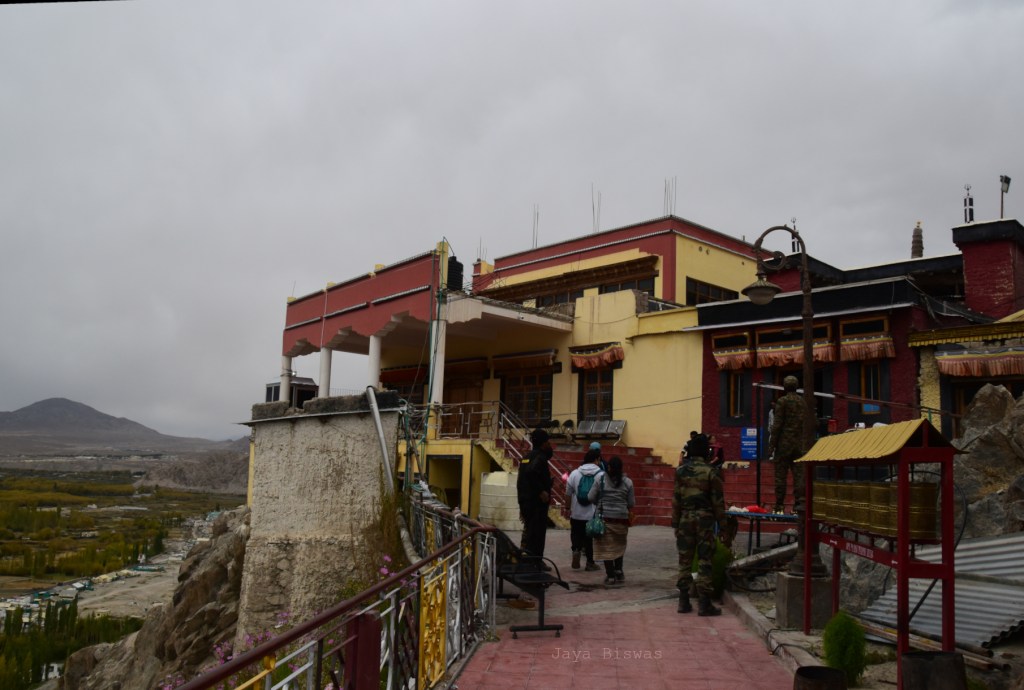
Tantrik Buddhism presents deities that are to be feared, their powers being such that their faces must be covered for most times. On certain occasions they are uncovered and these godheads are worshipped with utmost care and restrictions.
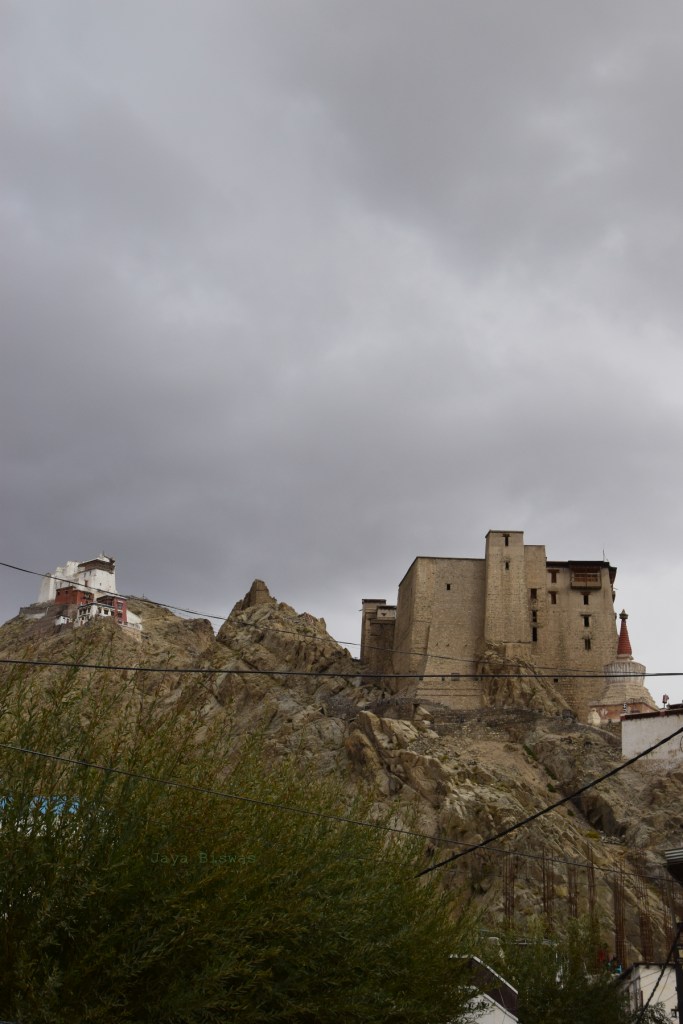
Though we have been to Leh only three times, the town and the main market have secured a special place in our hearts. Spending lazy afternoons in the Market, strolling to the lovely museum, looking at all the people from all over the world – Leh can give you a feeling of quiet languor that the world is losing today. With simple joviality and a quiet cosmopolitan aura, the town welcomes all. From expensive restaurants to simple cafés (Gupp Shupp @ Chai Shai is a nice eatery as is the Pumpernickel German Bakery) and Tibetan markets strewn here and there, one can be happily oblivious to the strategic significance of this town. We always stay near the Moravian Mission Church, in a place called Mentokling Guest House. The view of the Palace and the Monastery from the windows of our room is something that is forever etched in our memory. We have seen almost all there is to see in the town, but we will surely go back as we have good friends there. The city itself is now a good friend. And we can never stay away from friends for long.
RELEVANT INFORMATION
Elevation of Leh is approximately 11,500 ft.
There is some public transport within the city – mostly taxis.
There are all kinds of places to stay in Leh. Staying near the Main Market is a good idea.
Leh is generally extremely crowded and often has traffic congestions.
Most of the major tourist attractions charge for entry and ticket prices vary.
It is absolutely necessary to pay attention to advise of the locals. People are generally friendly and helpful.
Medical help is quickly available.
There are many checkposts on the way. Make sure you have the necessary permits.
Nearest airport is Kushok Bakula Rimpochee Airport, Leh (IXL).
The roads are generally great, but there are a few patches of natural damage.
Earlier Posts
1. Old Lucknow 2.Colonial Lucknow 3.Going Downhill – Versey to Dentam 4.Going to Garhwal 5.The Walkers 6. Palamau 7. Rishikesh 8.Kolkata Kolkata 9.The Roar of the Clouds – Santiniketan10. Of Pests and Men – Uttarey 11.Where Hikers Fear to Tread – Rudranath 12. Old Times 13. History in Ruins – Pushpagiri 14.Once There was a Heaven 15.Serenity – Madmaheshwar16. Pilgrim’s Progress – Kedarnath 17.Unfinished – Gaumukh 18. Ghatshila 19.Nothing Important 20.Manu’s Alaya – Manali 21.Santiniketan 22. Little Lhasa – Dharamshala 23. From Varuna to Assi – Varanasi 24.Tunganath 25. Transitory Blues 26. Gurudongmar 27. The Beginning 28.Yumesamdong 29. Bangali in Bangkok 30. Mukutmanipur 31. Rasvanti 32. The Old Town and the Sea – Falmouth 33. Budapest 34. The Last Post of 2019 35. Travel Travails 36. Cluj-Napoça – Romania 37 Presenting the Past – Baranagar Photo Walk 38. Far From the Urban Crowd – A small village in South Bengal 39.Silent Night Sleepless Night – travelling everywhere 40.Norwich – England 41.Photo Essay – The Road 42. Photo Story – The Days of the Goddess 43. Badrinath 44. Monumental Mistakes 45. Odyssey Now 46.To the Mountains 47. Keylong 48.Where Moon River is Born – The Cold Desert of Spiti 49. Kaza 50. Through the Valley of Spit 51.Kalpa 52.Sarahan 53. Un-happy Journey (Meghalaya) 54. Shimla 55. Bhalukpong 56. Rissia Nature Camp – Kuldiha Forest 57. Arunachal Diaries – Dirang 58. Arunachal Diaries – Sela to Jong 59. Quest for Quietness – Barot 60. Chindi to Chail 61. Baranti 62. Clouds of Tawang 63.Kumaon Diaries – Binsar 64. Ladakh Diaries – Siachen 65. The Aran Islands – Inishmaan 66. Ladakh Diaries – Hunder and Turtuk 67. Ladakh Diaries – Journey from Pangong to Hanle 68. Umling La and Hanle

